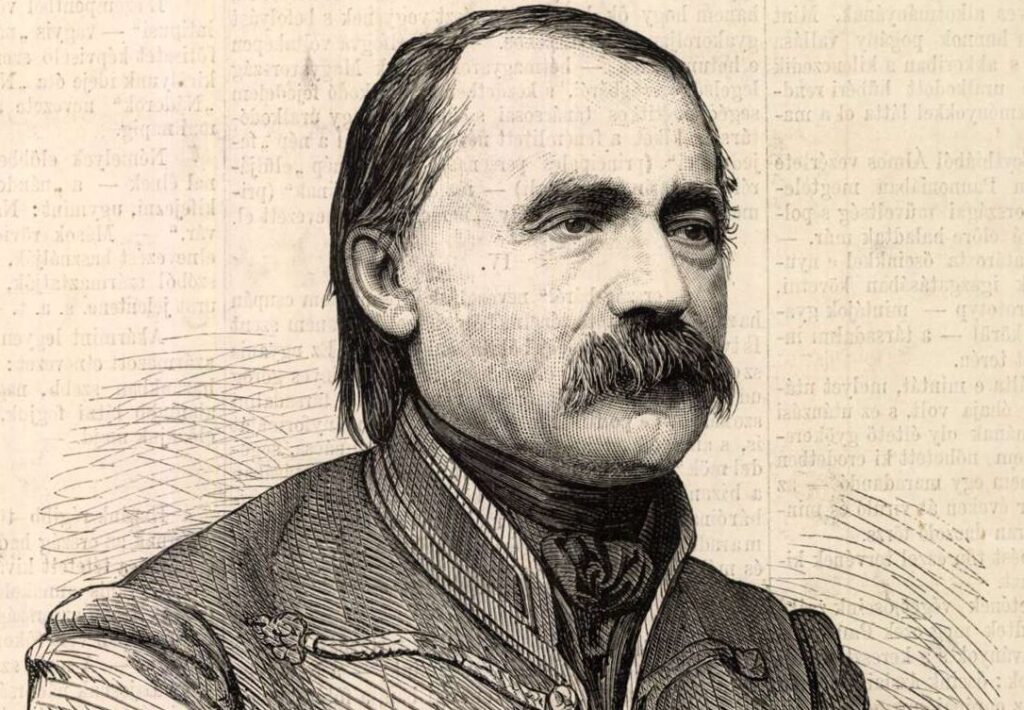
János Kriza was a Unitarian bishop, writer, poet, ethnographer, and one of the most influential figures of 19th-century Transylvanian Hungarian culture. Remembered both as an ecclesiastical leader and as a pioneering collector of Hungarian folk traditions, he played a decisive role in preserving the spiritual and cultural heritage of the Székely people.
Born in Nagyajta (today Aita Mare, Romania), Kriza studied at the Unitarian College of Kolozsvár (Cluj-Napoca) before continuing his theological and philosophical studies in Berlin. Upon his return, he served as minister in Kolozsvár for over two decades before being elected bishop of the Hungarian Unitarian Church in 1861.
Alongside his ecclesiastical work, Kriza gained lasting recognition through his literary and ethnographic activity. His landmark work, Vadrózsák (“Wild Roses”), published in 1863, was one of the first major and scientifically organized collections of Székely folk songs, ballads, legends, and tales. At a time when oral traditions were rapidly disappearing, Kriza’s work helped preserve an invaluable part of Hungarian folk culture for future generations.
As bishop, he passionately supported education, Hungarian-language culture, and the strengthening of Unitarian intellectual life in Transylvania. His writings and public activity reflected a deep commitment to national culture, community identity, and the moral and social responsibilities of religious life.