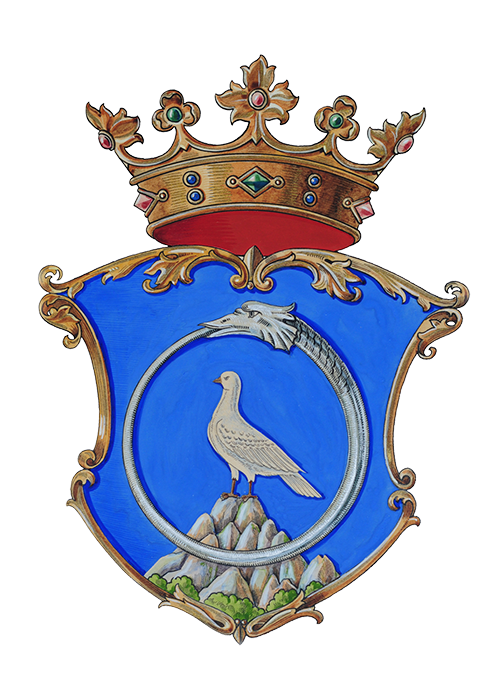
With its uniquely preserved medieval murals, Gothic vaulted interiors, 17th-century fortifications, and the living community traditions connected to them, the Székelyderzs (Dârjiu) Fortified Church occupies a distinguished place among Unitarian churches in Transylvania. As the only Hungarian-related monument in the region included on the UNESCO World Heritage List, it represents an exceptional example of Transylvania’s architectural and spiritual heritage.
The village of Derzs first appeared in written records in 1334. Local legend recounts that the Saxon inhabitants of the village exchanged settlements with the Székely residents of nearby Homoróddaróc (Drăușeni), after which the village became part of Szekler Land. What is certain, however, is that the prosperity of the community and its proximity to Saxon settlements as sources of inspiration enabled the people of Derzs to construct one of the few fortified churches built by the Hungarian population of Transylvania.
The two early Gothic windows visible on the southern wall of the nave suggest that the original church was constructed around the turn of the 13th and 14th centuries. The building is first mentioned in the Papal Tithe Registers in 1334. In 1419, the interior walls of the nave were decorated with frescoes. At the turn of the 16th century, the church underwent major expansion in the Late Gothic style, in keeping with the artistic preferences of the era.
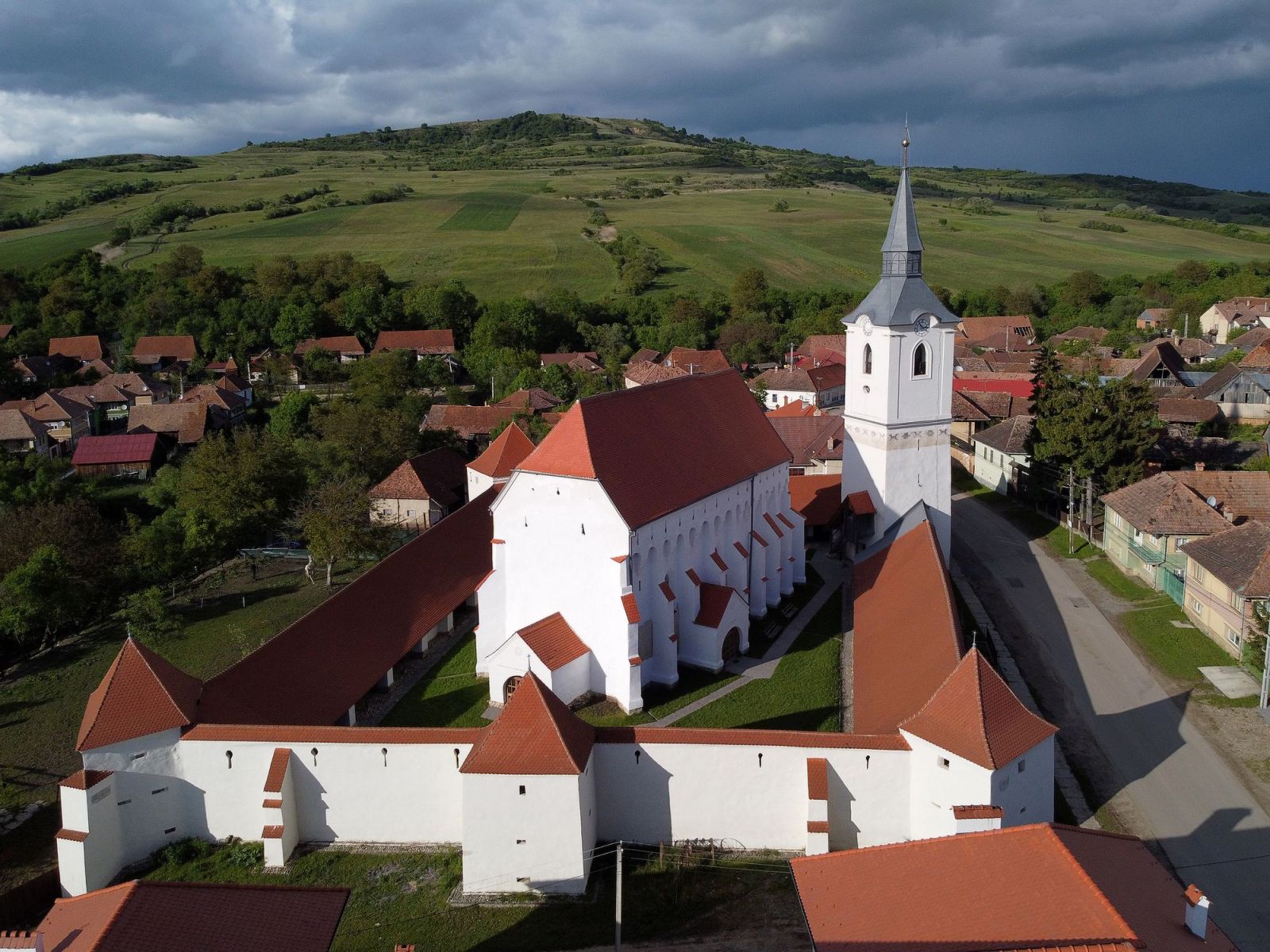
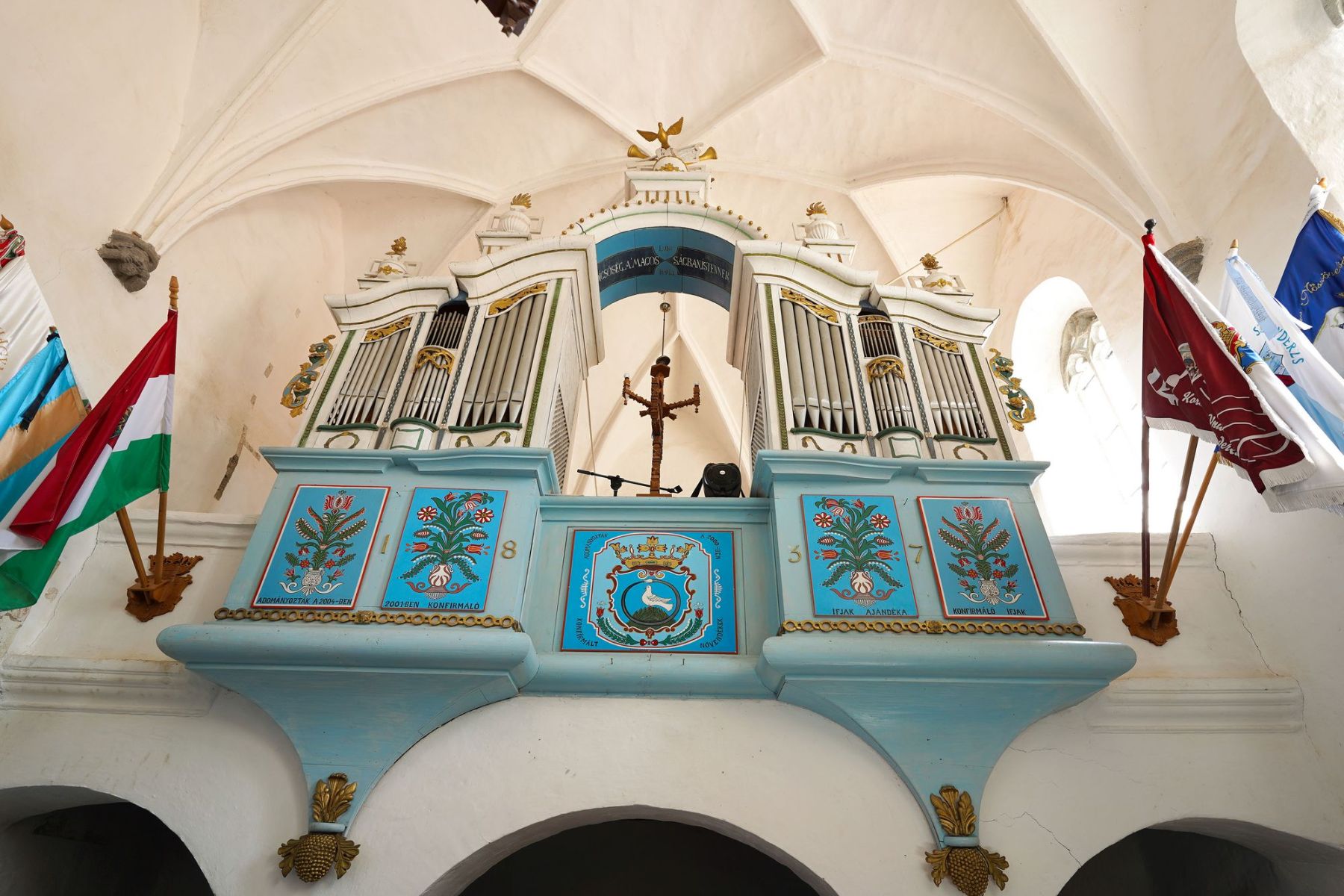
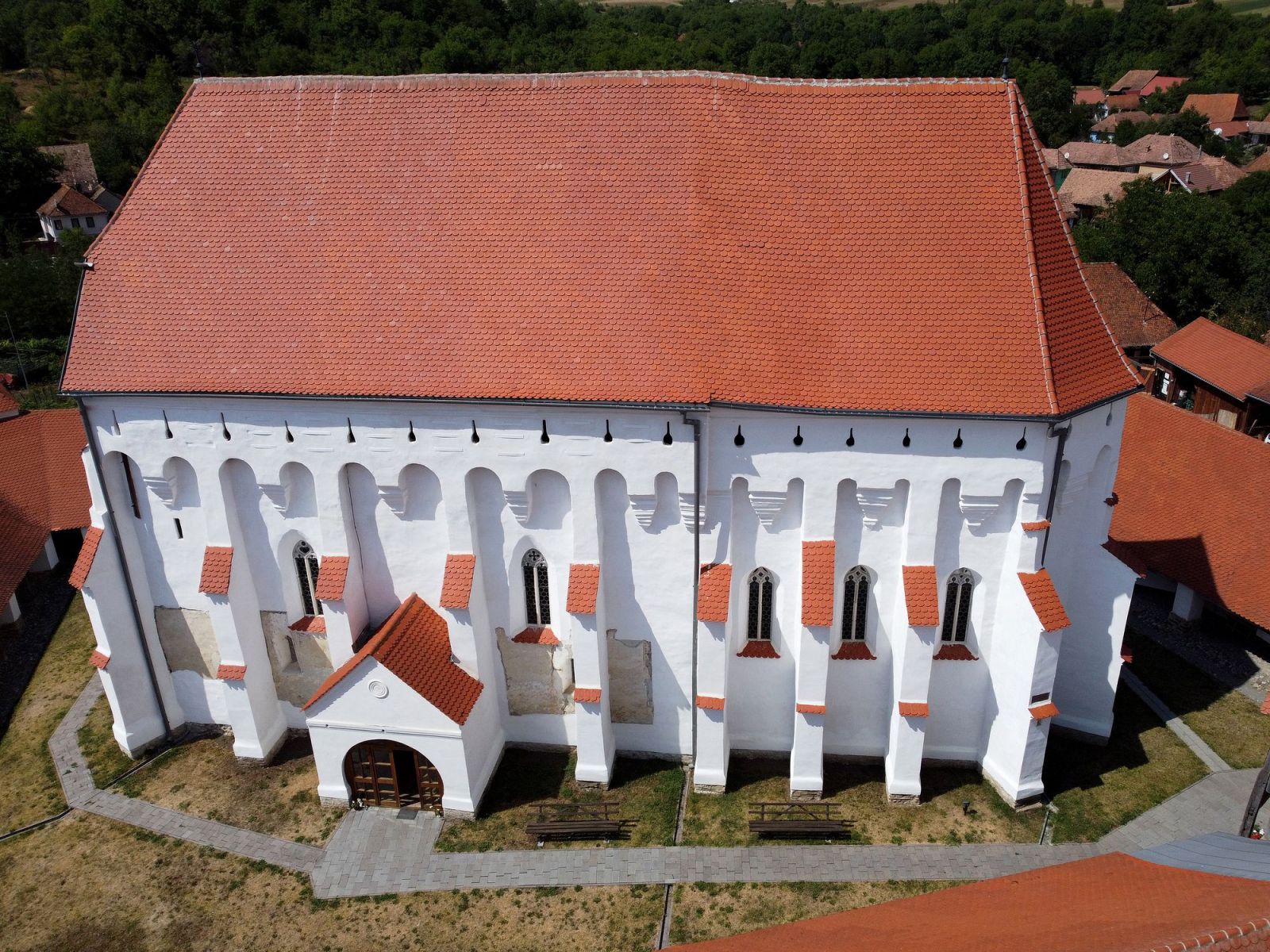
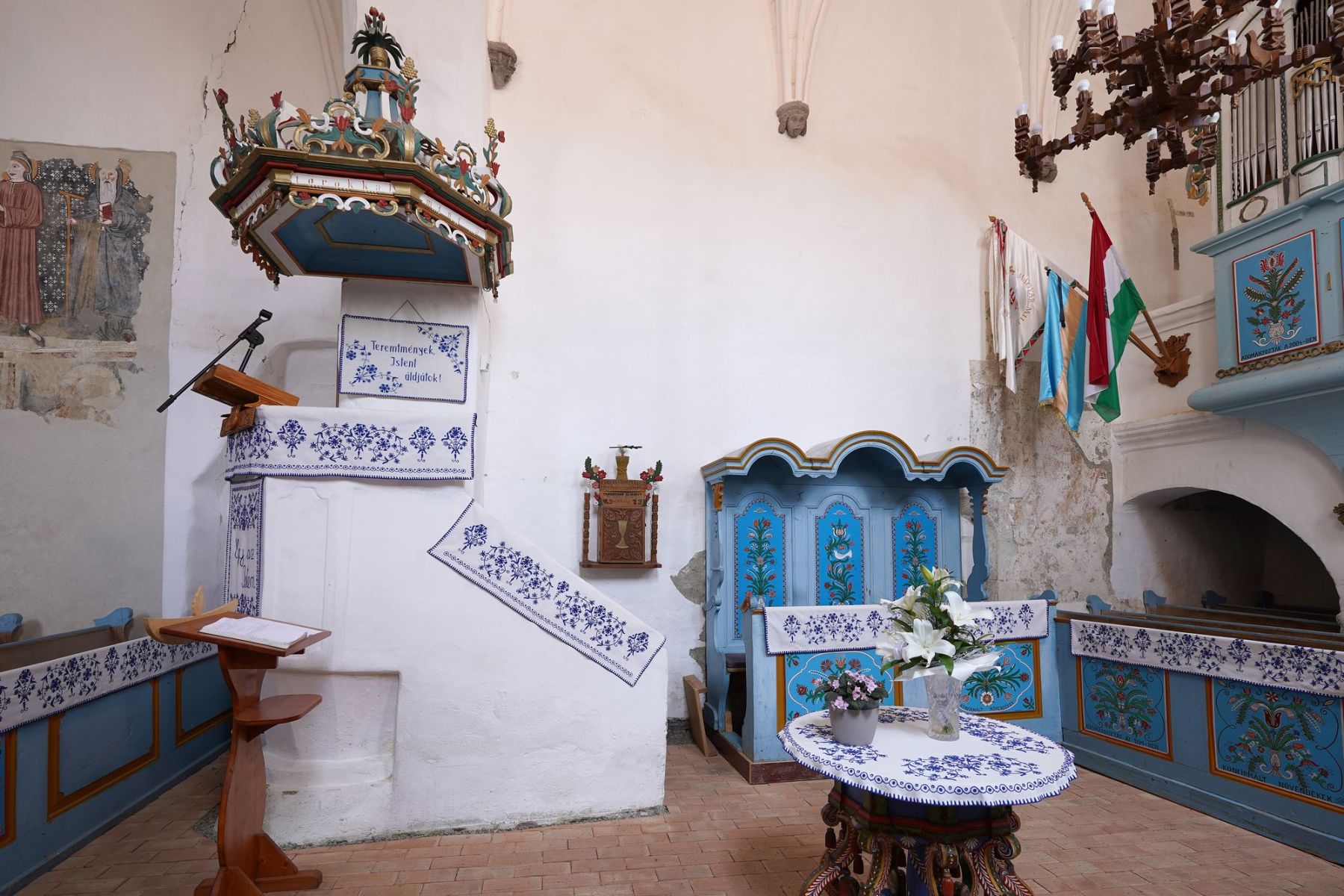
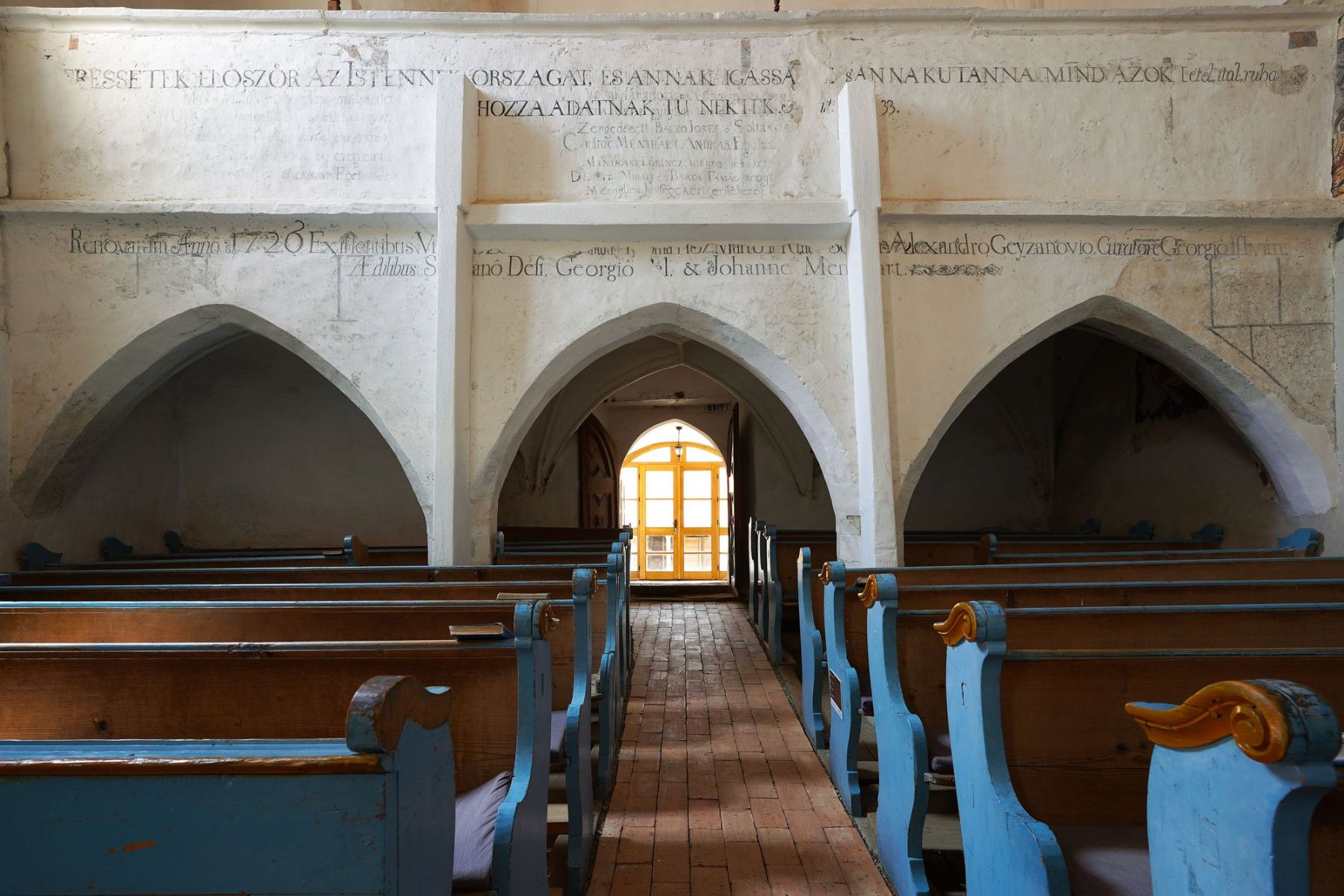
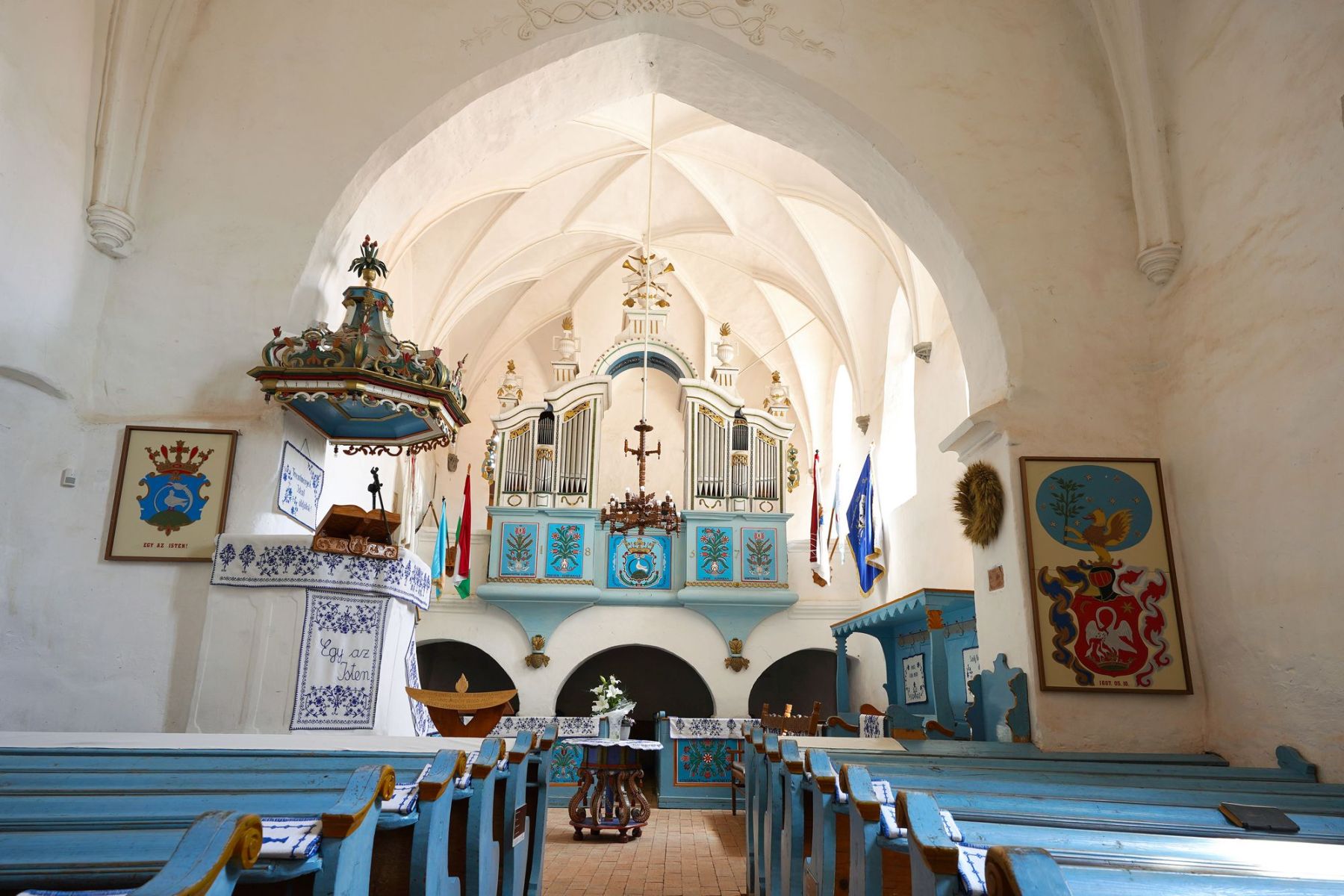
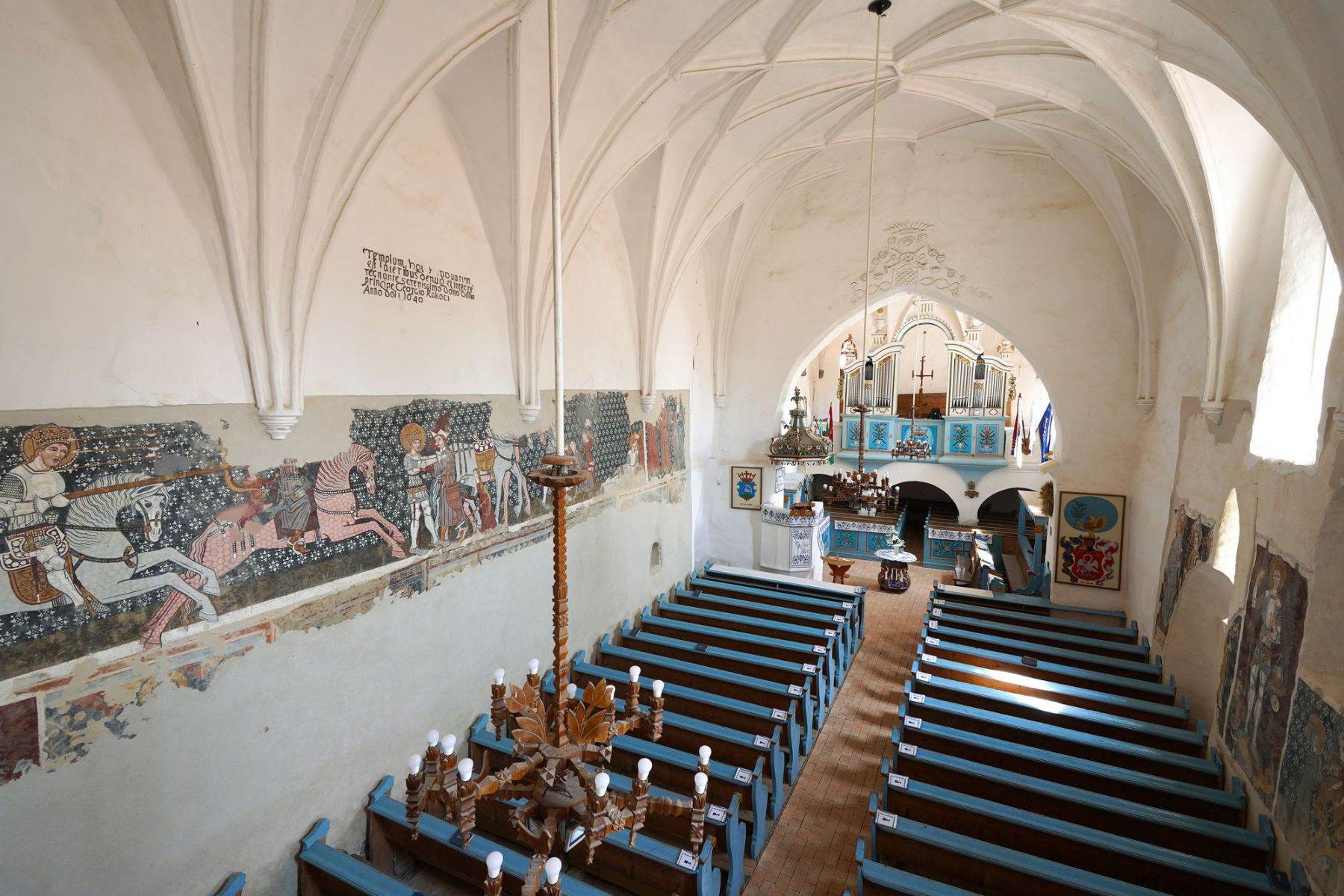
Thanks to the patronage of the Petky family—closely connected to the history of both the village and the church—a larger sanctuary was added, along with vaulted ceilings that partially covered the earlier frescoes and a vaulted western gallery. Around this time, the defensive upper level was also created by raising the roof structure and adding arrowslits. The earlier curved enclosure wall was replaced by a rectangular rampart reinforced with bastions, a project completed in the early 17th century. Aside from minor architectural interventions, the church can still be seen today largely in this historical form.
Today, the fortified church is surrounded by defensive walls incorporating five bastions and a bell tower. These Renaissance-style fortifications were likely begun after the Gothic reconstruction and completed in the early 1600s. Beneath the covered galleries along the inner walls, villagers once stored grain in wooden chests and bins, while the bastion chambers were used for hanging bacon, sausages, and hams—a tradition that persists to this day.
Among the church’s most treasured features are its recently restored late medieval frescoes. On the southern wall of the nave are scenes from the life of Paul the Apostle, a depiction of Saint Michael, and fragments portraying bishop saints. The lower register of the northern wall depicts the story of the Ten Thousand Martyrs and the martyrdom of Saint Dorothy. The upper register is dominated by scenes from the legend of King Saint Ladislaus. The narrative of the king defeating the Cumans forms one of the best-preserved Saint Ladislaus mural cycles in Transylvania. The sequence concludes with depictions of Anthony the Great and two haloed women dressed in red.
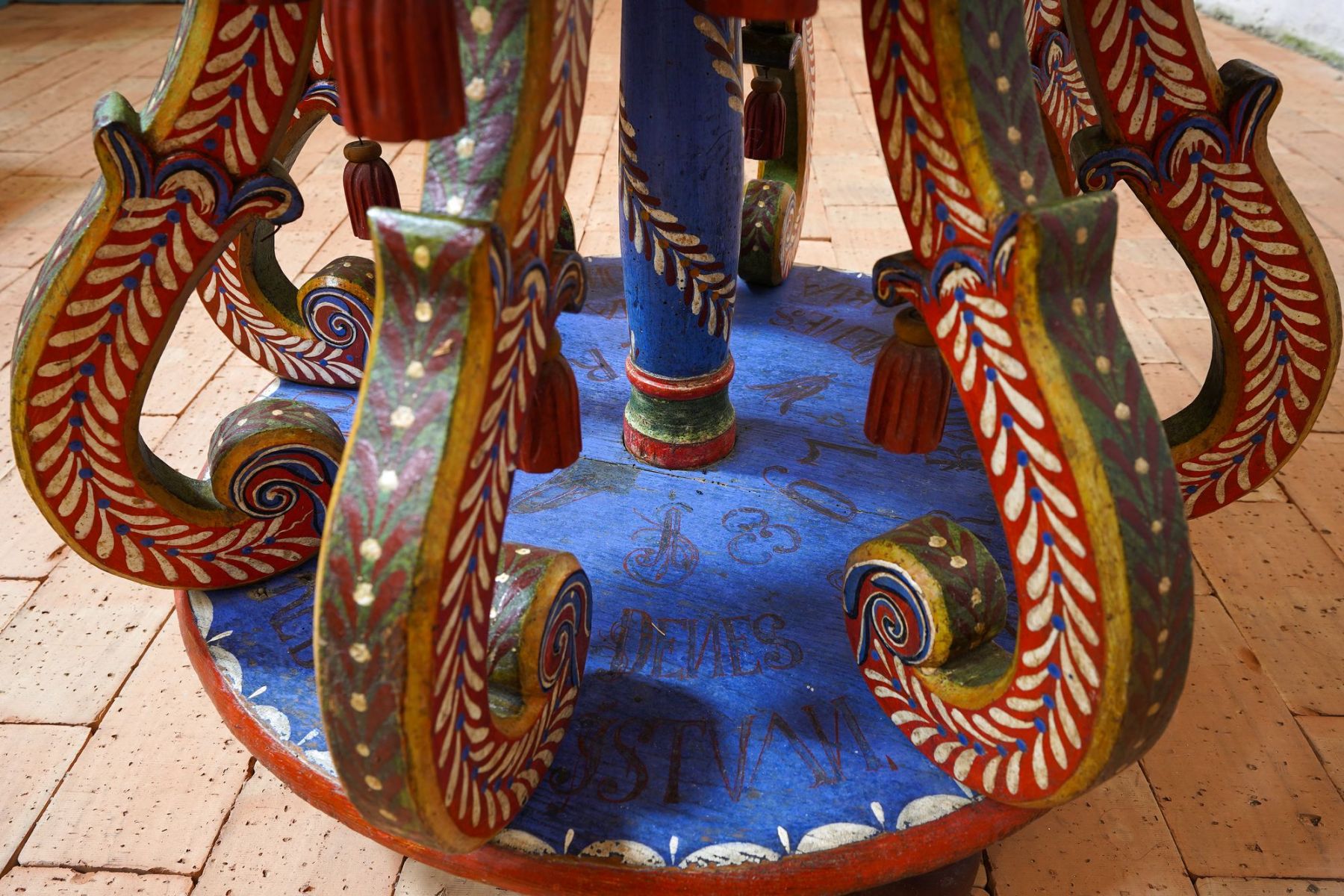
The church pews were crafted in 1790 and assigned to families according to their financial contribution; tradition dictated that each family member sit only in their designated place. The painted communion table dates from 1867, while the pulpit is crowned by an artistically carved canopy made in 1759.
The complete restoration of the fortified church was carried out between 2012 and 2018.