
Compiled by: Júlia Koppándi
Ferenc Balázs’s lifestyle was closely intertwined with his life philosophy, at the center of which stood simplicity, closeness to nature, and service to the community. His way of life was not merely a personal choice, but a conscious moral and intellectual program in which physical health, spiritual balance, and social responsibility reinforced one another. His lifestyle was partly shaped by his illness—tuberculosis, which appeared in his youth and prompted self-reflection already in adolescence. According to his recollection, this was when a long inner dialogue began, during which he posed questions to himself and to the world:
“It took fifteen years for this conversation, this clarification of things, this raising of questions and their resolution or abandonment, to take place.”
In order to preserve his health, Balázs paid great attention to physical exercise and a conscious lifestyle. Already as a theology student, he regularly performed gymnastic exercises, believing that strengthening the body could help overcome illness. According to the recollections of his writer friend Sándor Kacsó (The Flower Fades, the Mud Gathers, 1974), “he fought against it with unwavering faith and trusted in victory.” A natural way of life played an important role for him: movement, fresh air, and moderate nutrition. At the same time, his own experiences also warned him of the dangers of excessive workload. As he wrote:
“I know that in me nervousness is the result of overwork, which again and again sets back the full recovery of my health. I cannot do little, slowly.” (Under the Soil)
His diet was also guided by conscious principles. He was close to a vegetarian diet and occasionally followed various dietary regimens, such as vegetable-based cures. According to Kacsó’s notes:
“He became an adherent of vegetarianism, because he accepted the theory that a significant part of the germs of disease enter our bodies through meat. His cures at the time included eating only vegetable dishes from the boarding school meals for one or two weeks.”
His meals were generally simple: vegetables, soups, stews, and fruits formed the basis of his diet. However, this did not mean asceticism; rather, he followed the principle of naturalness and moderation.
At one stage of his life, Balázs showed interest in contemporary life-reform movements, including the teachings of the Bicsérdist movement. This movement emphasized natural nutrition, a meat-free diet, fasting, and regular physical exercise. For Balázs, these ideas primarily represented a way of preserving health, and he temporarily adopted certain elements of them. Over time, however, he distanced himself from the stricter forms of the doctrine and retained rather its spirit: moderation, conscious nutrition, and the search for harmony between body and soul.
“…just as the liver can fall ill and the lungs can deteriorate, so too can certain functions of the soul become distorted or impaired. The chief illness of thinking is prejudice. That of instinct is aimless gratification, when we chew without nourishment and allow our body to be swept into a magnetic drift, even though neither the fire of a soul longing to unite with its partner nor the fever of bringing forth new life drives it.” (Under the Soil)
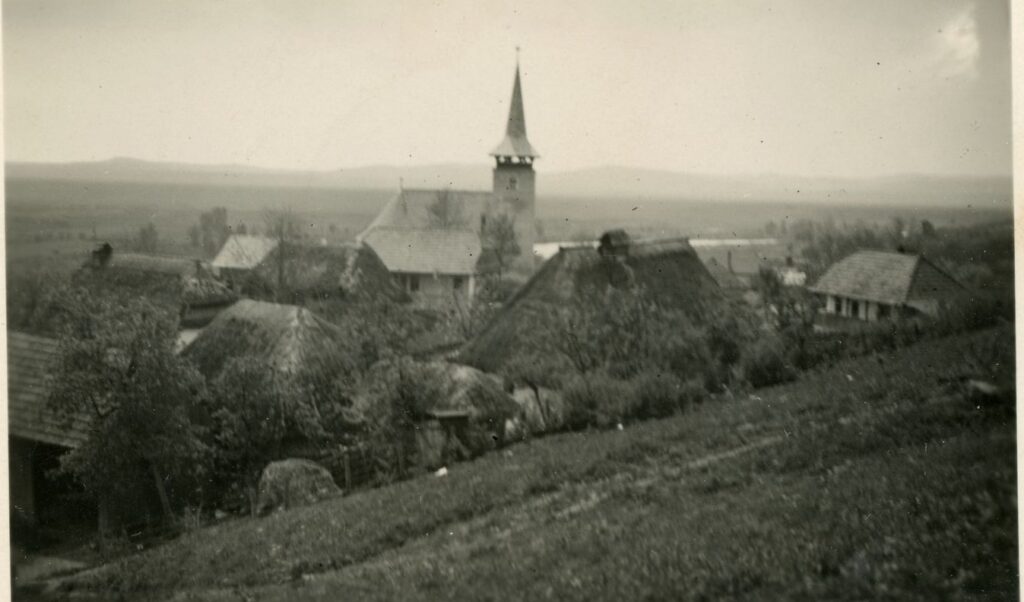
Perhaps the most important feature of his lifestyle, however, was that personal health and social responsibility appeared in unity. After his world travels, he consciously chose rural life and settled in Mészkő as a pastor. He believed that a person lives a full life only if they remain connected to nature and the community. As he wrote:
“I was bound to everything by a mysterious attachment; I felt every living and non-living thing to be my brother.” (Under the Soil)
For him, village life represented a properly proportioned existence, where humans and nature complement one another.
“The village nestled on the hillside, by the riverbank, at the mouth of the valley is the rightly proportioned life. Mountains, forests, meadows, fields, air, air, and houses, people. All are together—those who can know one another—and all live together on the back of the earth, in the palm of God. Art and science may develop among them. But they never tear themselves away from the breast of the earth. They till the soil and sow the seed. They feel growth. They live the life of the universe.” (Under the Soil)
Thus, Ferenc Balázs’s lifestyle was not merely a personal health program, but a kind of ethical and social statement. The simple life, respect for nature, service to the community, and the pursuit of harmony between body and soul still carry a timely message today. For modern people, who are often disconnected from nature and live overburdened lives, his example is a reminder that the foundation of a healthy life lies in moderation, self-knowledge, and connection to community. His way of life is therefore not just a feature of a historical era, but a set of ideas that can still speak to people today.