A Medieval Church with Layers of History
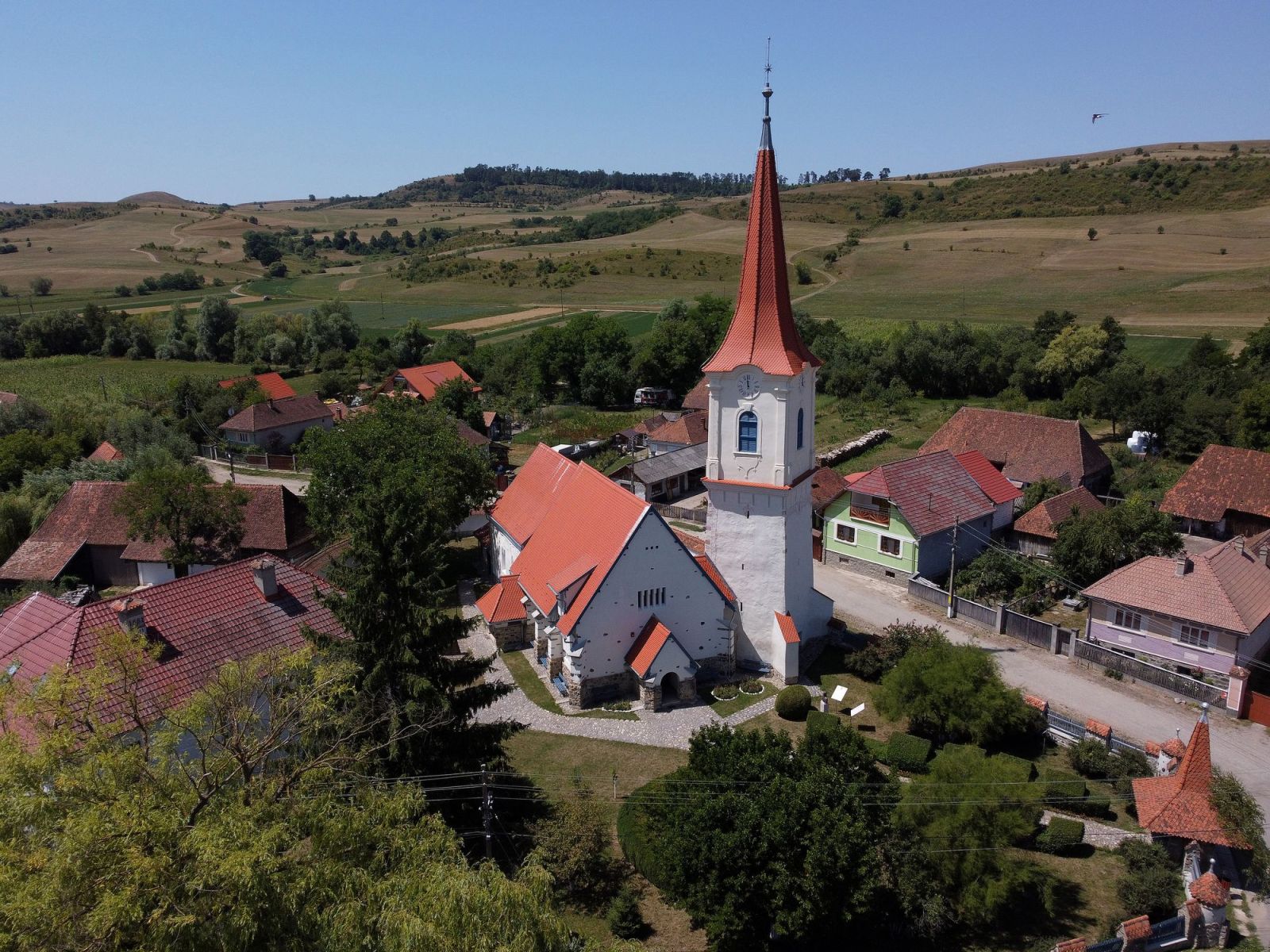
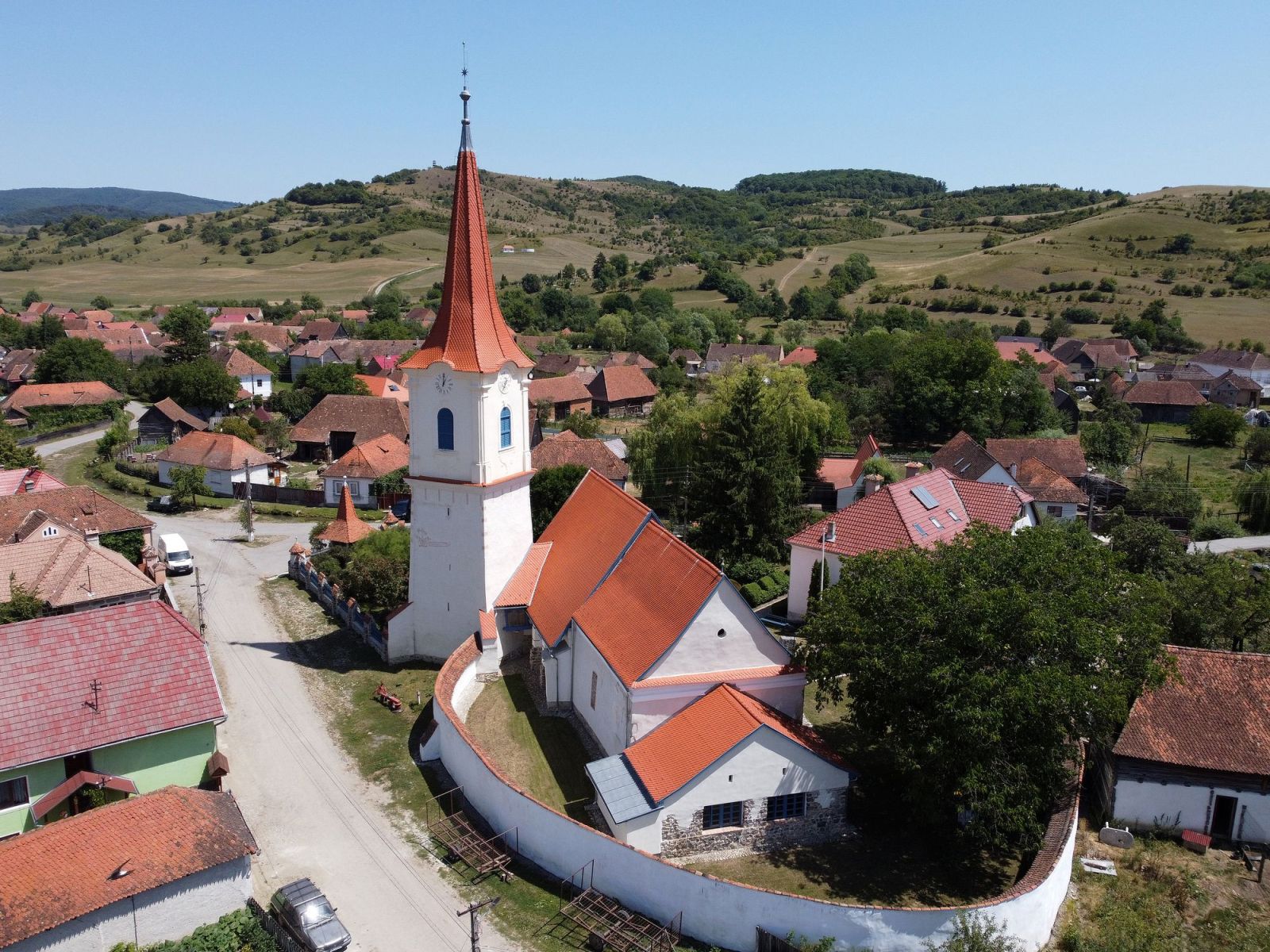
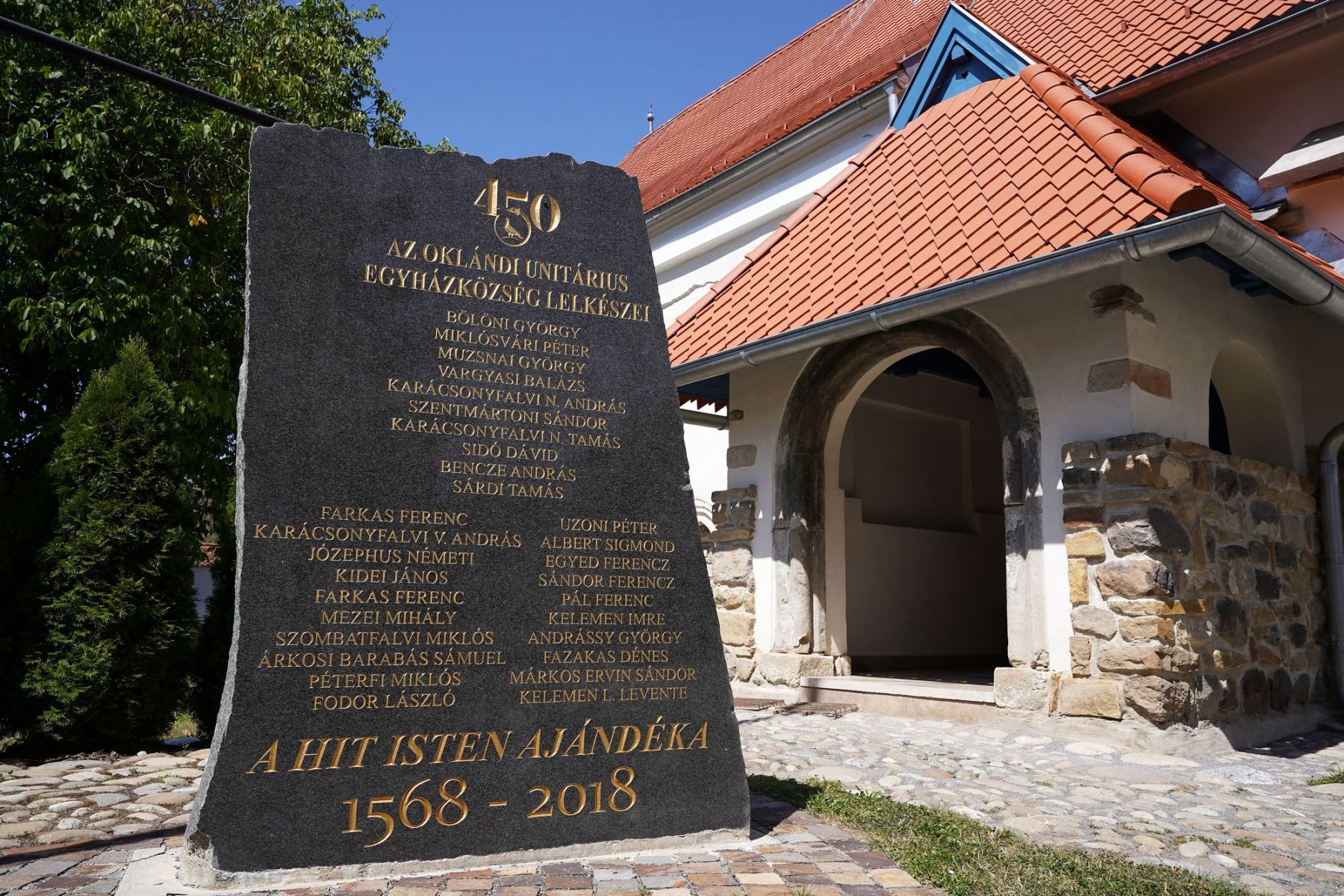
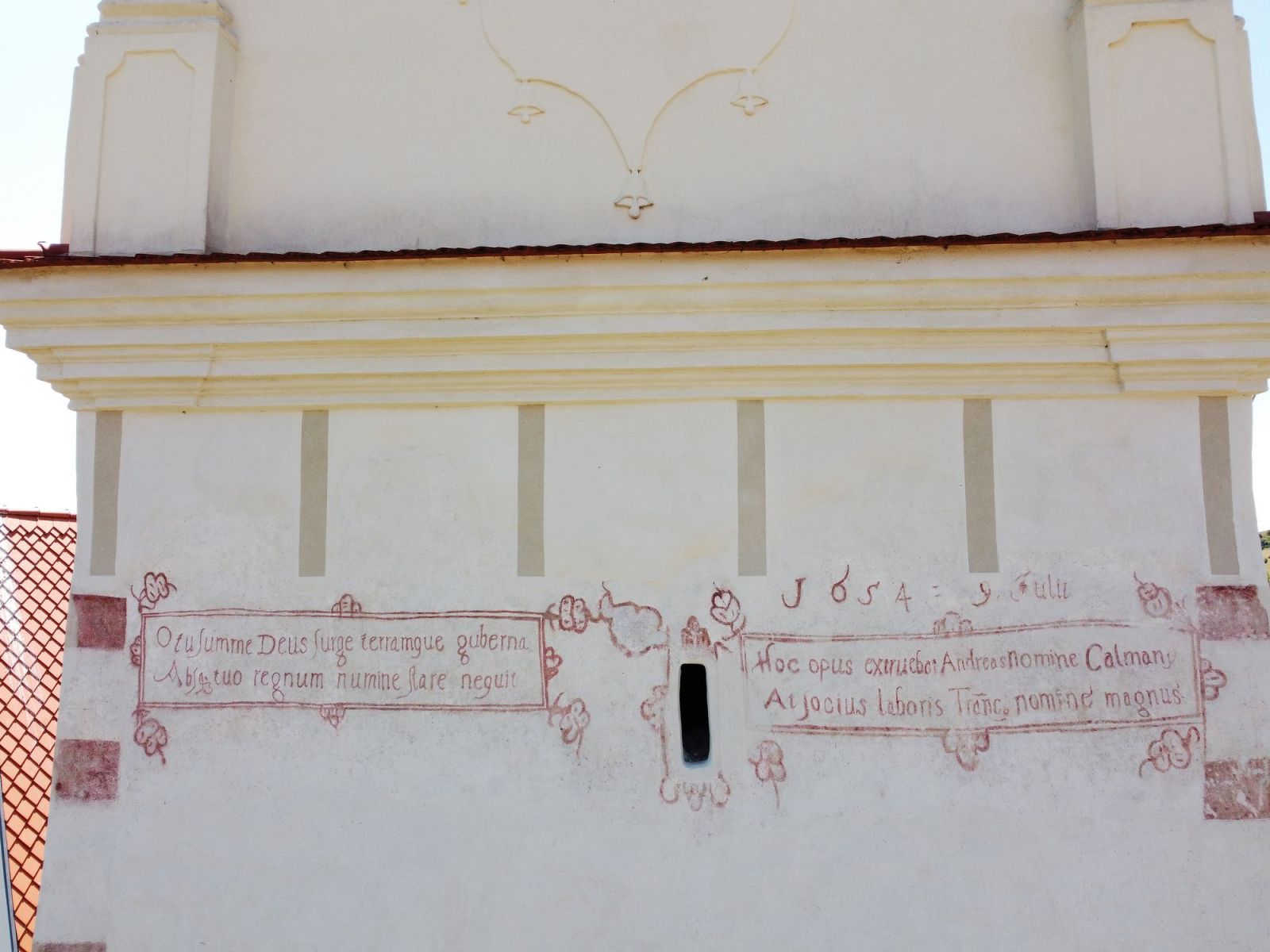
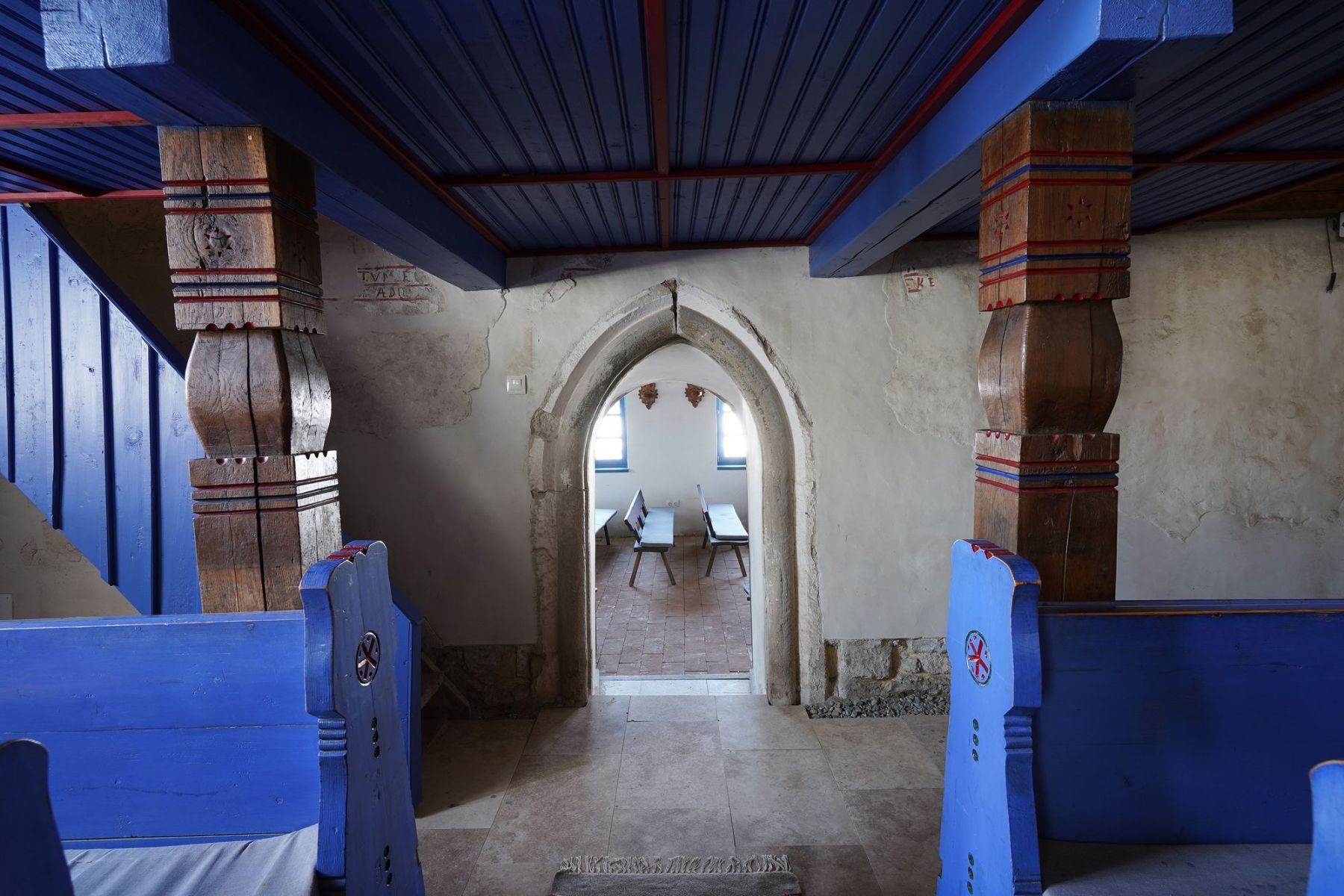
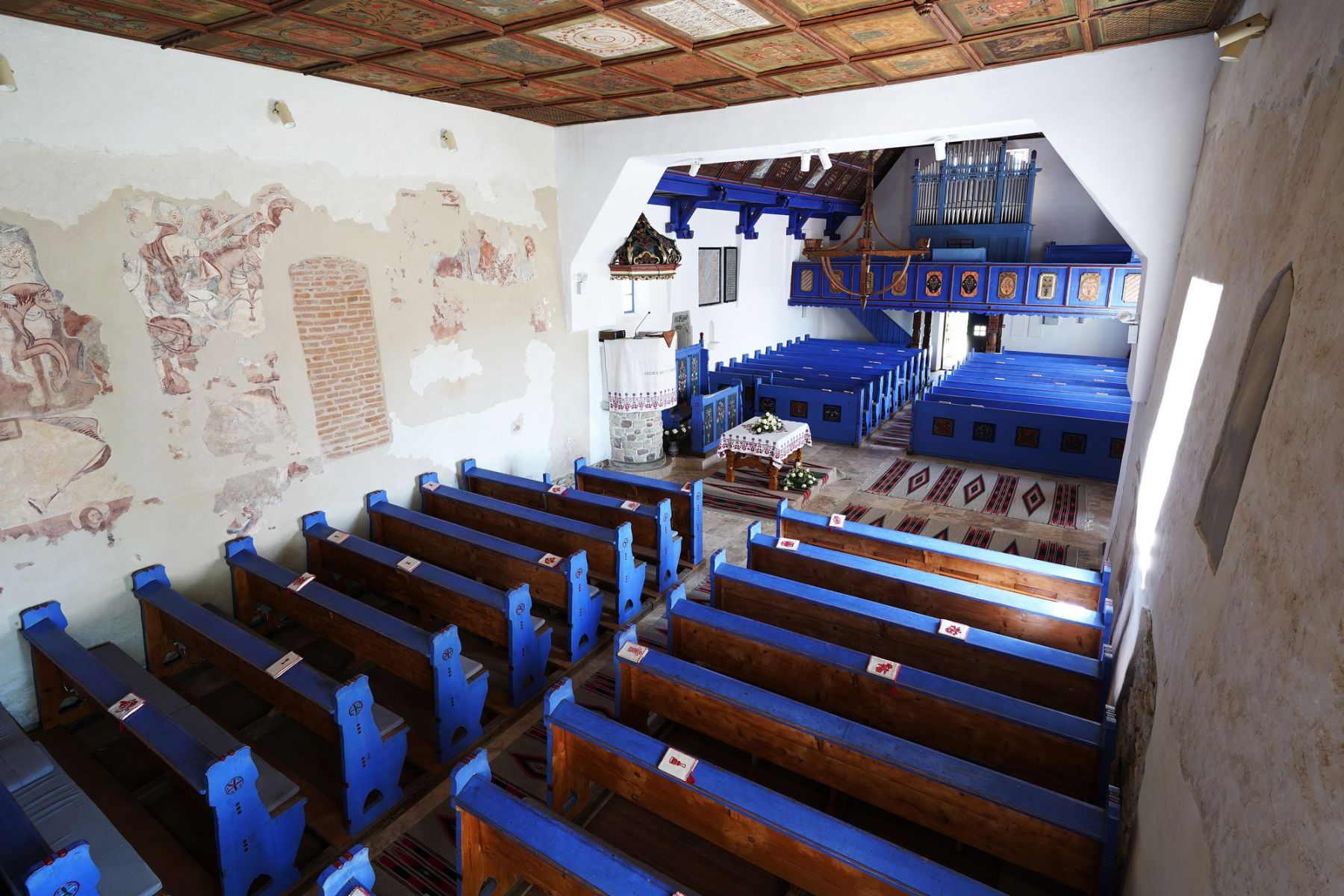
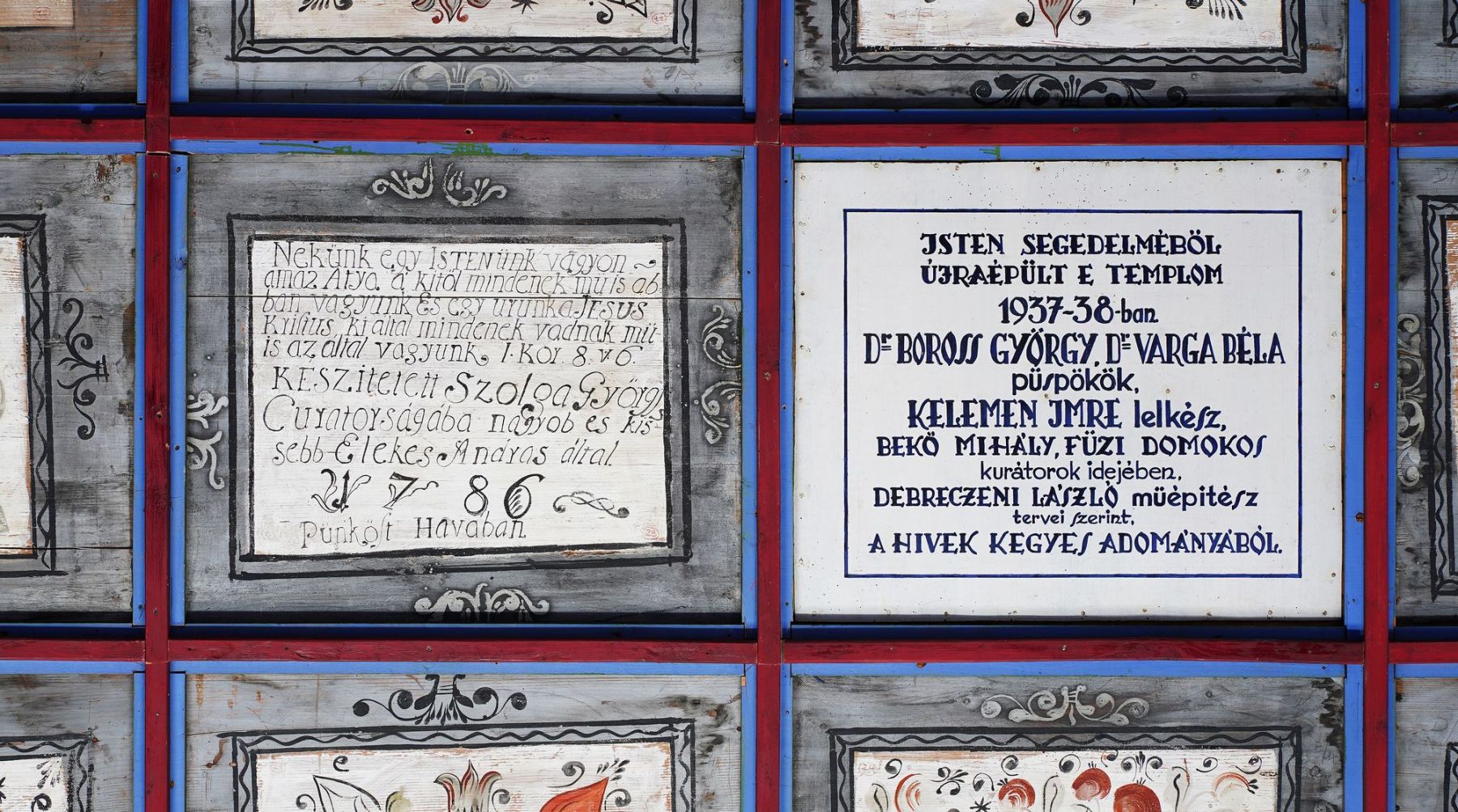
The Unitarian community of Oklánd embraced Unitarianism during the Reformation, and archival records preserve the name of a Unitarian minister serving the congregation as early as 1606. The oldest part of the church dates from the thirteenth century and retains important Romanesque features. Although the building underwent major reconstruction in 1937–1938, it still preserves valuable architectural and artistic elements from several historical periods.
Medieval Murals
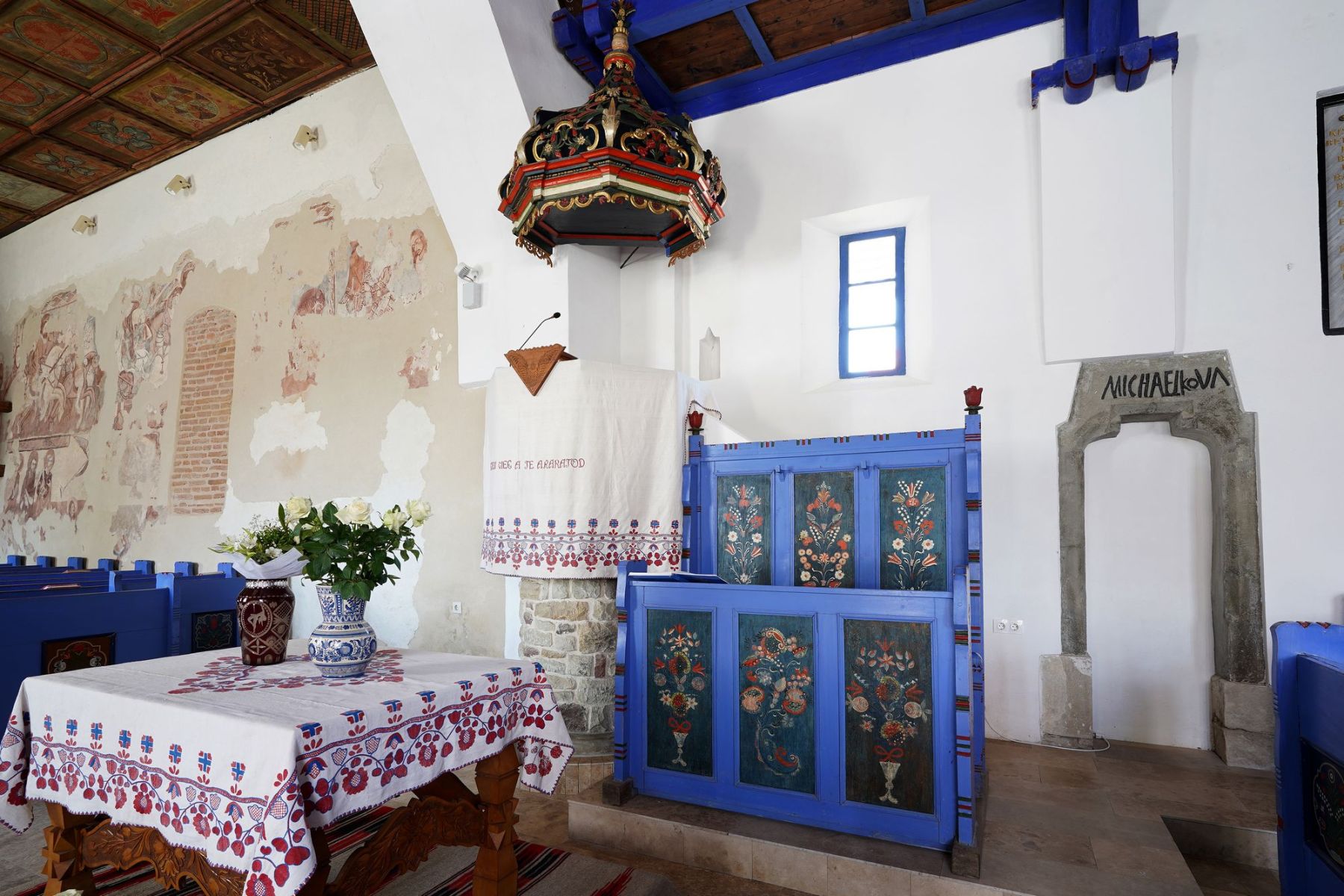
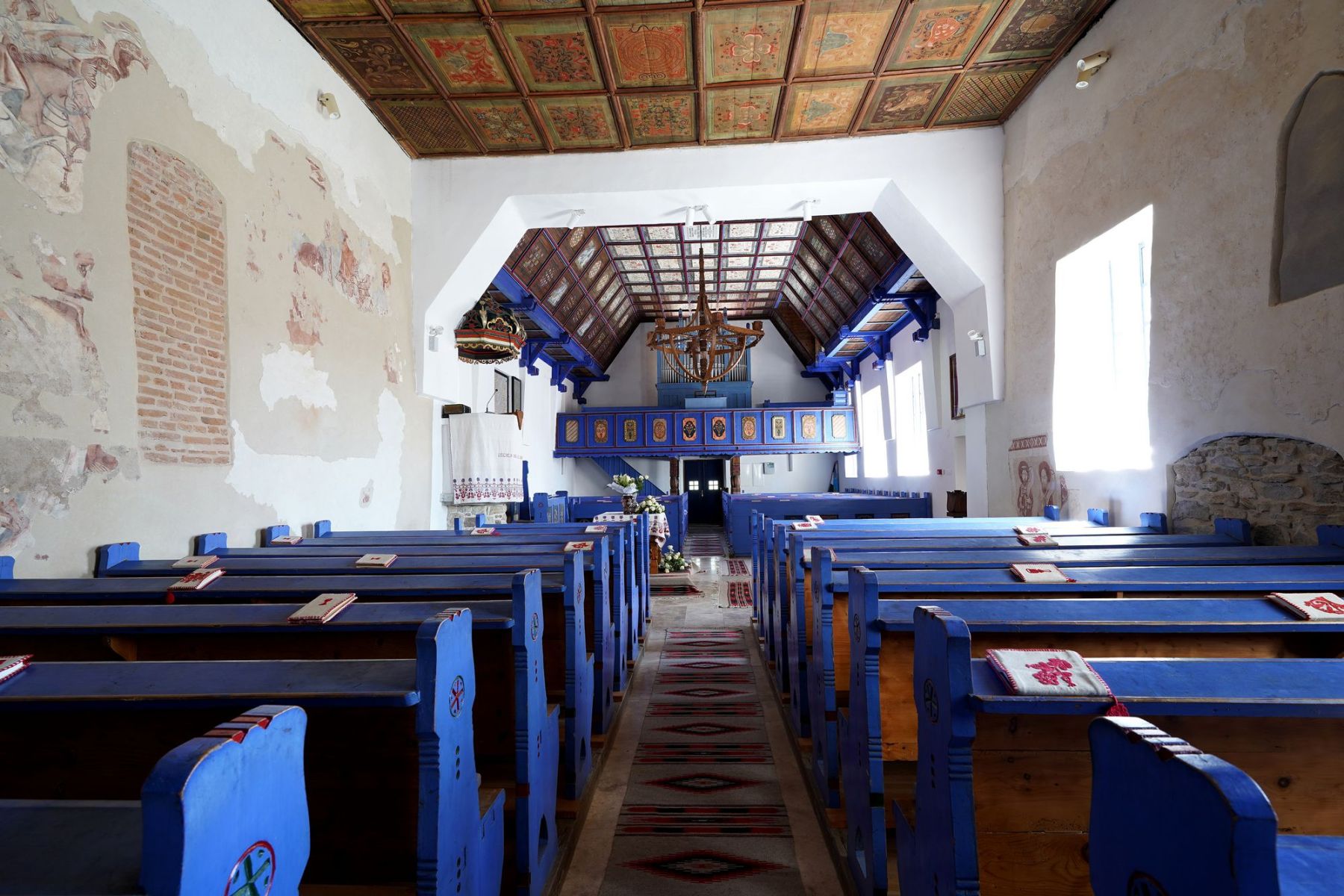
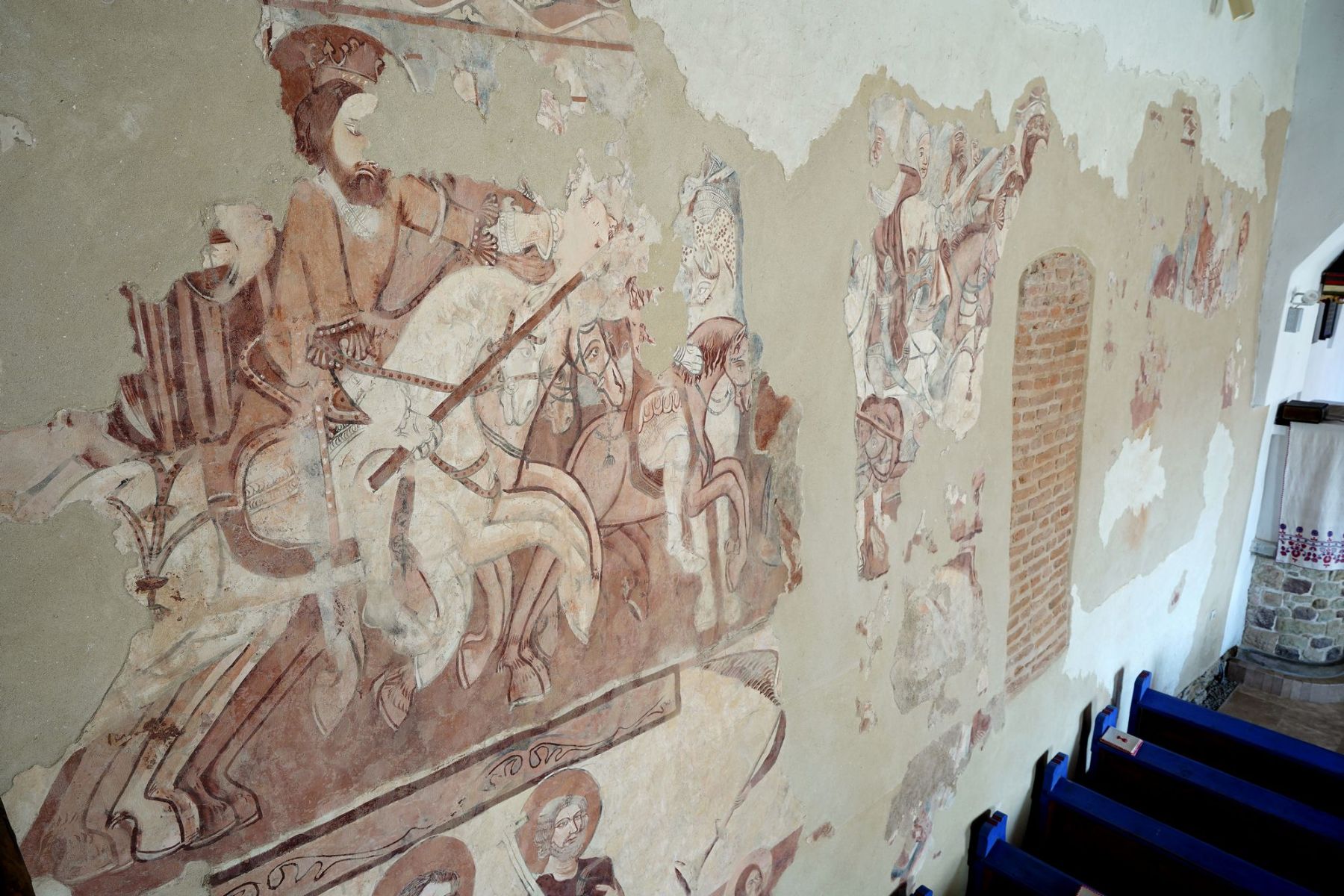
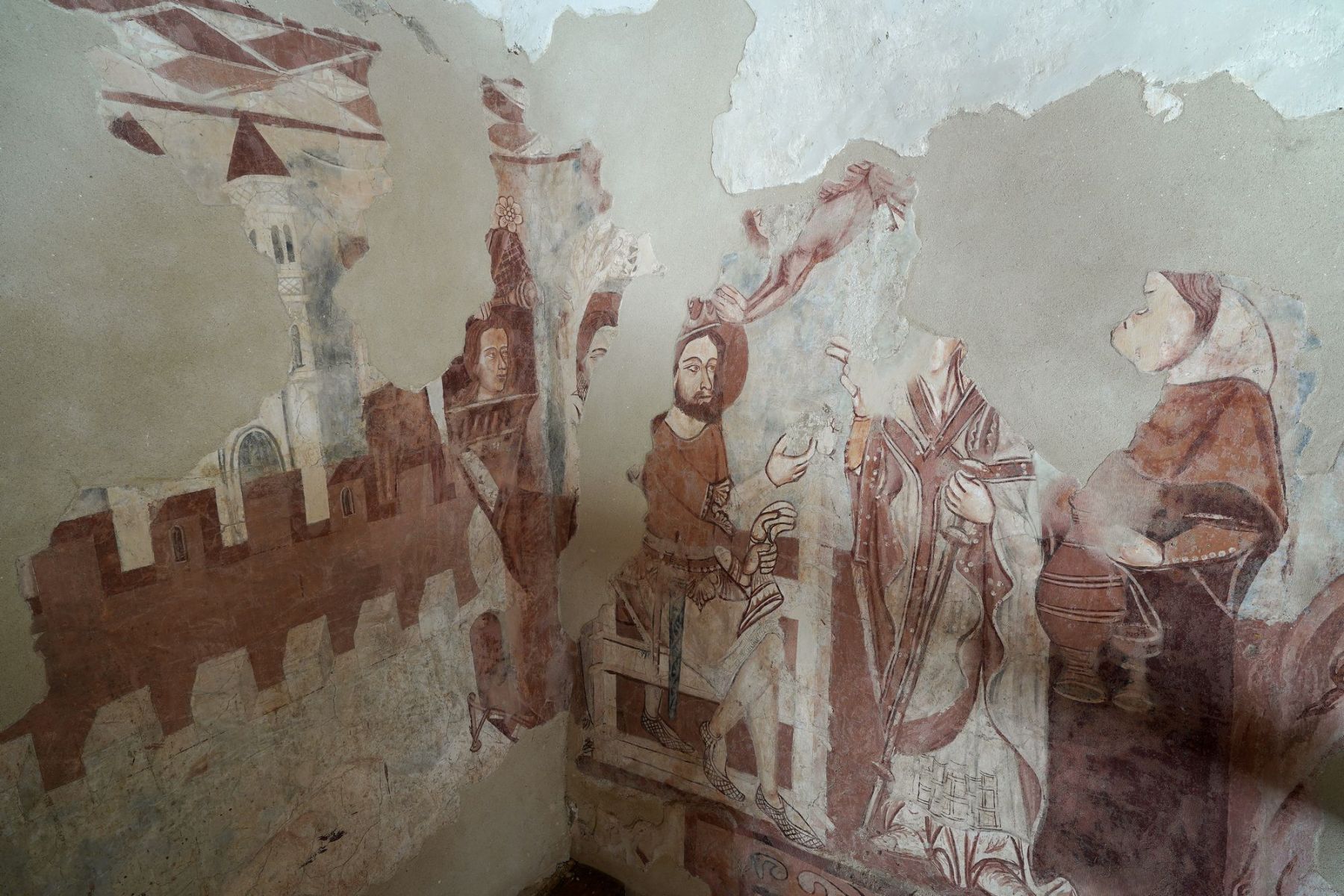
Among the church’s most significant treasures are the surviving fragments of medieval wall paintings. Frescoes can be seen on the southern, western, and northern walls of the nave. The northern wall preserves scenes from the Legend of Saint Ladislaus, while beneath them survive fragments of the Last Judgment and depictions of the apostles. On the southern wall, traces of figures identified as Saint Peter and Saint Paul remain visible, and a damaged fresco portraying Christ displaying His wounds survives on the exterior southern wall. Together, these paintings testify to the rich visual culture of the medieval church and connect Oklánd to the broader tradition of mural painting in Transylvania.
The Painted Coffered Ceiling
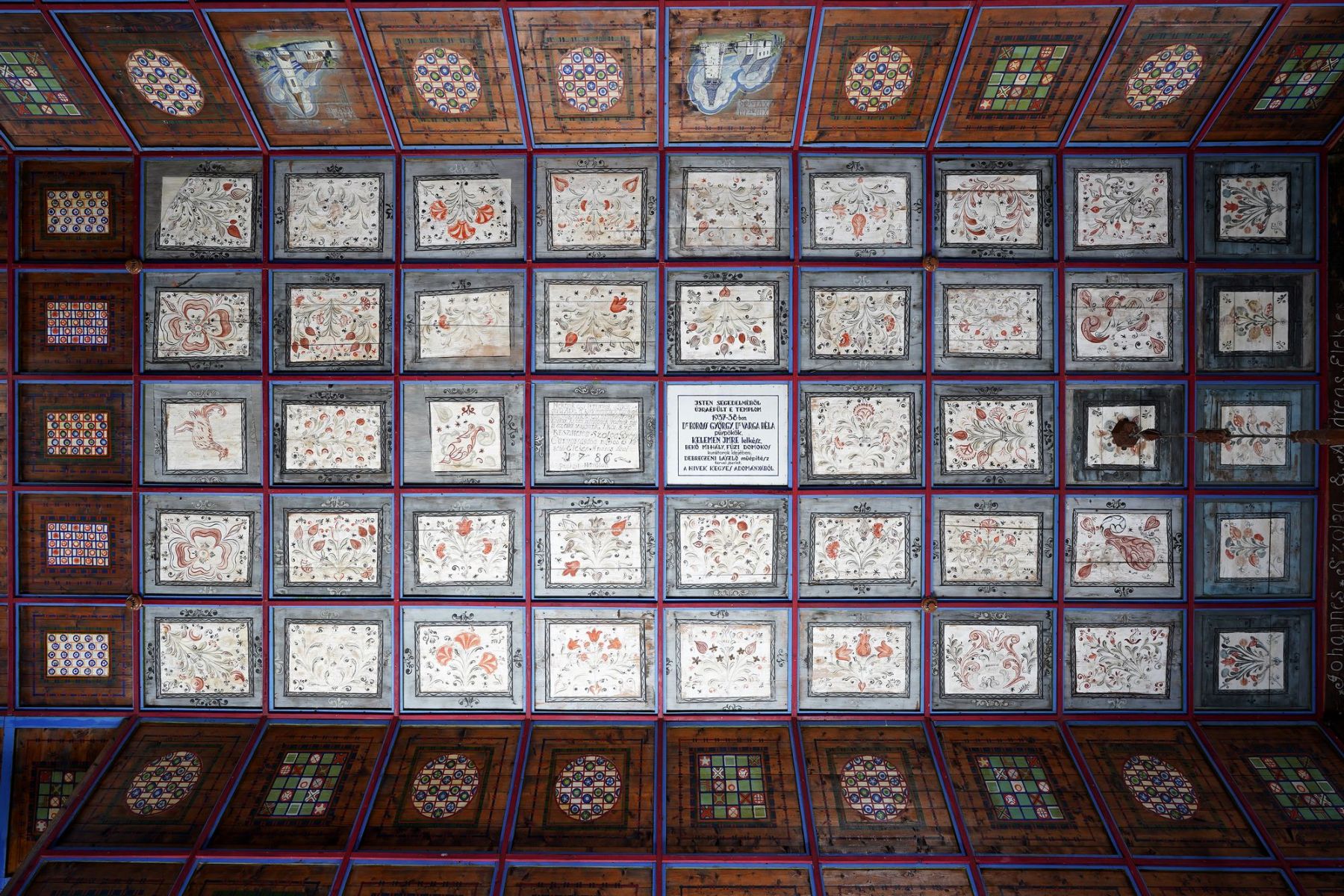
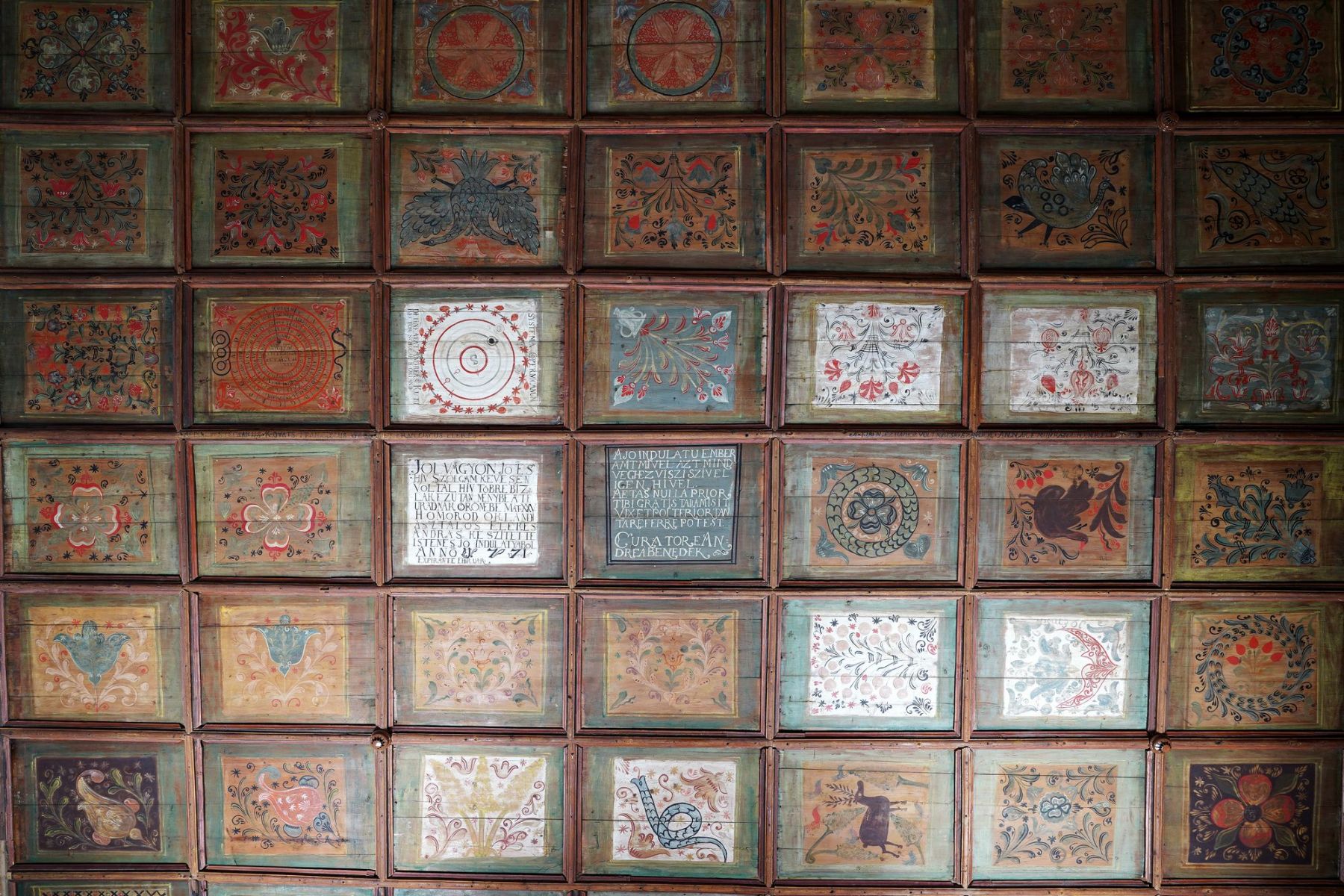
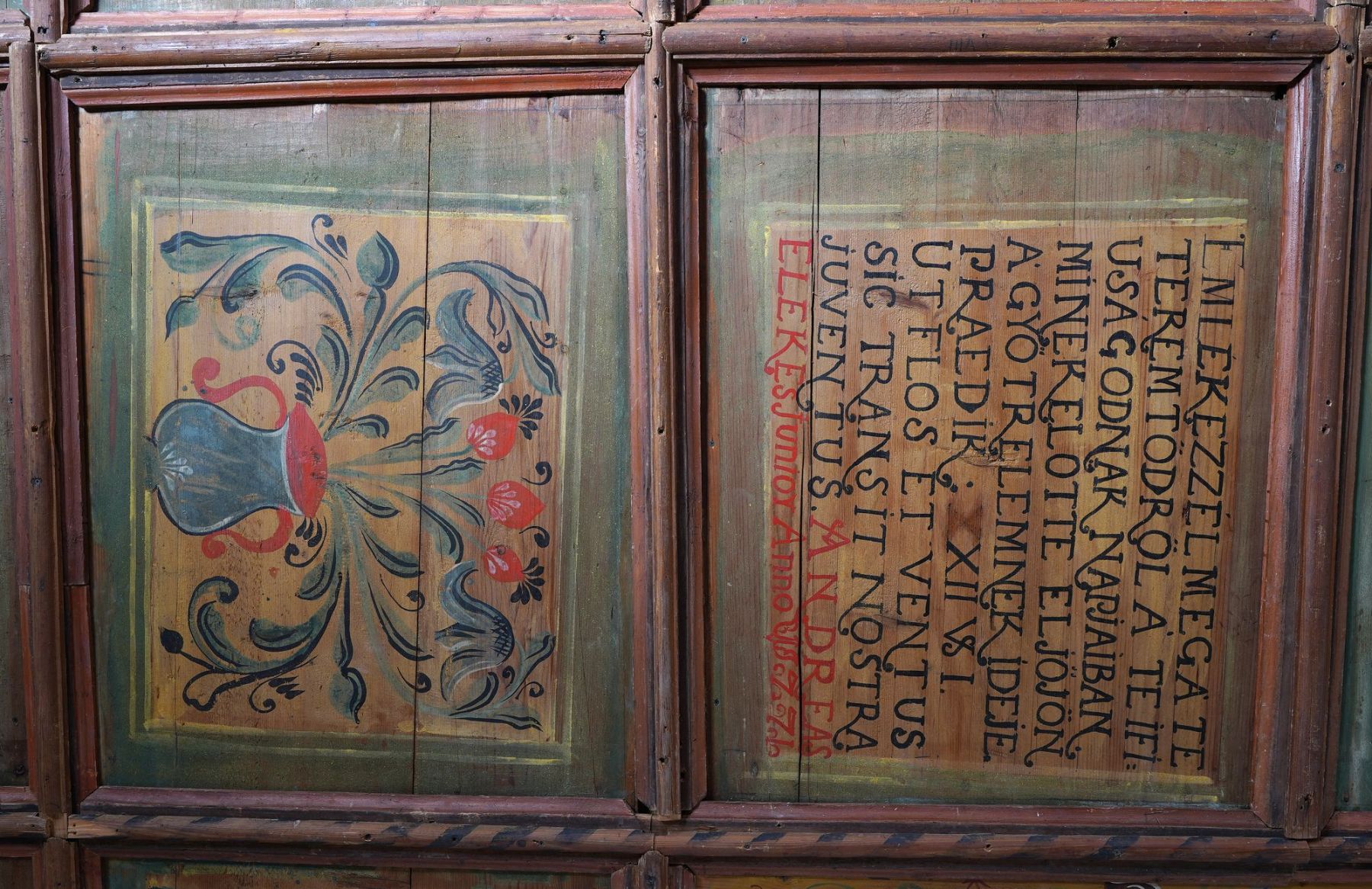
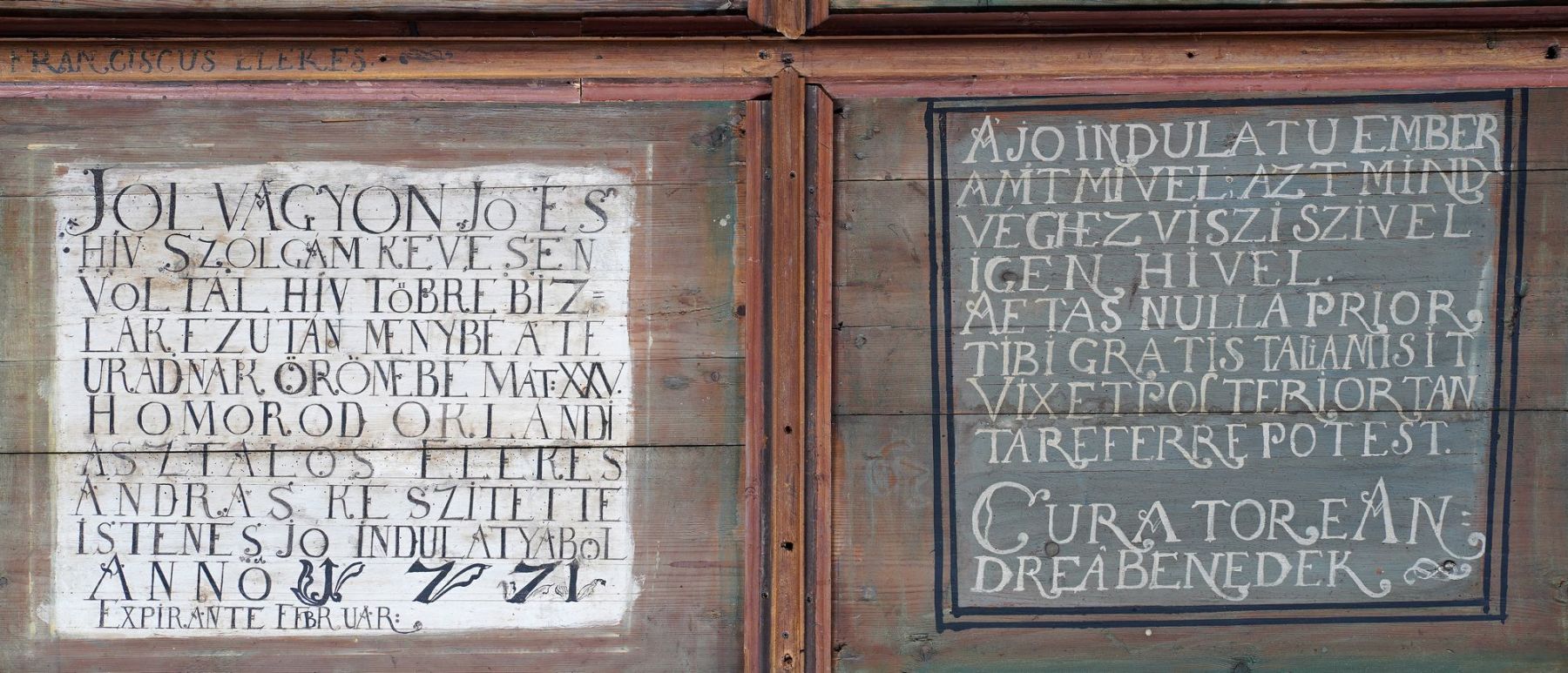
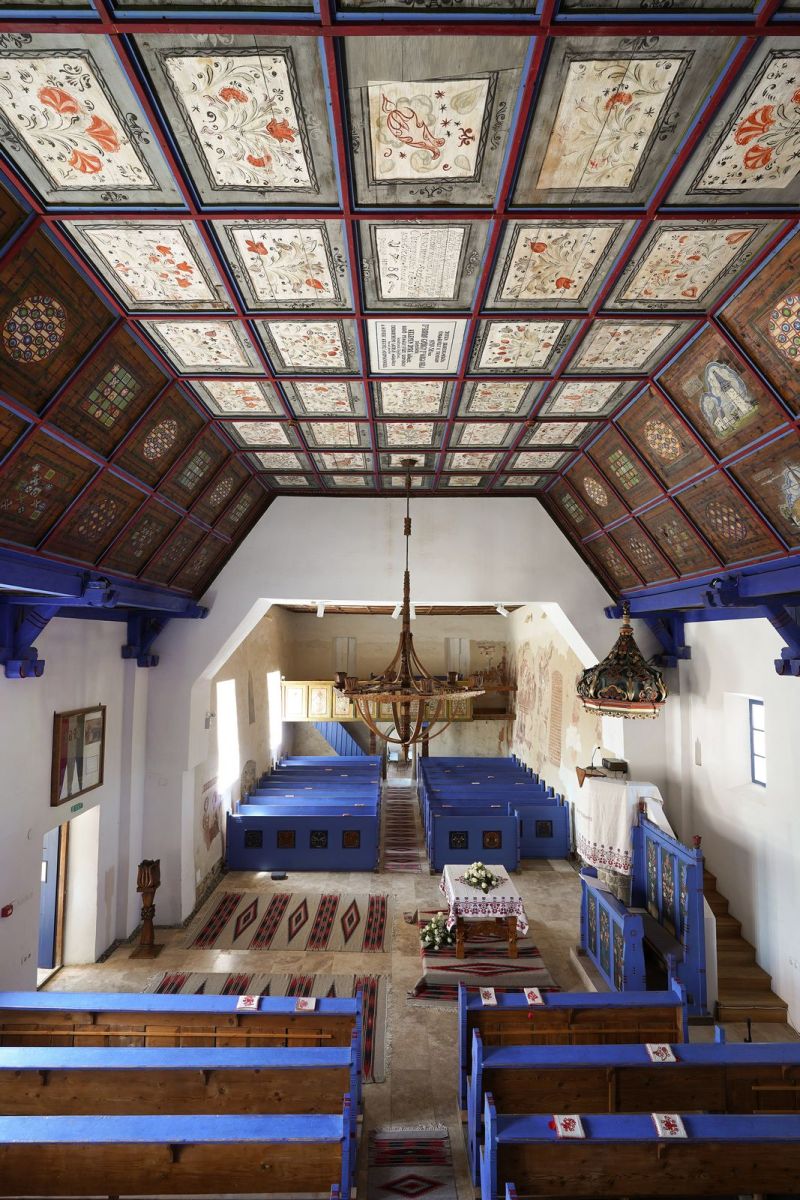
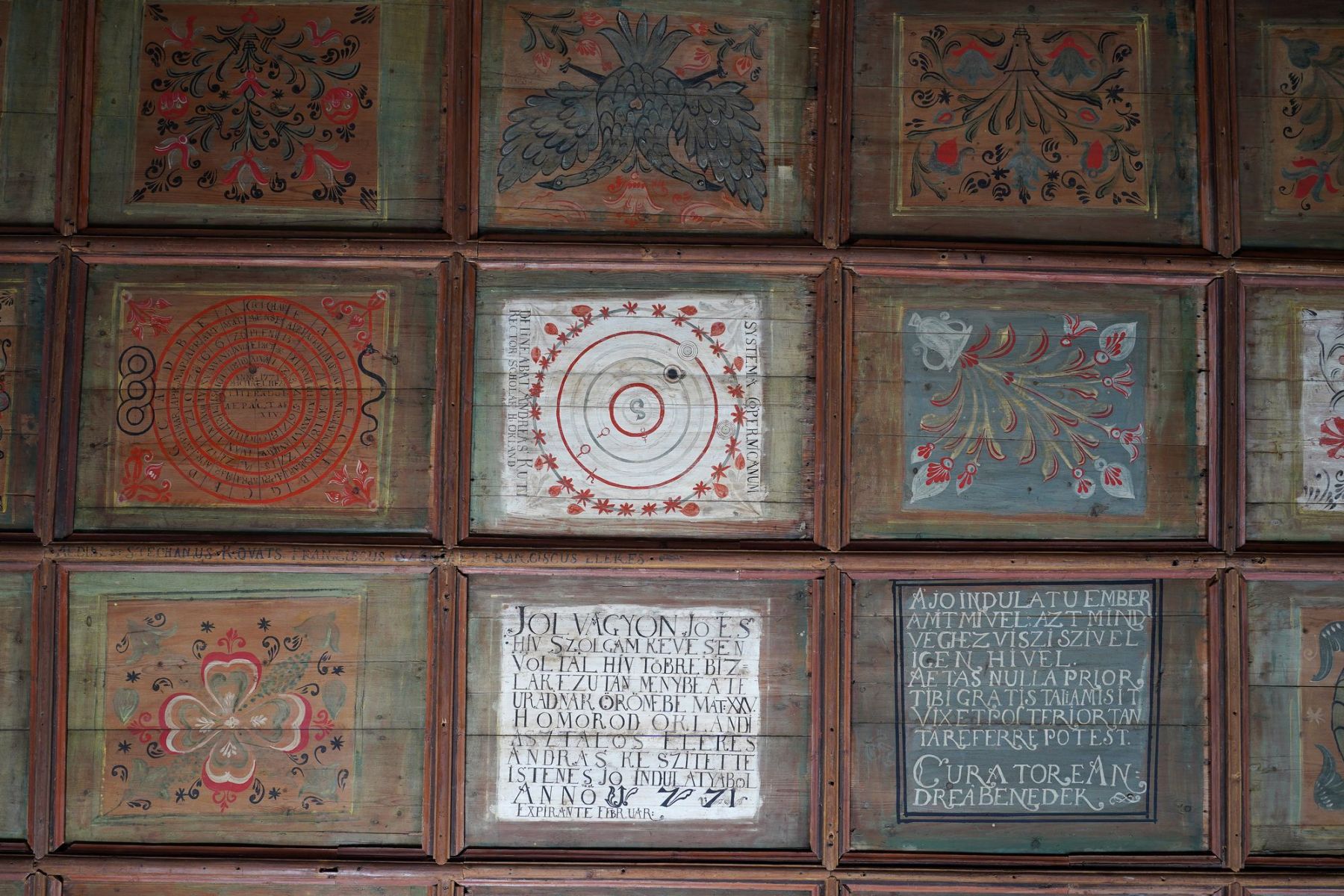
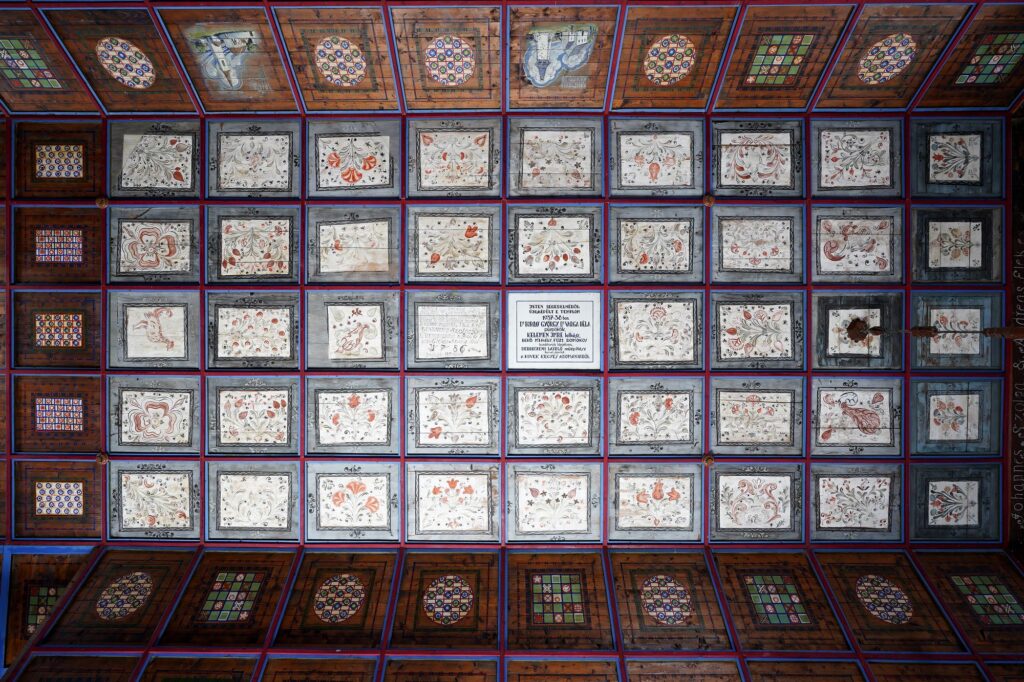
The church is equally renowned for its remarkable painted coffered ceiling, one of the finest examples of eighteenth-century painted church decoration in Transylvania. The ceiling of the nave was painted in 1771 by the local master András Elekes. Its coffers are richly decorated with floral motifs, animal representations, biblical quotations, and ornamental designs executed with exceptional craftsmanship.
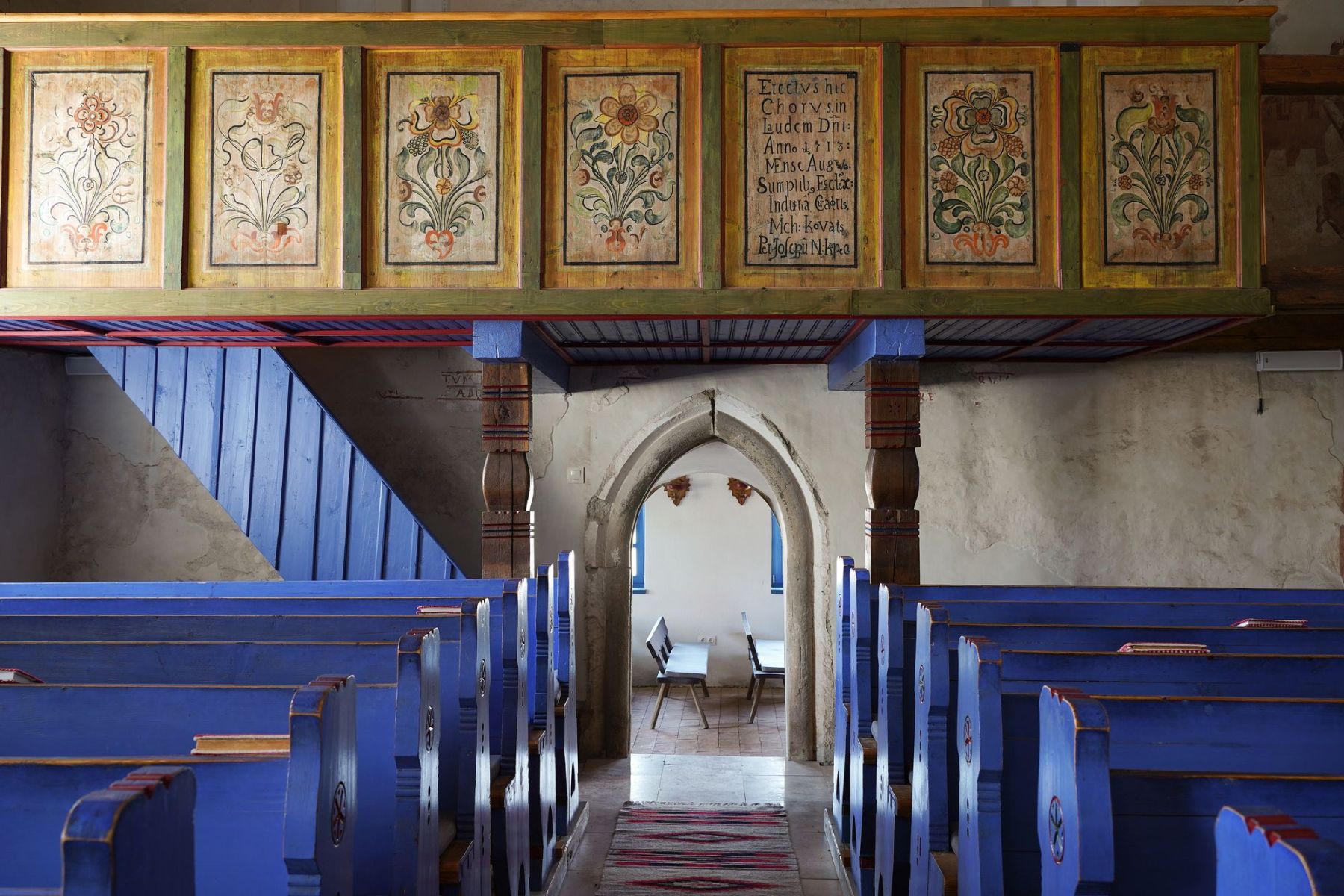
The oldest surviving painted wooden elements in the church date from 1713. Originally forming part of the western gallery, several of these panels were later incorporated into the minister’s bench during subsequent alterations to the interior. The central section of the sanctuary ceiling was created in 1786 by András Elekes the Elder and András Elekes the Younger, demonstrating the continuity of local artistic traditions across generations.
Astronomy, Calendar Science and Faith
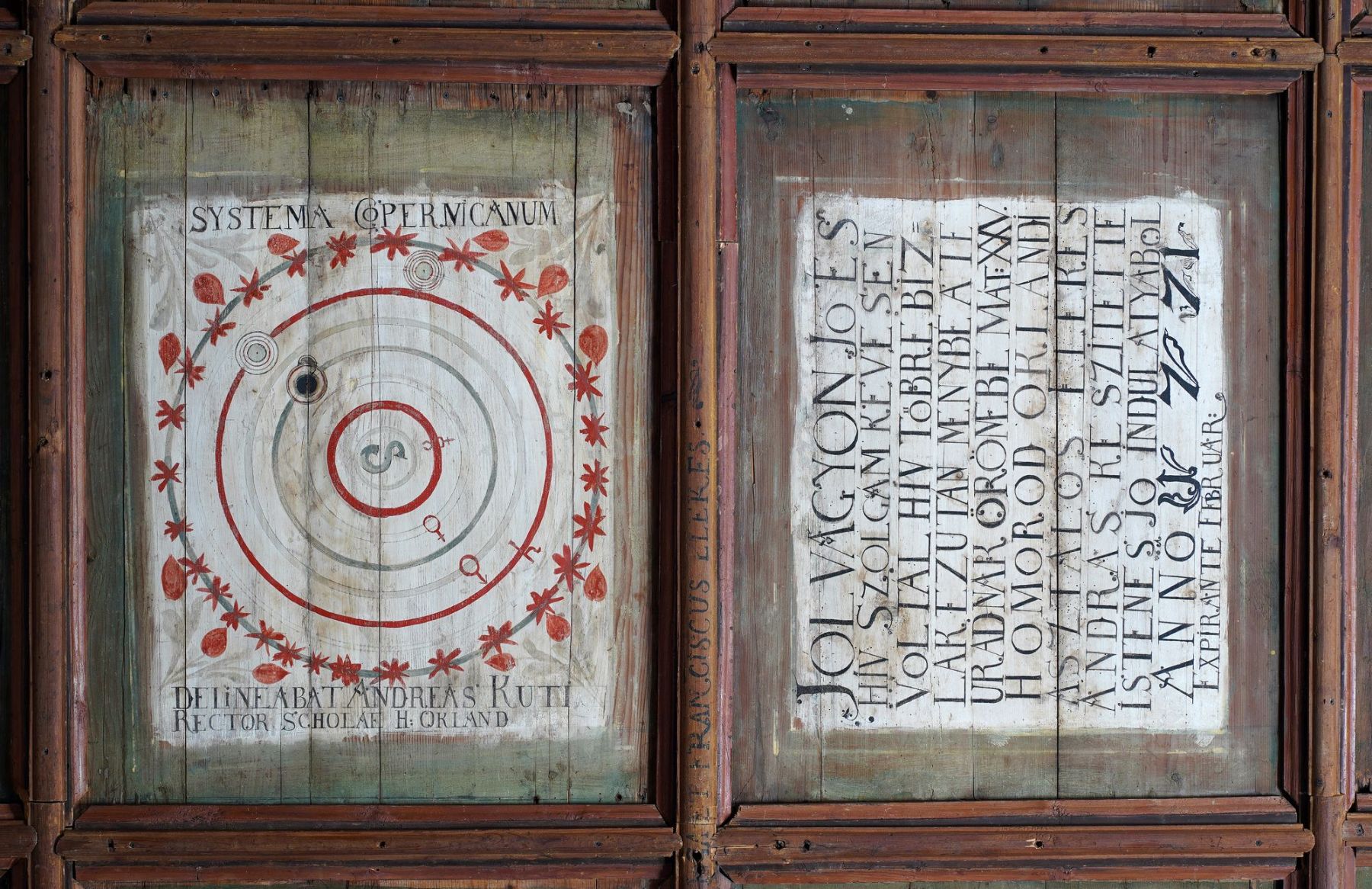
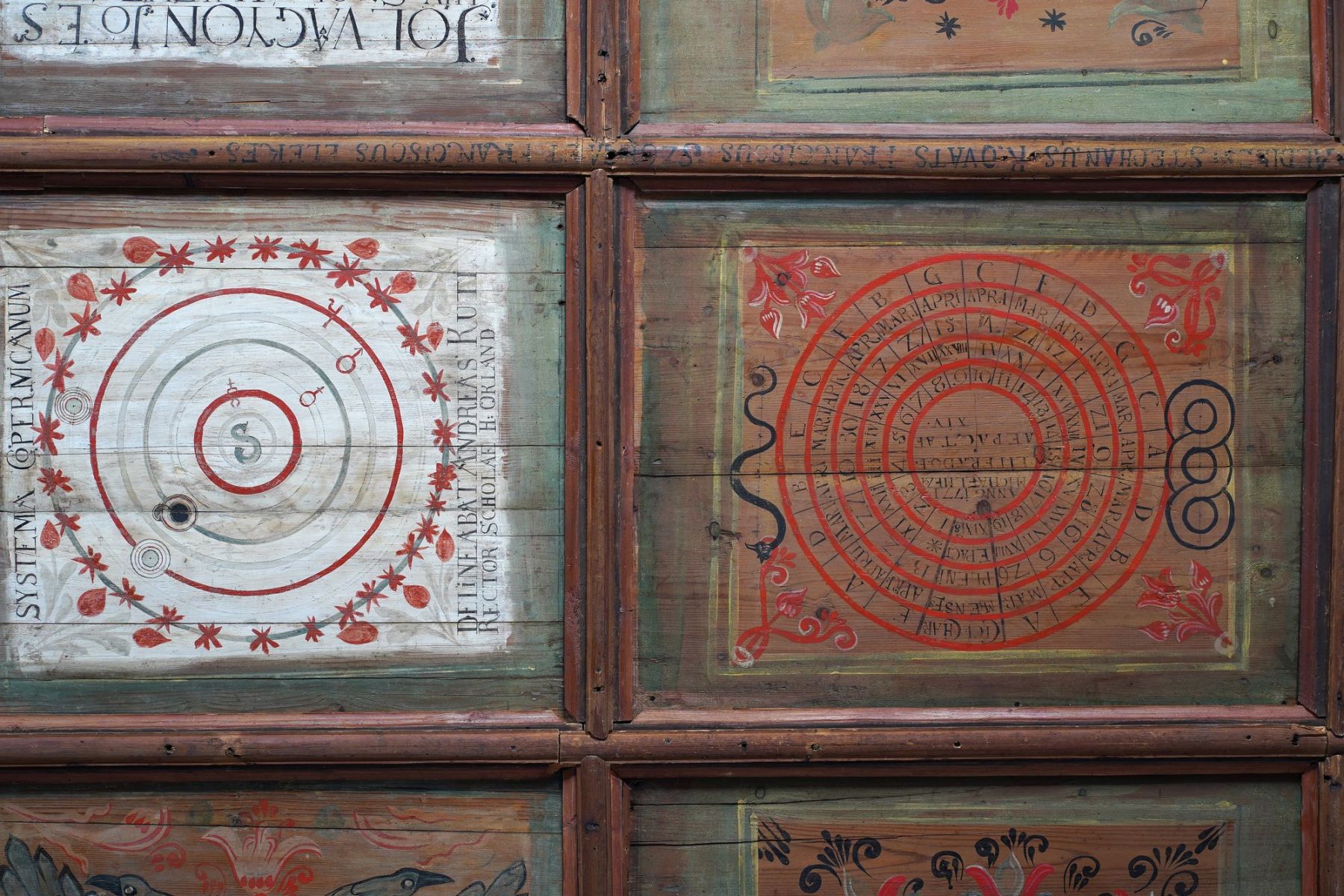
Several panels elevate the Oklánd ceiling far beyond a purely decorative work. One of its most remarkable features is a coffer depicting the Copernican heliocentric system, accompanied by a Latin inscription mentioning the local school rector András Kuti. Considered unique within the surviving corpus of Hungarian ecclesiastical painted ceilings, the panel reflects the reception of modern scientific thought in eighteenth-century rural Transylvania.
Beside it is another celebrated panel: a perpetual Easter calendar dating from 1771. Combining the Latin abbreviations of the months with Roman and Arabic numerals, it functioned as an ecclesiastical calendar and demonstrates the close relationship between religious life, education, and practical knowledge within the Unitarian community.
A Unique Artistic Ensemble
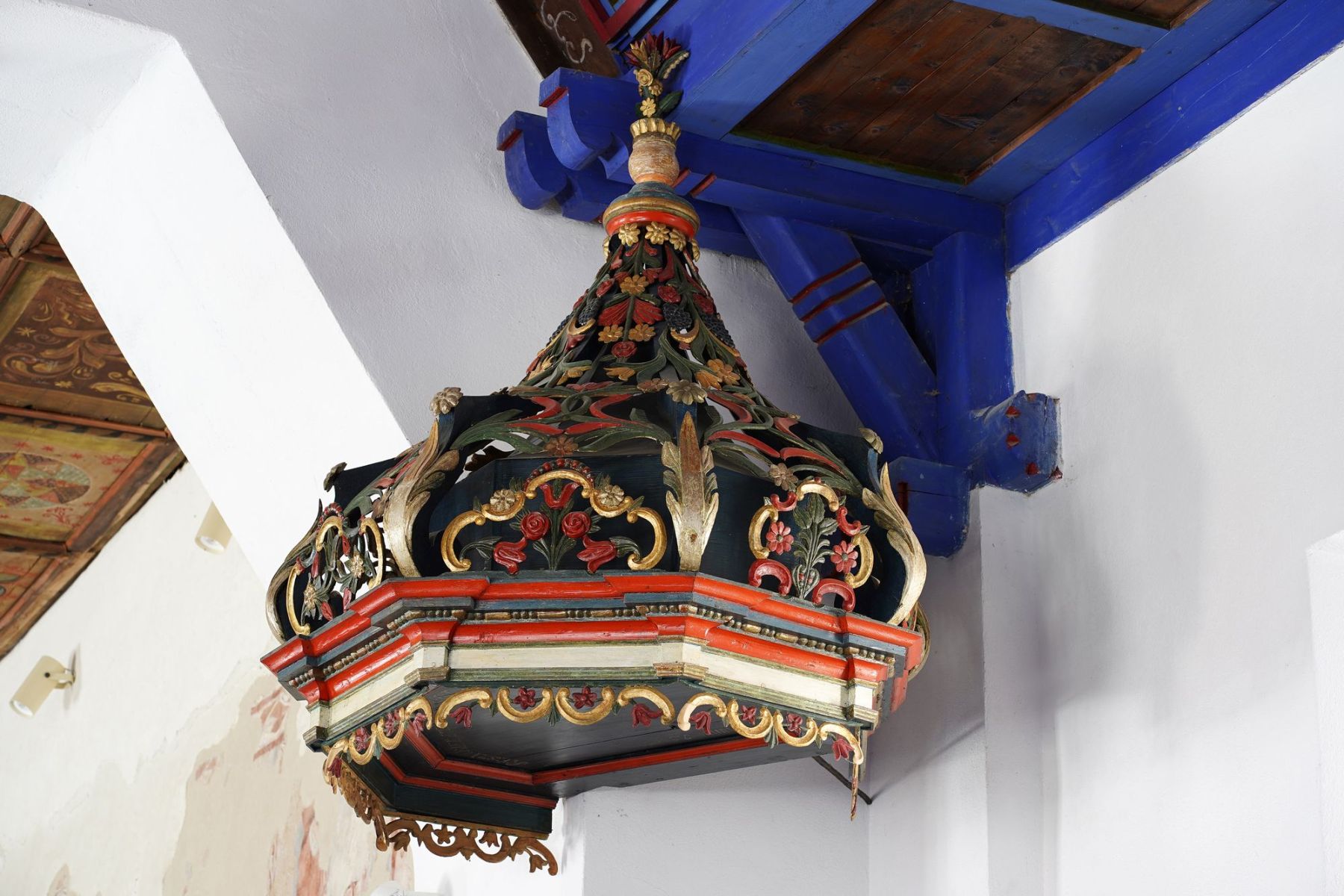
Few churches preserve such a rich combination of artistic traditions. Medieval fresco fragments, early eighteenth-century painted woodwork, the 1771 coffered ceiling, and the later sanctuary decoration together create an exceptional visual record spanning several centuries. The coexistence of medieval sacred imagery with rare scientific representations—most notably the heliocentric system and the perpetual Easter calendar—makes Oklánd one of the most distinctive artistic monuments of the Hungarian Unitarian Church and one of the most remarkable painted-ceiling churches in Transylvania.
Beyond the Church
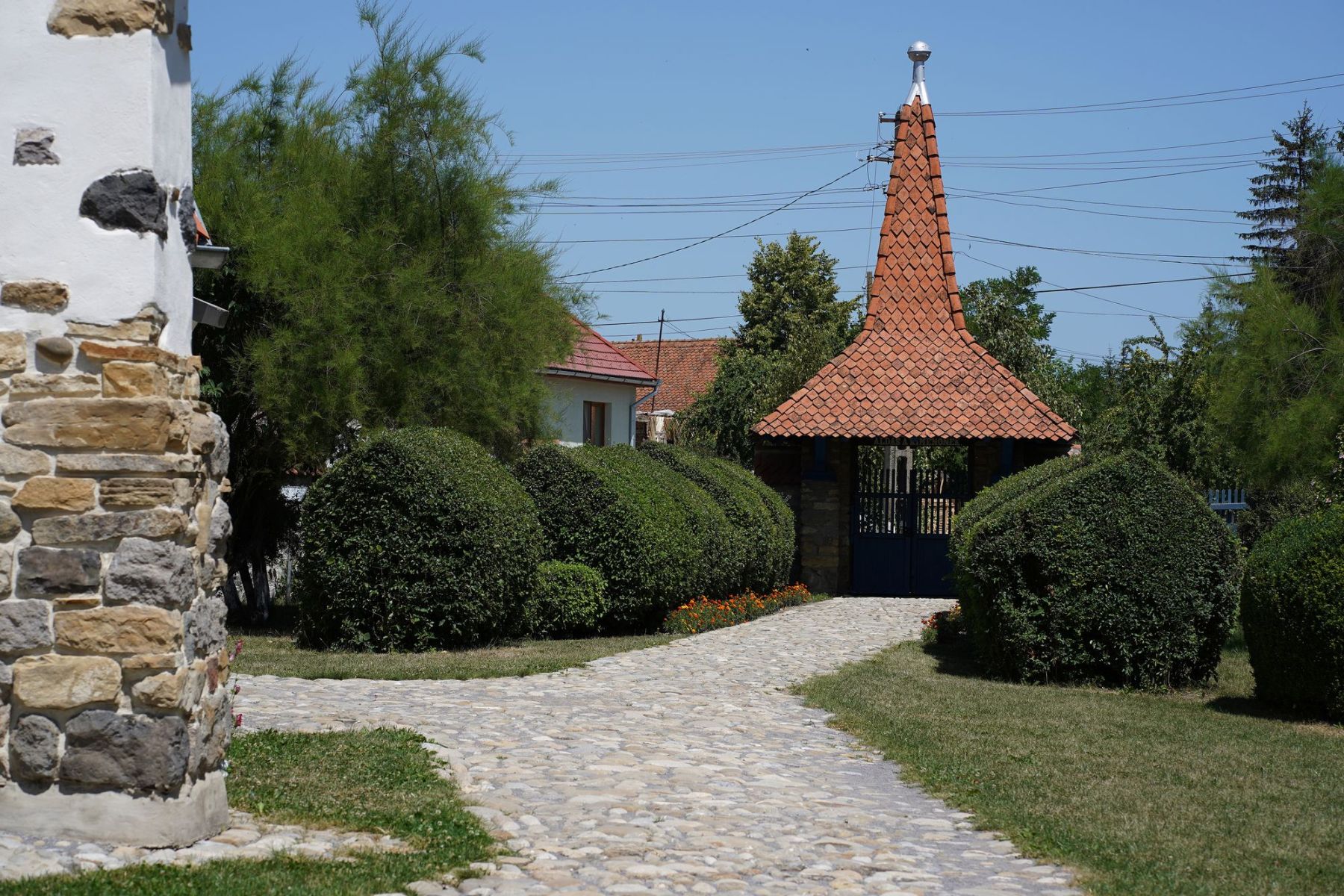
Although the church is best known for its murals and painted ceiling, visitors should also note the painted Székely gate standing before the Unitarian parsonage. Dating from 1809, it is widely regarded as the oldest surviving and continuously used Székely gate in Harghita County. Together with the church and parsonage, it forms an important part of Oklánd’s historic cultural landscape.