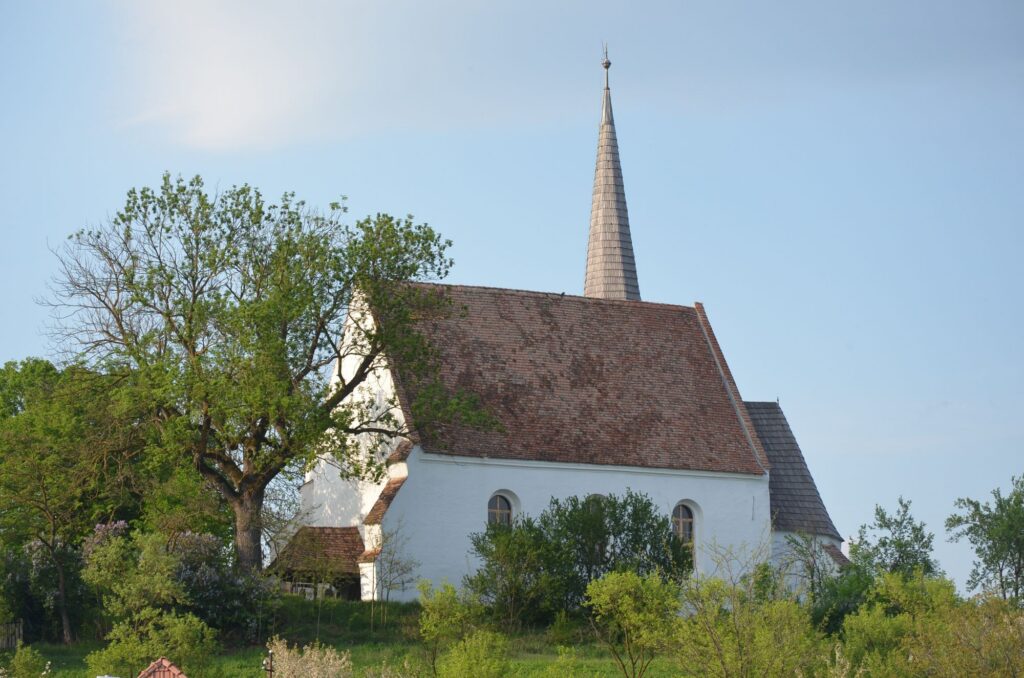
A Church on Ancient Foundations
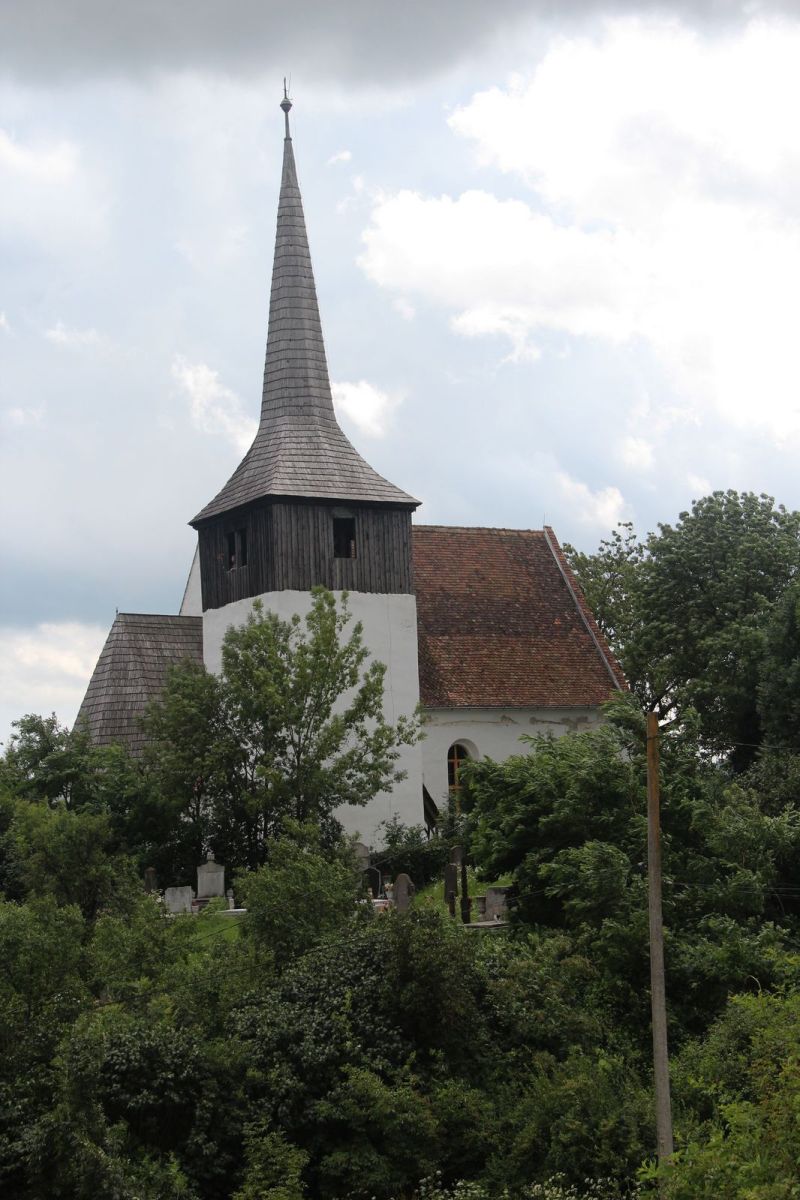
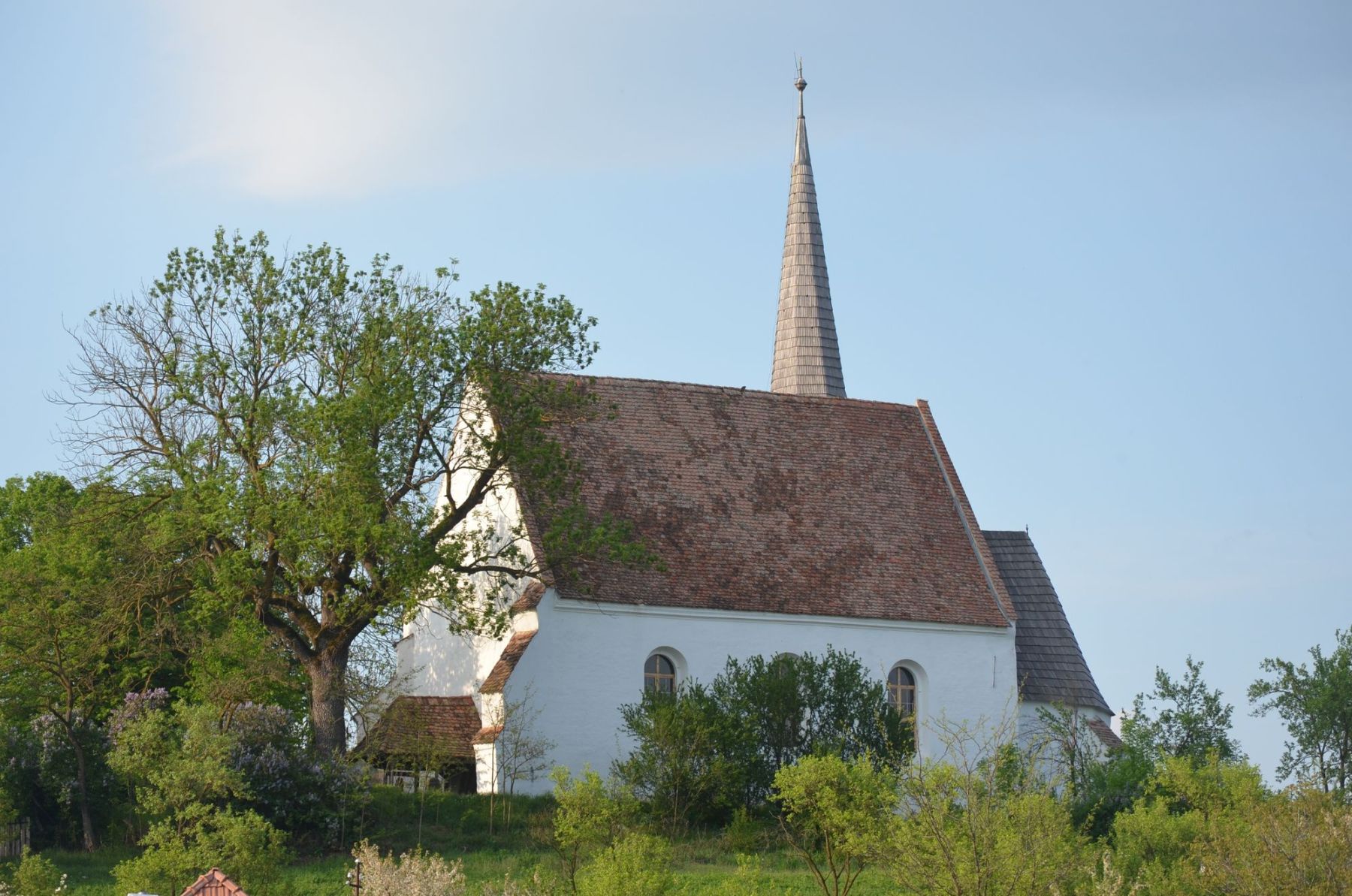
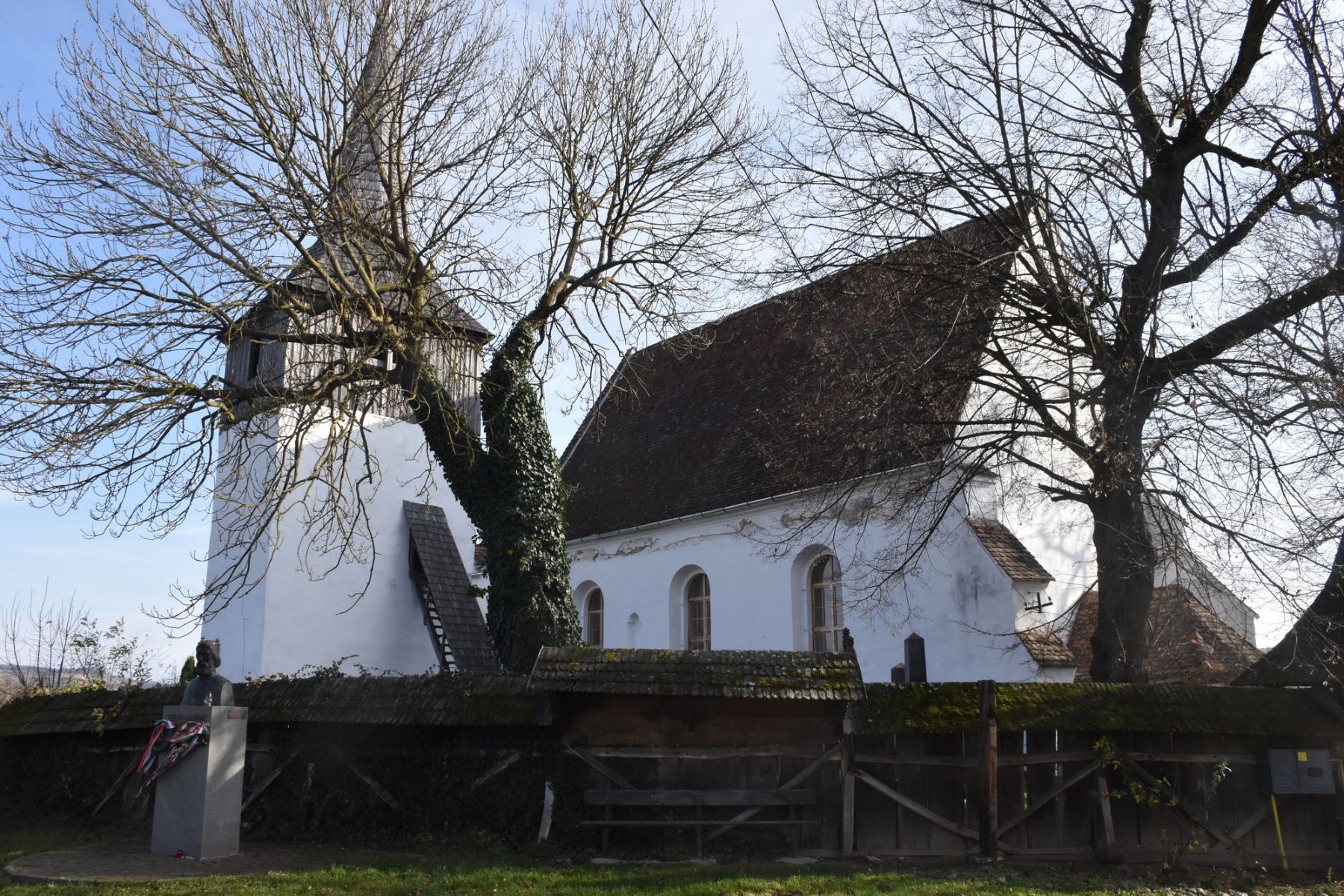
The Unitarian church of Nyárádszentlászló stands on a hill overlooking the Nyárád Valley in Mureș County. Dedicated to Saint Ladislaus, the church occupies a site whose history reaches back to the early thirteenth century. Archaeological investigations carried out before the most recent restoration revealed evidence of an ambitious medieval building programme, including the remains of an earlier church dating from the late twelfth or early thirteenth century.
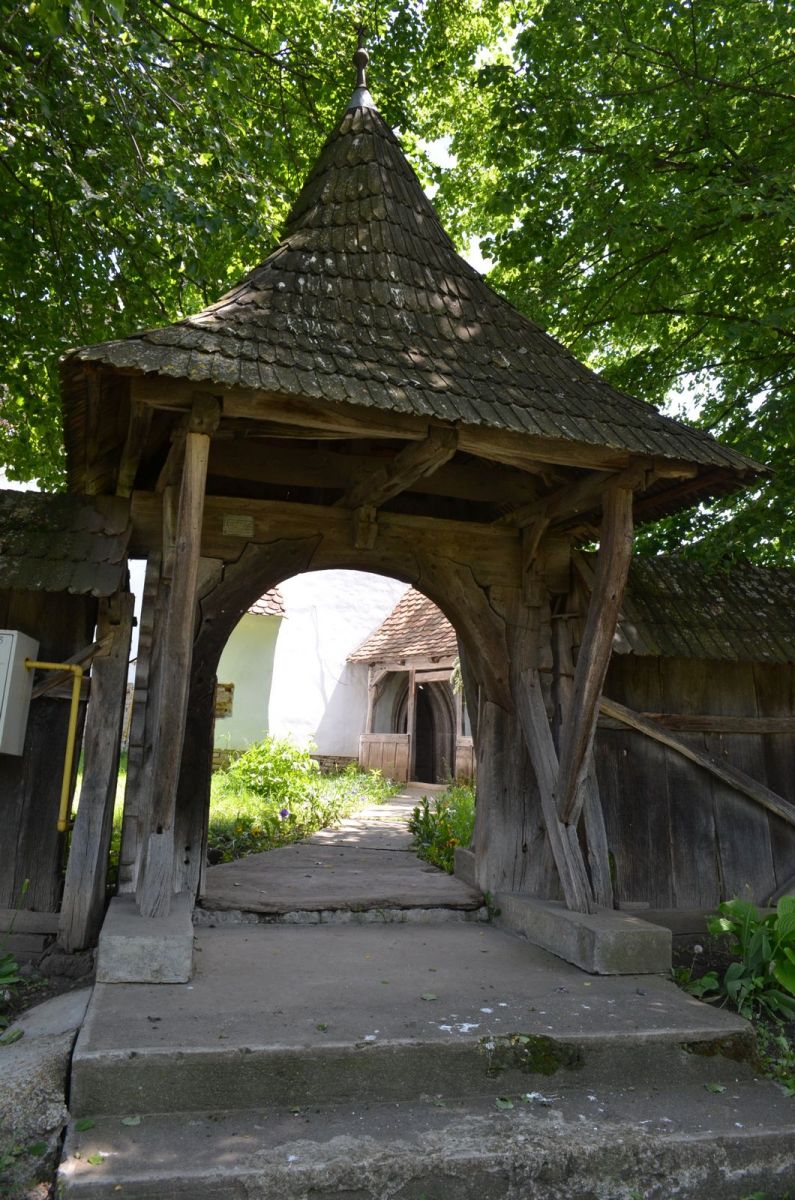
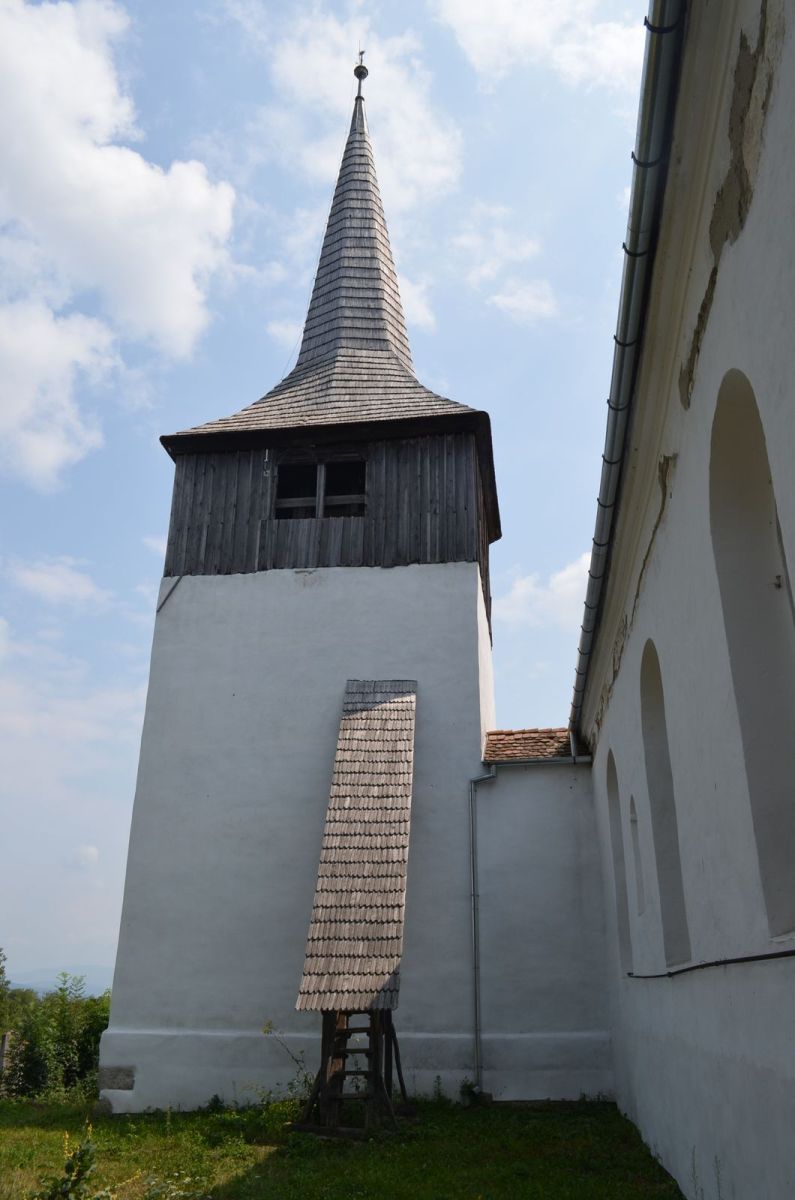
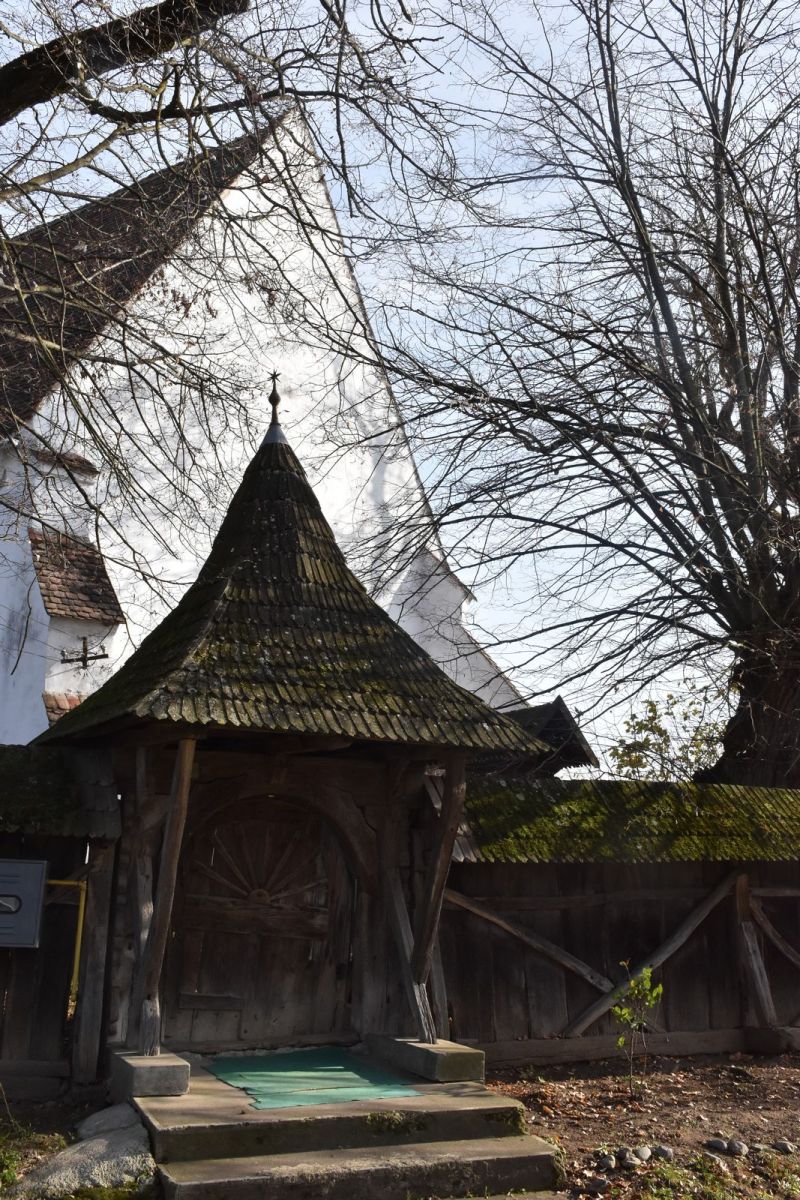
The present church combines Romanesque and Gothic architectural elements. Its rectangular nave is joined to a polygonal sanctuary, while a tower and sacristy complete the ensemble. Surrounded by a historic enclosure wall and approached through a gate tower, the church remains one of the most remarkable medieval monuments of the Nyárád region.
Medieval Frescoes
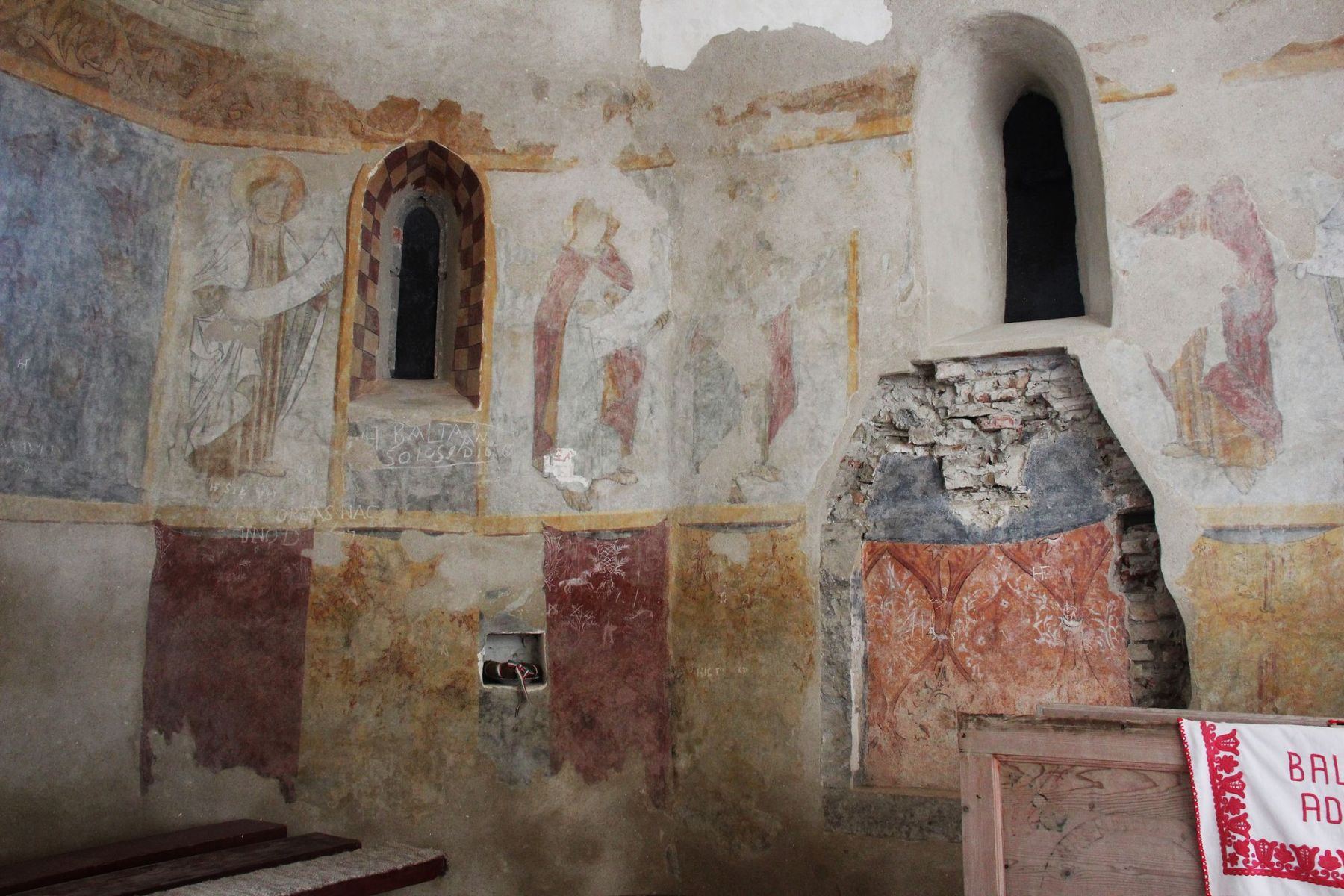
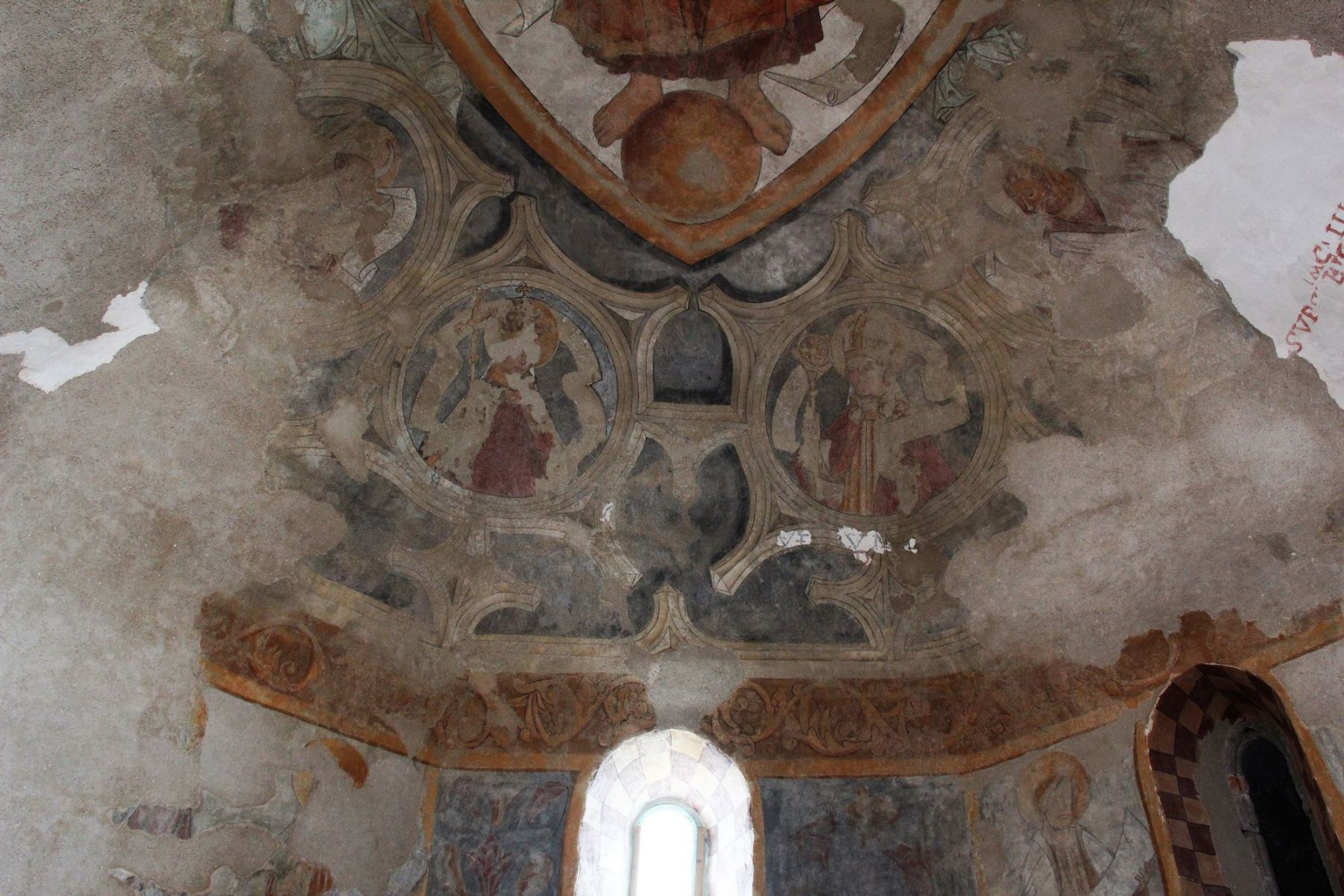
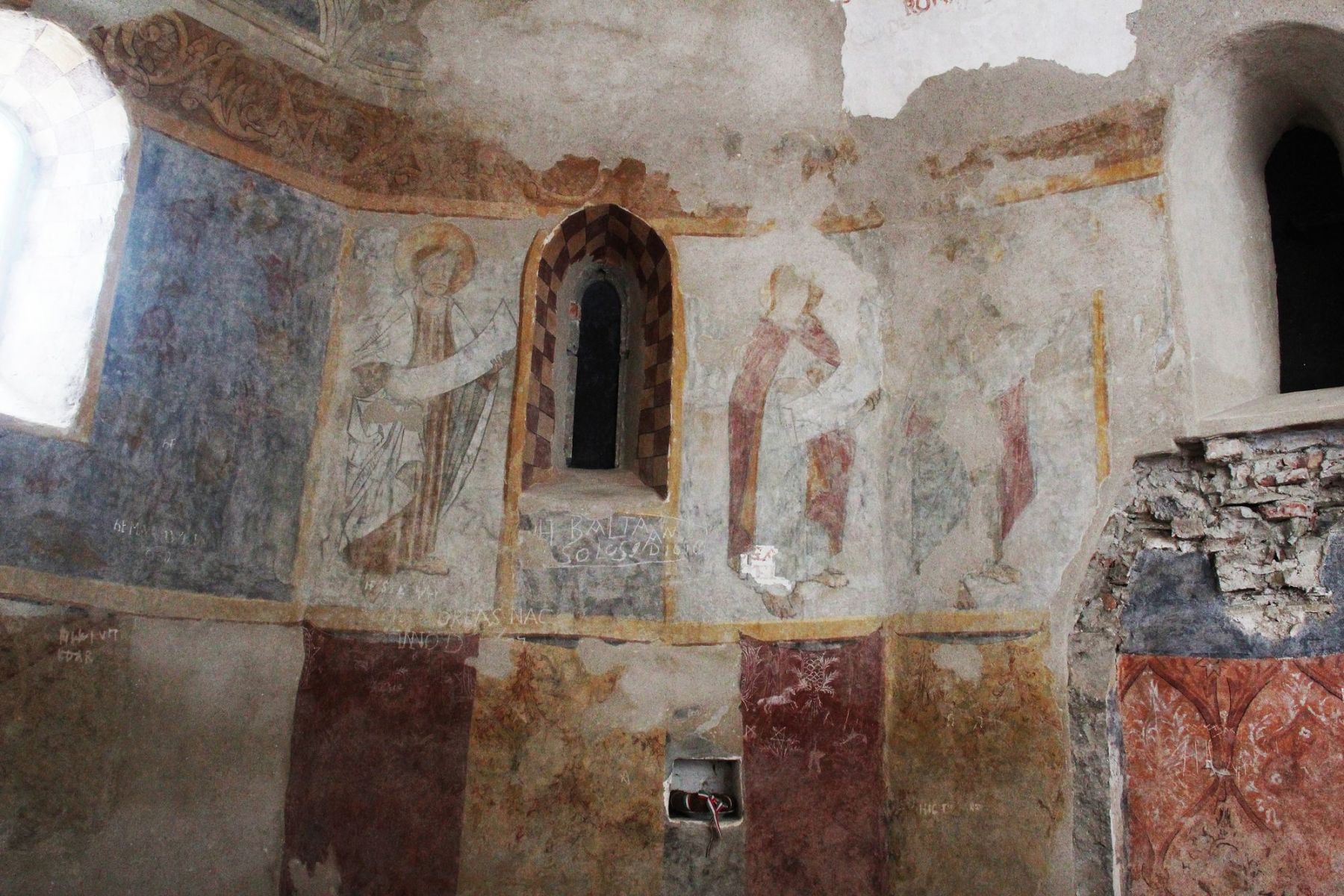
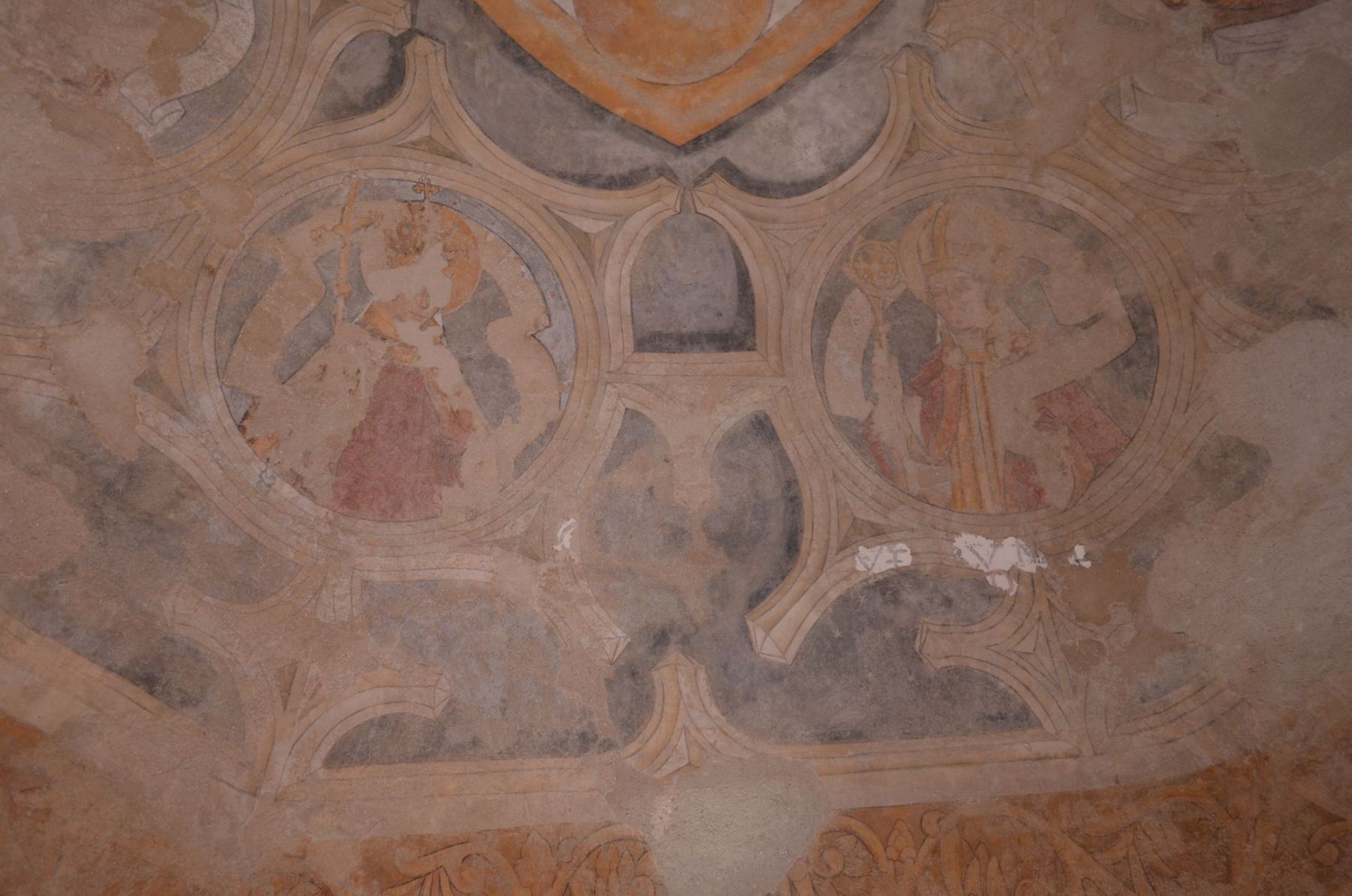
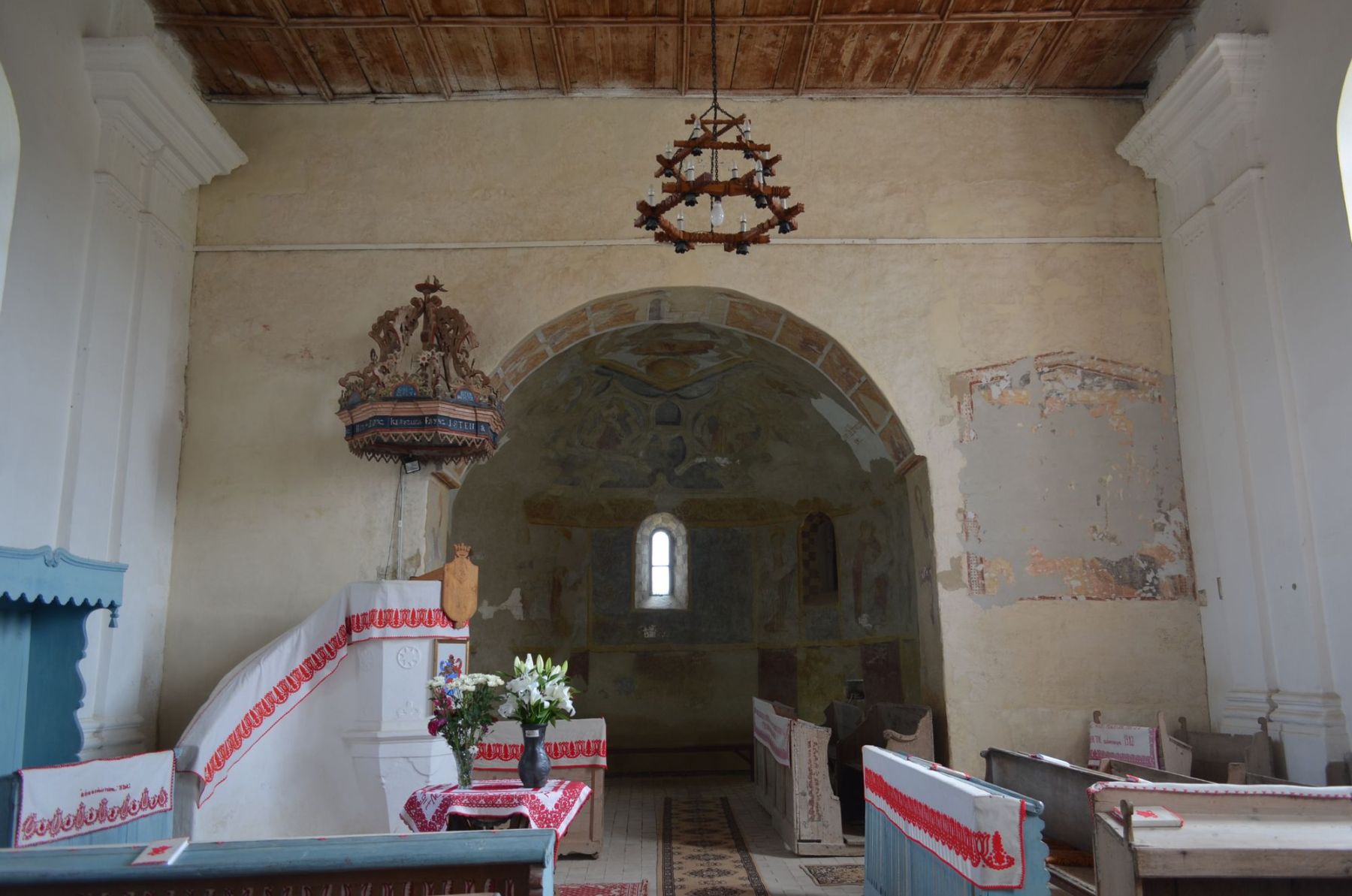
Among the church’s greatest treasures are its late Gothic wall paintings, created in 1489 and uncovered during restoration work between 2009 and 2015. The frescoes rank among the most significant surviving medieval mural cycles in Transylvania.
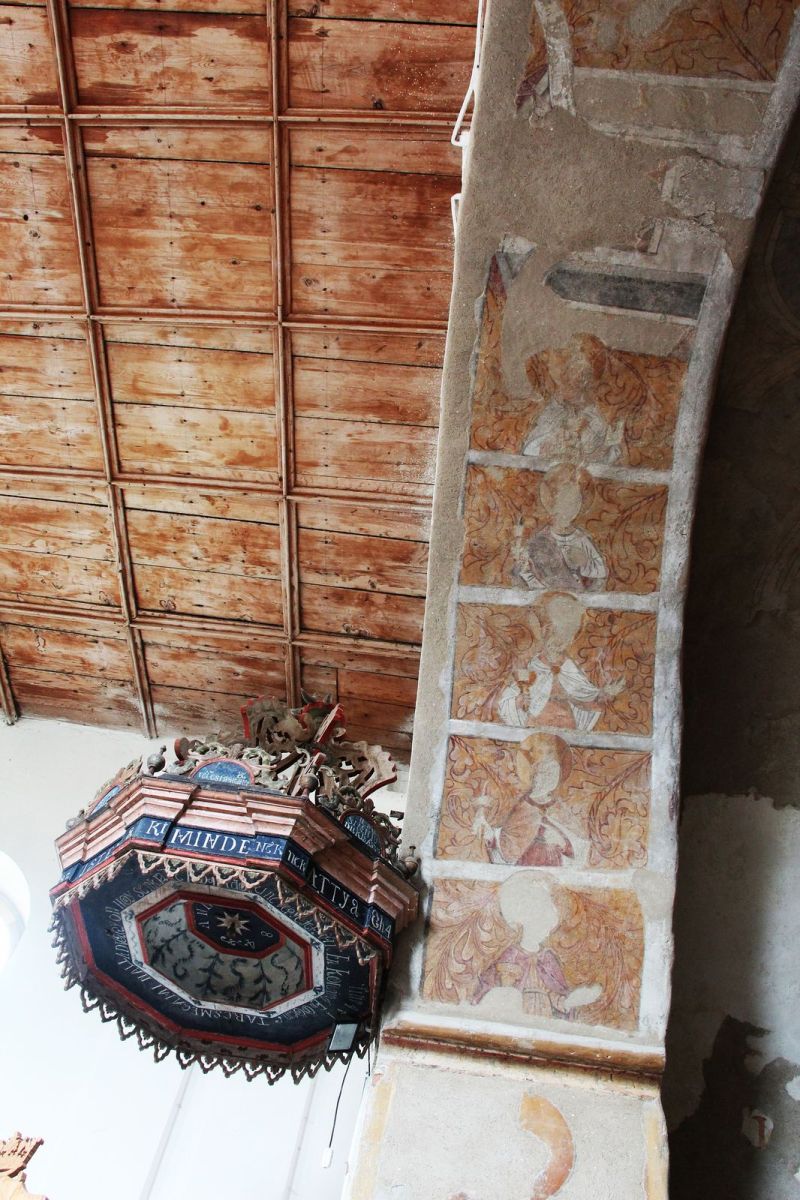
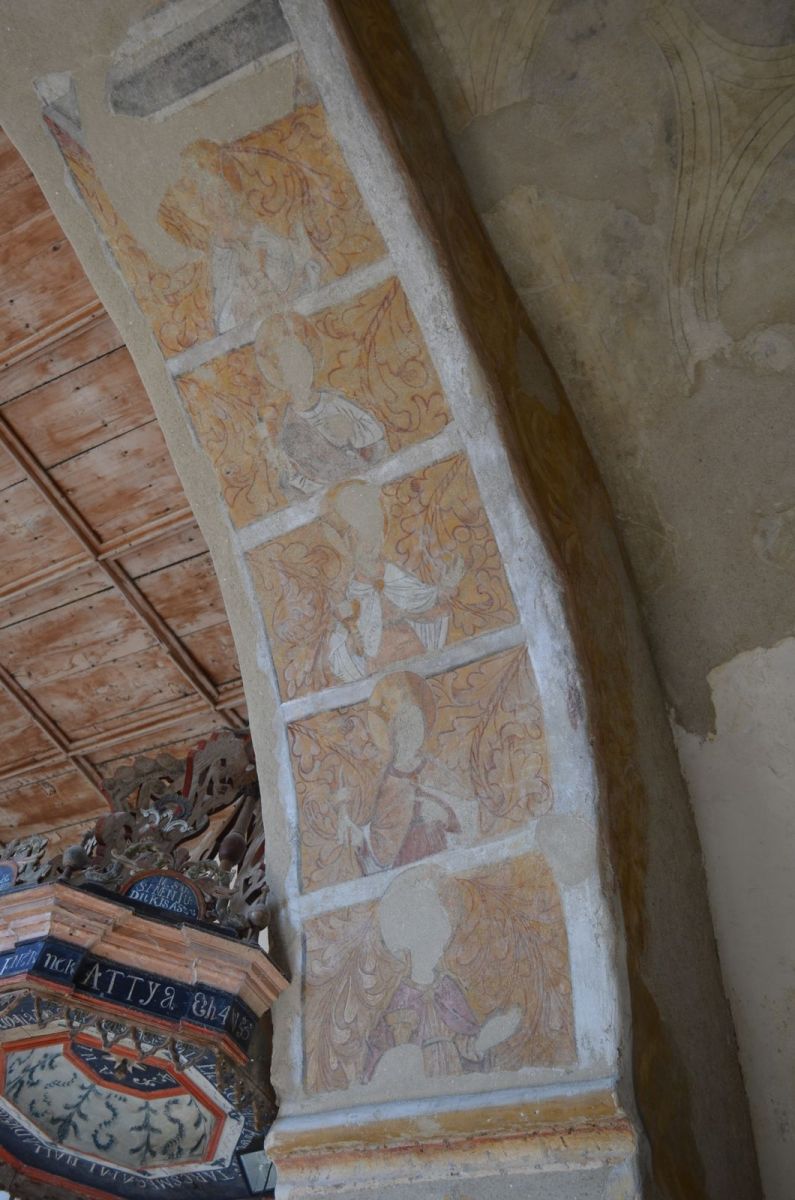
Figures of the apostles appear between the sanctuary windows, while the vault is decorated with painted Gothic tracery motifs. At the centre of the composition sits Christ in Majesty within a mandorla, accompanied by a bishop and a pope. Around the triumphal arch are depictions of the Wise and Foolish Virgins, while fragments of an earlier Crucifixion scene survive on the nave side of the arch. Art historians note that these fragments belong to an earlier painting phase than the sanctuary frescoes themselves, revealing multiple layers of medieval artistic activity within the church.
Furnishings and Painted Woodwork
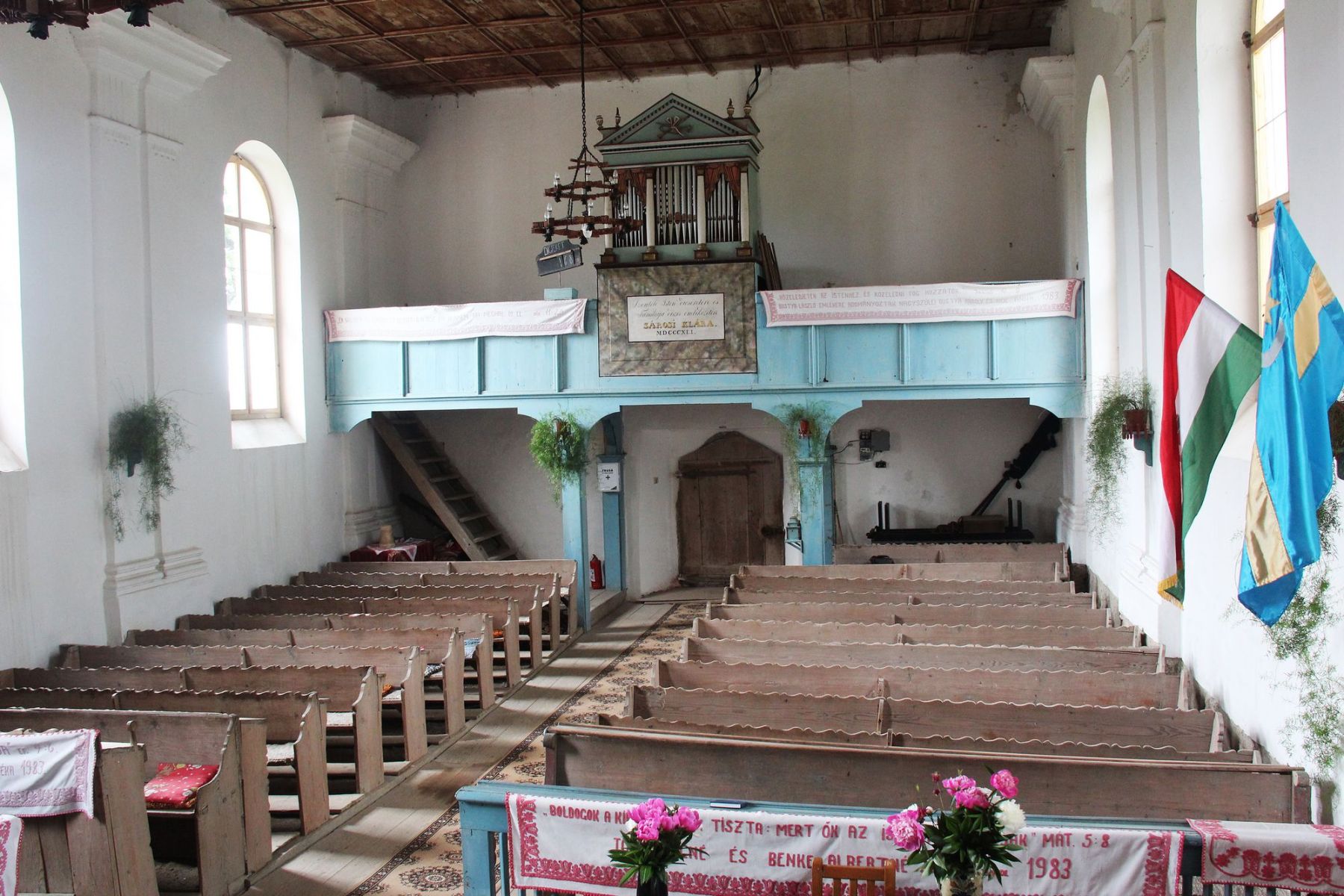
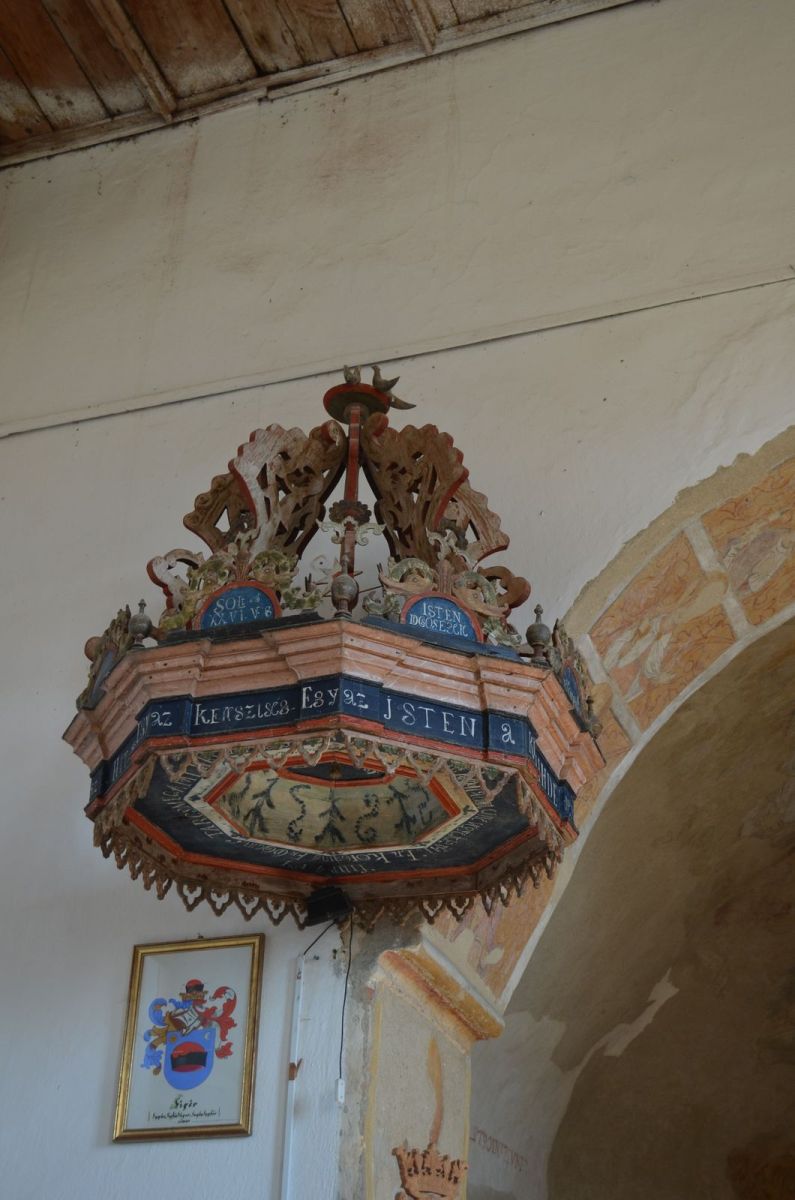
The church preserves an exceptional collection of post-Reformation furnishings. The wooden ceiling of the nave, the communion table, the pulpit canopy, and parts of the painted pews were created during the eighteenth century.
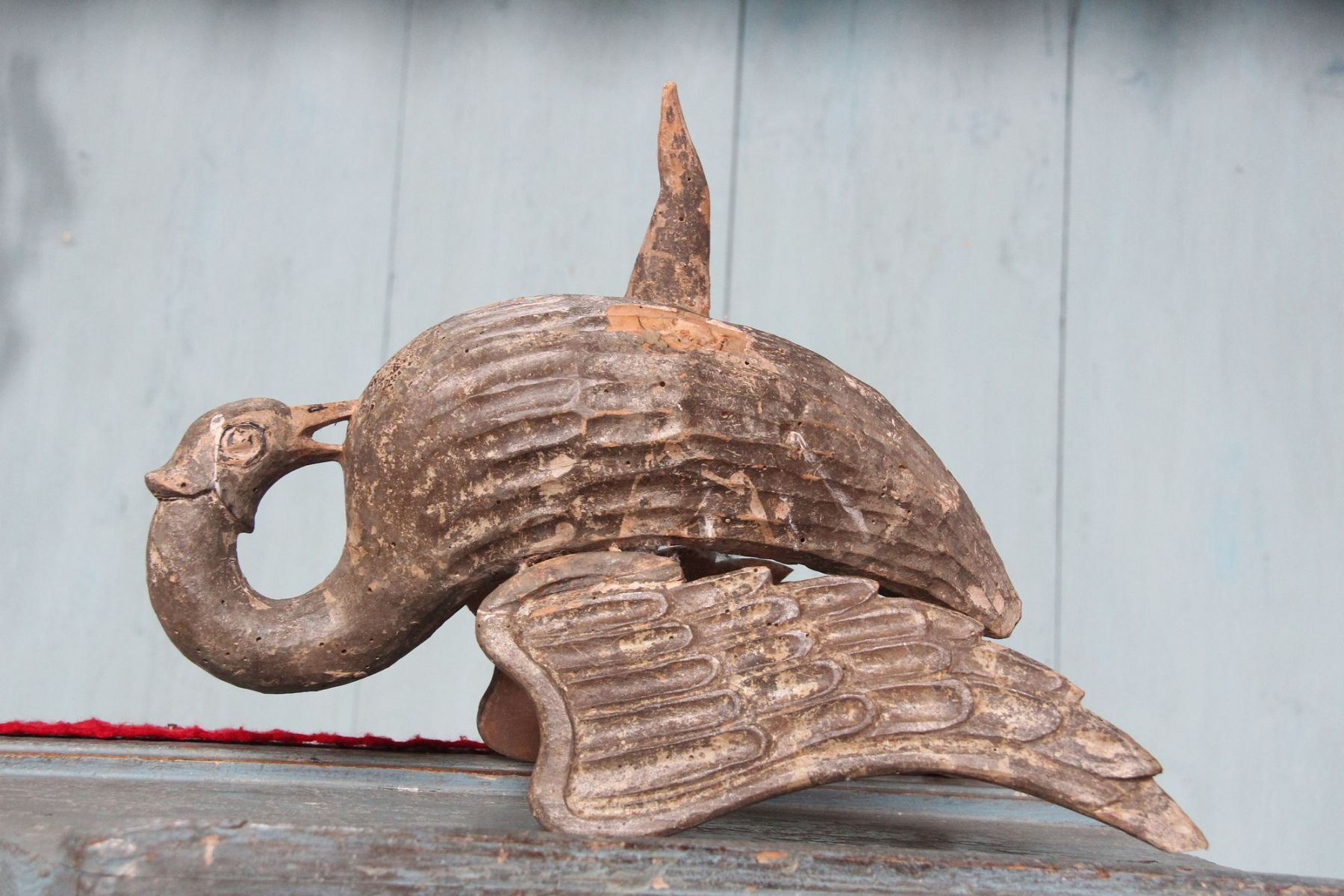
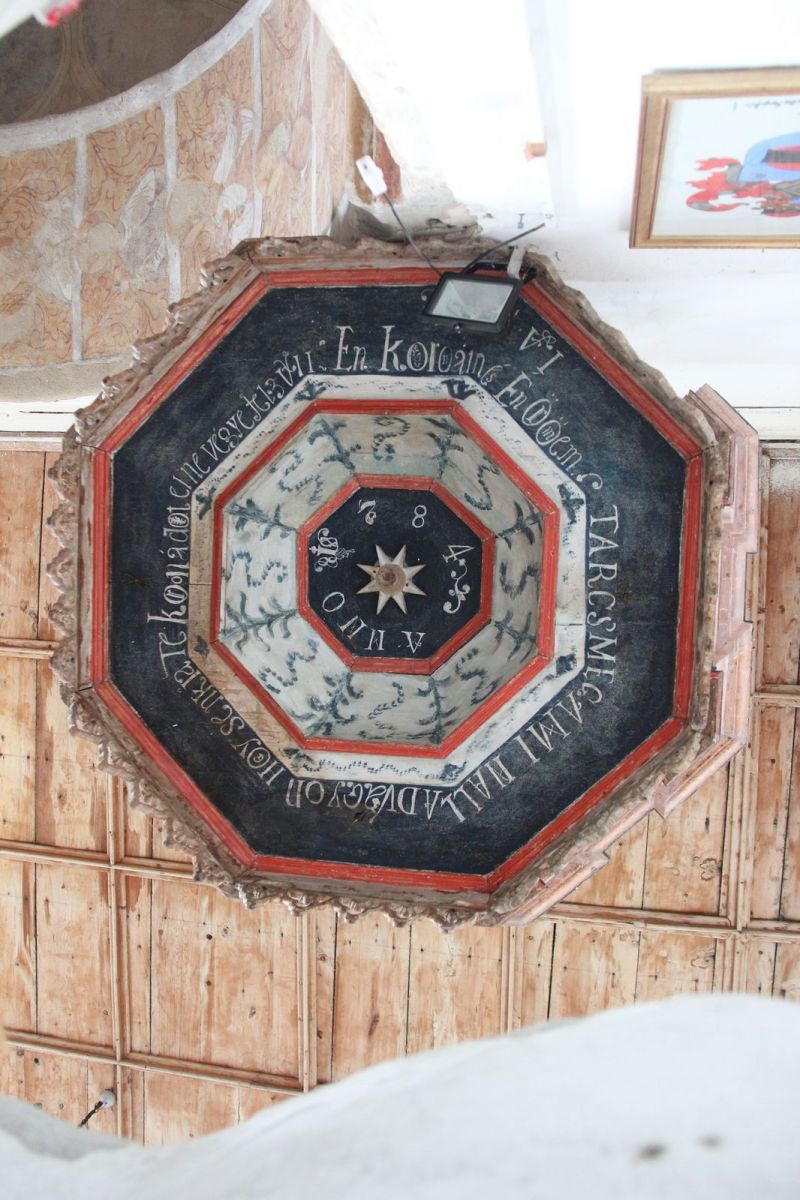
Particularly noteworthy is the painted pulpit canopy, dated 1784, bearing biblical inscriptions and featuring a pelican feeding its young with its own blood—a traditional Christian symbol of sacrifice. The communion table was also made in 1784 and is believed to be the work of the same craftsman.
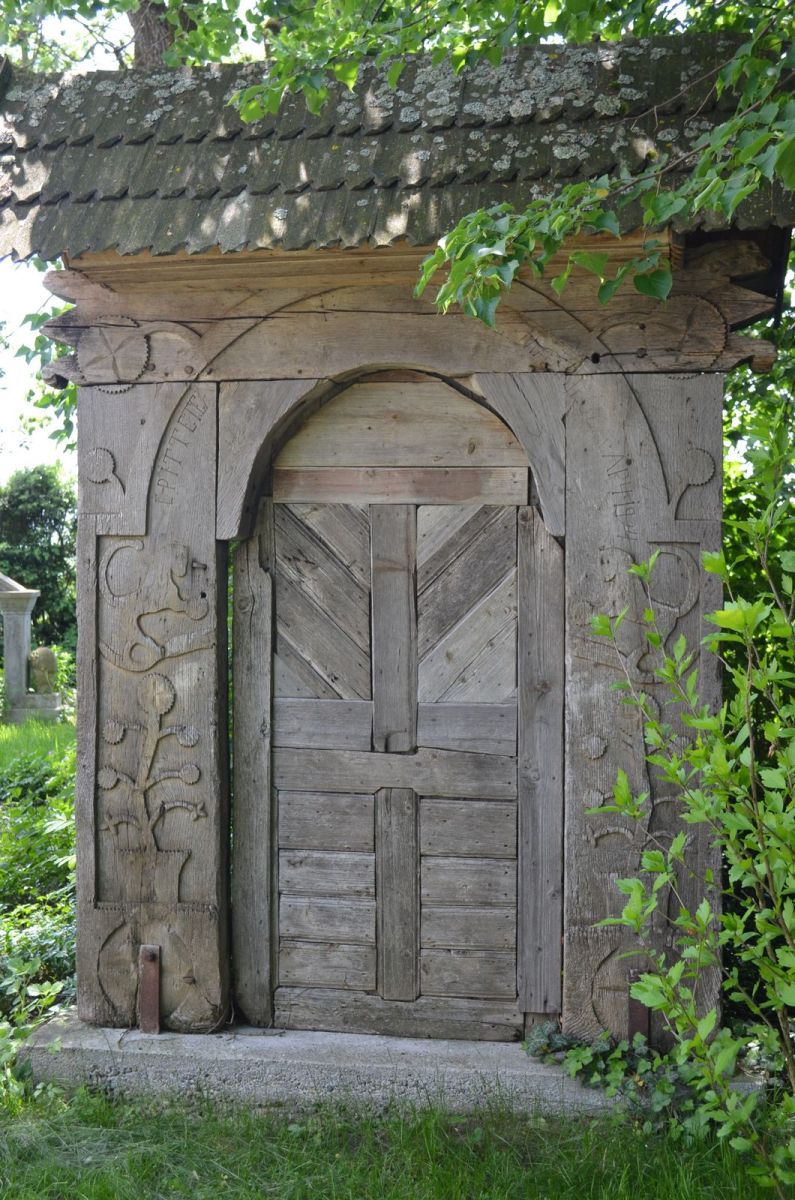
The church’s most valuable painted woodwork is the richly decorated Renaissance sacristy door, probably dating from the early sixteenth century. Owing to its exceptional artistic value, it was transferred to Cluj-Napoca in 1916 for preservation.
Historic Bells and Liturgical Treasures
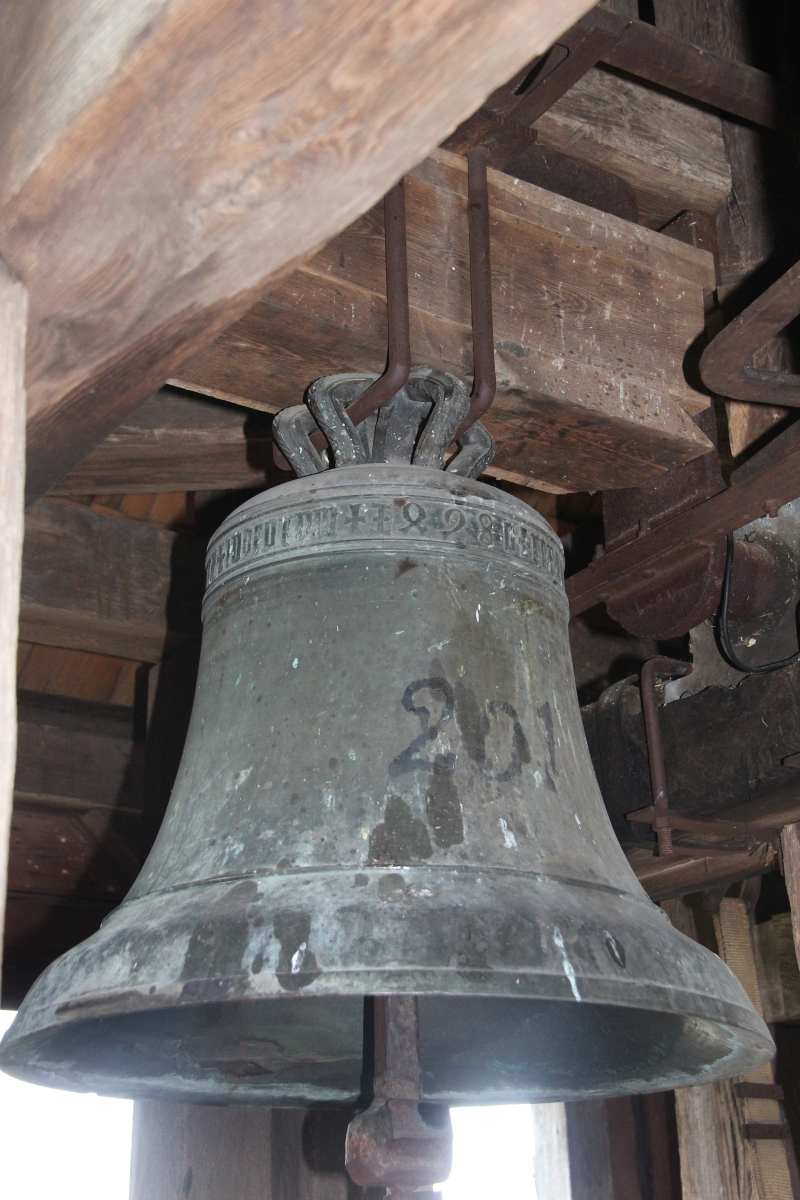
The tower houses one of the oldest surviving bells in the Hungarian Unitarian Church. Cast in 1498, it bears a Gothic inscription invoking Jesus Christ, King of the Jews, and remains a rare survivor from the late medieval period.
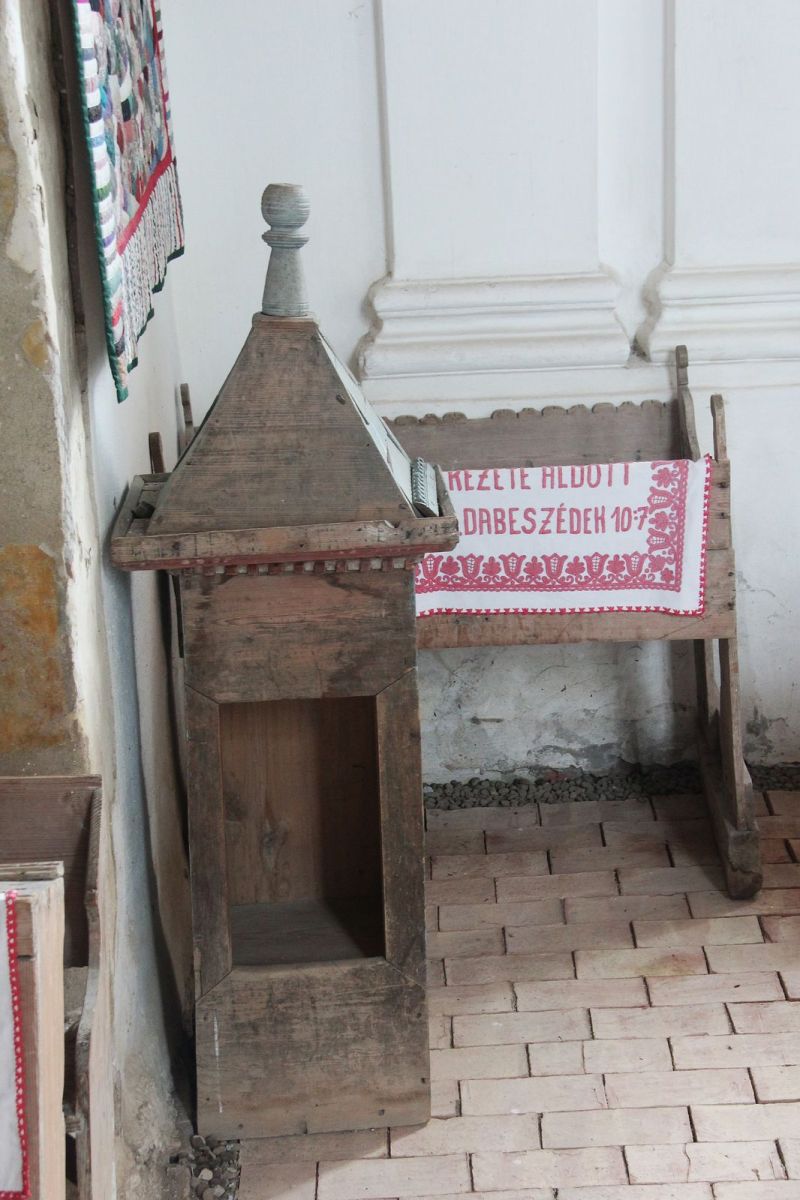
The church also preserves the oldest known Unitarian cantor’s pew (singing seat), dating from 1645 and inscribed with the words Omnis Spiritus Laudet Dominum (“Let every spirit praise the Lord”). This remarkable piece is unique within the Unitarian tradition.
Among the congregation’s historic treasures are several seventeenth- and eighteenth-century liturgical vessels, including silver communion cups, a seventeenth-century flagon, and a gilded silver baptismal bowl, reflecting the continuity of worship and community life across the centuries.
A Landmark of Unitarian Heritage
Few churches combine so many layers of history in a single monument. Medieval architecture, outstanding late Gothic frescoes, Renaissance woodwork, rare liturgical furnishings, and one of the oldest surviving Unitarian bells together make Nyárádszentlászló one of the most important monuments of Unitarian heritage in Transylvania and a remarkable destination for visitors interested in the artistic, historical, and religious heritage of the region.