
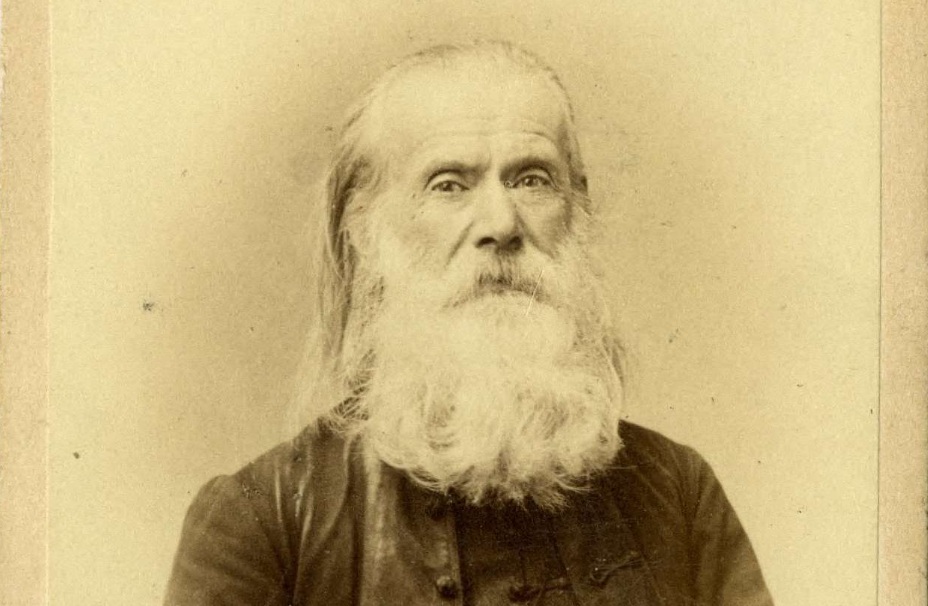
Sámuel Brassai was one of the most remarkable Hungarian intellectuals of the 19th century: a scholar, linguist, educator, philosopher, scientist, and public intellectual whose work left a lasting impact on Hungarian and Transylvanian cultural life. Often referred to as “the last Transylvanian polymath,” he pursued knowledge across an extraordinary range of disciplines, including mathematics, botany, philosophy, music, pedagogy, and linguistics.
Born in Torockószentgyörgy (today Colțești, Romania), Brassai studied at the Unitarian College of Kolozsvár (Cluj-Napoca), an institution with which he remained closely connected throughout his life. Deeply influenced by the intellectual traditions of the Hungarian Unitarian community, he became one of the leading advocates of modern education and scientific thinking in Transylvania.
Brassai played a major role in the development of Hungarian-language higher education and scholarship. As a teacher and later director of the Unitarian College, he emphasized critical thinking, practical knowledge, and the importance of teaching in the mother tongue. Following the establishment of the Franz Joseph University of Kolozsvár in 1872, he served as a university professor and later as its Rector, cementing his status as one of the leading figures of Transylvanian academia. He also contributed significantly to the modernization of Hungarian grammar and became widely respected for his pioneering studies in comparative linguistics.
In addition to his educational and scientific work, Brassai was actively involved in the cultural and academic life of his era. He became a prominent member of the Hungarian Academy of Sciences and was recognized as one of the most original and fiercely independent thinkers of 19th-century Hungarian intellectual life.
Sámuel Brassai lived to the age of one hundred and remained intellectually active almost until his death in 1897.