Ferenc Dávid (c. 1520–1579)
Home » Notable Figures » Ferenc Dávid (c. 1520–1579)
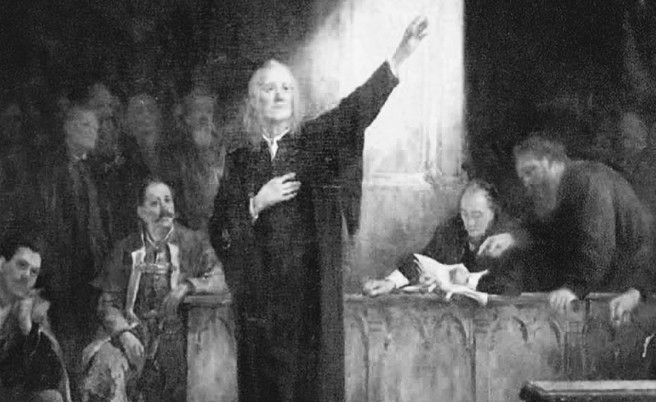
Ferenc Dávid was the founder and first bishop of the Unitarian Church in Transylvania and one of the most influential religious reformers of the 16th century. Born in Kolozsvár (today Cluj-Napoca, Romania), he studied in Wittenberg and other important centers of the Reformation before returning to Transylvania, where he first served as a Roman Catholic priest, later became a Lutheran bishop, and subsequently emerged as a leading theologian of the Reformed Church.
Through his theological studies and public debates, he gradually came to reject the doctrine of the Trinity, emphasizing instead the unity of God and the importance of reason and freedom of conscience in matters of faith. Together with Prince John Sigismund Zápolya, he played an important role in the religious developments that led to the Edict of Torda (1568), widely regarded as one of the earliest legal expressions of religious freedom in Europe.
Ferenc Dávid became the first bishop of the Unitarian Church and helped establish a distinct nontrinitarian Christian tradition in Transylvania. In his later years, theological disputes led to his imprisonment in the fortress of Déva (Deva), where he died in 1579.