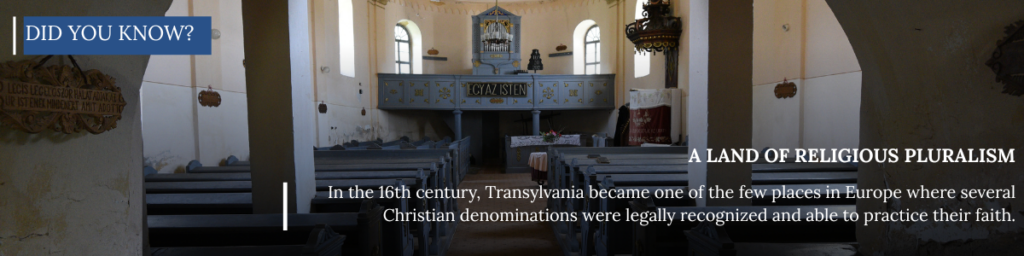
The Hungarian Unitarian Church is part of the one, universal Christian church and a community of believers who seek to live according to the teachings and example of Jesus. It brings together congregations that profess the unity of God and cultivate a religious life grounded in faith, reason, and conscience.
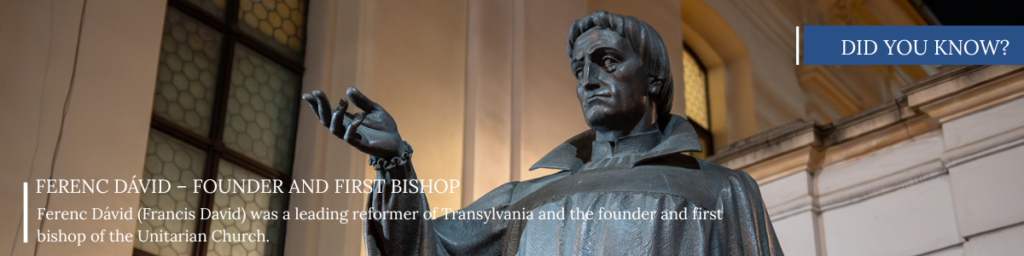
The Unitarian Christian tradition traces its roots to the biblical teachings of Jesus and the monotheistic faith of the first Christian communities. As an organized church, it took shape during the 16th-century Reformation in Transylvania. The founder and first bishop of the church was Ferenc Dávid (Francis David), whose ministry established the Unitarian faith as a historically recognized Christian tradition.
The spiritual life of the church is based on the Holy Bible, which it regards as its foundational document. The church proclaims the unity of God, the importance of following the teachings and example of Jesus, and the dignity and responsibility of every human being. It emphasizes the values of faith, reason, and conscience; respect for life, the family, and the created world; and the belief that moral character and personal responsibility are essential to spiritual life.
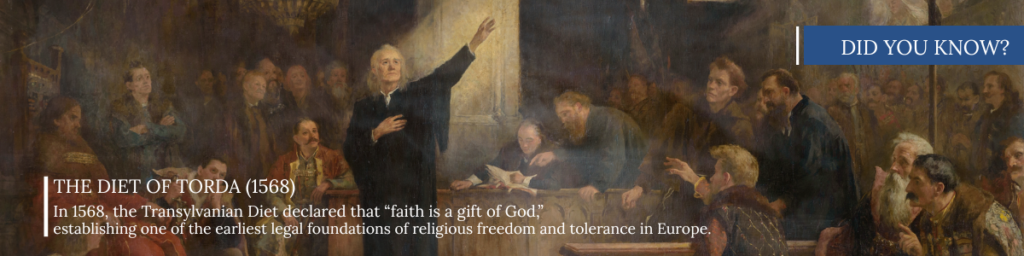
A defining moment in the history of the church was the Diet of Torda in 1568, when the Transylvanian Diet declared that “faith is a gift of God” and that no one should be persecuted for their religious beliefs. This landmark decision established an early legal foundation for religious freedom and tolerance in Europe.
The mission of the Hungarian Unitarian Church includes nurturing spiritual life, serving communities through acts of charity and social responsibility, supporting education and cultural life, and strengthening the moral and spiritual values of society.
The basic unit of the church is the local congregation, whose members form a community of faith and mutual responsibility. These congregations together constitute the Hungarian Unitarian Church, which is organized according to synod-presbyterian principles, meaning its governance is carried out through elected bodies representing both clergy and lay members.
The present form of the Hungarian Unitarian Church was established through the reunification of the Transylvanian and Hungarian church bodies in 2012, restoring the institutional unity of a religious community with centuries-old roots in the history and culture of the Carpathian Basin.