Rooted in the historical legacy of the Edict of Torda (1568) and the tradition of freedom of conscience, the Hungarian Unitarian Church maintains active relationships with Unitarian, Unitarian Universalist, and liberal religious communities throughout the world. As the oldest continuously existing Unitarian church, it occupies a unique place within the international Unitarian movement and serves as an important spiritual and historical reference point for many partner communities.
The church has long been engaged in international cooperation related to religious freedom, interfaith dialogue, education, and community life. Hungarian and Transylvanian Unitarians have participated actively in organizations such as the International Association for Religious Freedom (IARF) and the International Council of Unitarians and Universalists (ICUU), contributing a historic Central European perspective to global conversations on faith, tolerance, and human dignity.
Over the past decades, the Hungarian Unitarian Church has developed strong partnerships with religious communities, universities, charitable organizations, and cultural institutions across North America, Europe, Africa, and Asia. These relationships have supported theological exchange programs, conferences, educational initiatives, humanitarian cooperation, youth and women’s leadership programs, and various community-building projects.
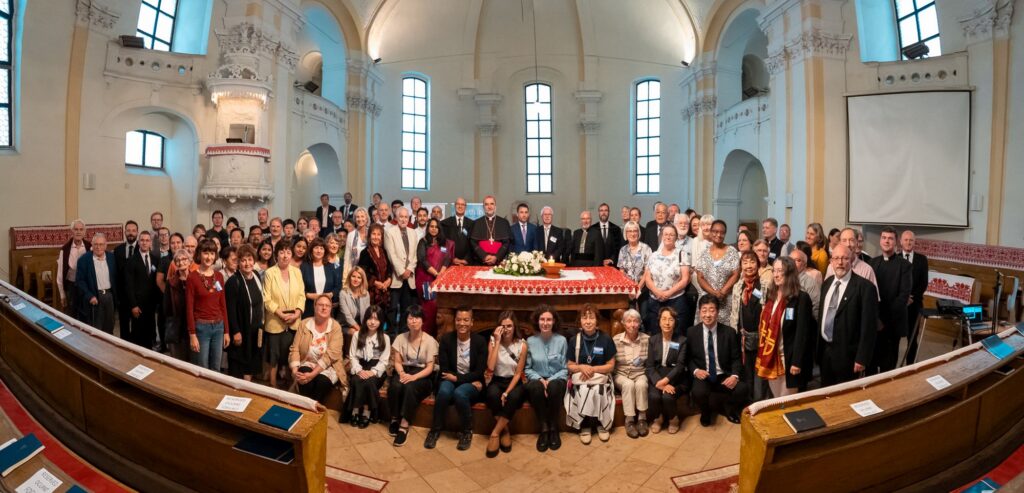
The church also regularly welcomes international visitors, scholars, pilgrims, and partner delegations to Transylvania, offering opportunities to encounter the living heritage of historic Unitarianism through its congregations, schools, cultural institutions, and community events.
Today, the Hungarian Unitarian Church continues to serve as an important bridge between historic European Christianity and contemporary global liberal religion. Through its international partnerships and ongoing dialogue, it seeks to promote mutual understanding, cooperation, religious freedom, and respect across cultural and denominational boundaries.