A Unitarian Journey Through Transylvania
Join us on a twelve-day journey through the heart of Transylvania, exploring the history, heritage, and living traditions of the Hungarian Unitarian Church. From the birthplace of religious freedom to medieval villages, UNESCO-listed monuments, vibrant cities, and breathtaking natural landscapes, this pilgrimage offers a unique opportunity to discover the people, places, and stories that shaped one of Europe’s most distinctive religious communities.
Through worship, lectures, guided visits, and personal encounters, participants will gain a deeper understanding of Transylvania’s multicultural heritage and the enduring legacy of Unitarianism.
April 15 – Arrival in Kolozsvár (Cluj-Napoca)
Upon arrival at Cluj-Napoca International Airport, participants will be welcomed by members of our pilgrimage team and transferred to the 1568 Guest House in the historic centre of Kolozsvár.
After check-in, we will gather for a welcome dinner and an introductory orientation walk through the city centre. This relaxed evening offers an opportunity to become acquainted with fellow travelers and to receive an overview of the journey ahead.
Accommodation: 1568 Guest House, Kolozsvár
April 16 – Kolozsvár (Cluj-Napoca): The Heart of Transylvanian Unitarianism
Kolozsvár, the historic capital of Transylvania, is the birthplace of organized Unitarianism and remains the spiritual, educational, and administrative centre of the Hungarian Unitarian Church. The city is closely associated with Ferenc Dávid, founder and first bishop of the Unitarian Church, whose teachings and leadership helped shape one of the most important chapters in the history of religious freedom.
Our day begins with an introductory lecture on the history of the Unitarian Church in Transylvania, providing historical context for the sites we will visit throughout the pilgrimage.
We will then explore the most important institutions of contemporary Unitarian life, including the Headquarters of the Hungarian Unitarian Church, the Episcopal Office, the János Zsigmond Unitarian College, the First Unitarian Church, the statue of Ferenc Dávid, and the award-winning House of Religious Freedom.
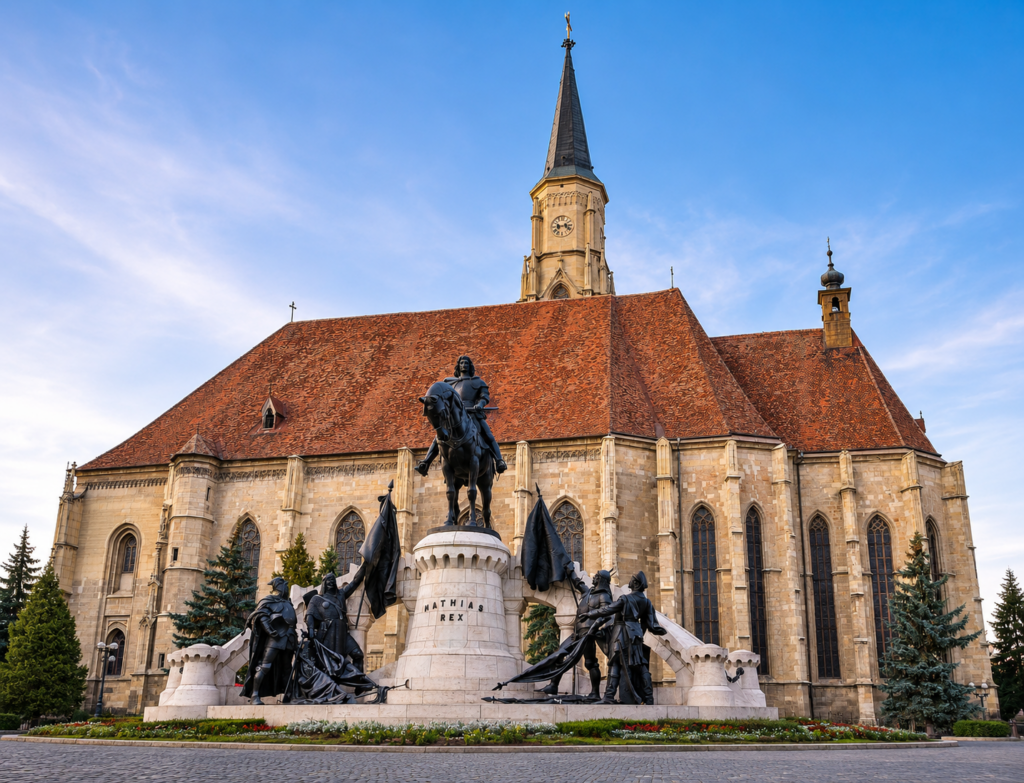
Following lunch, a guided city tour will introduce participants to the rich multicultural heritage of Kolozsvár. Highlights include the historic city centre, Saint Michael’s Church, the Franciscan Church and Monastery—home to the first Unitarian school in the sixteenth century—and other landmarks reflecting the city’s Hungarian, Romanian, Saxon, and Unitarian past.
The late afternoon and evening will be free for personal exploration. Participants may visit museums, enjoy local cafés and restaurants, or simply experience the atmosphere of one of Transylvania’s most dynamic cultural centres.
Dinner on your own.
Accommodation: 1568 Guest House, Kolozsvár
April 17 – Marosvásárhely (Târgu Mureș) and Segesvár (Sighișoara)
After breakfast, we depart for Marosvásárhely (Târgu Mureș), one of the most important cultural centres of Hungarian life in Transylvania and the western gateway to Székely Land.
Our first stop is the magnificent Palace of Culture, one of the masterpieces of Hungarian Art Nouveau. Built between 1911 and 1913, the palace is renowned for its stained-glass windows, decorative interiors, and rich artistic symbolism. During our visit, we will explore the building’s galleries and learn about the cultural movements that shaped Transylvania at the beginning of the twentieth century.
Marosvásárhely stands at the edge of Székely Land, a historic region inhabited predominantly by the Székelys, a Hungarian-speaking community with a strong cultural identity and a distinctive historical heritage.
We then continue to the Teleki-Bolyai Library, one of the most significant historical libraries in Central Europe. Founded by Count Sámuel Teleki and opened to the public in 1802, the library preserves thousands of rare books, manuscripts, and early printed works, reflecting the intellectual heritage of Transylvania and the wider European Enlightenment.
Following lunch, we travel to Segesvár (Sighișoara), one of the best-preserved medieval towns in Europe and a UNESCO World Heritage Site. Founded and developed by the Transylvanian Saxons, the fortified town offers a remarkable glimpse into the urban life of the Middle Ages. The city is also widely known as the birthplace of Vlad III, commonly known as Vlad the Impaler, whose historical figure later inspired the Dracula legend.
Segesvár was part of the historic Saxon Lands, a self-governing region of medieval Transylvania whose prosperous German-speaking communities played an important role in the economic and cultural development of the region. The town’s defensive towers, merchant houses, and cobbled streets continue to reflect this rich Saxon heritage.
After checking into our accommodation, we will enjoy a relaxed walking tour through the historic citadel. The narrow cobbled streets, colourful houses, defensive towers, and centuries-old churches create one of the most atmospheric urban landscapes in Transylvania.
The remainder of the evening is free for individual exploration. Participants may stroll through the medieval streets, visit local cafés, or enjoy dinner in one of the town’s traditional restaurants.
Dinner on your own.
Accommodation: Segesvár (Sighișoara)
April 18 – Székelyderzs (Dârjiu) and Énlaka (Inlăceni)
After breakfast, we leave Segesvár (Sighișoara) and enter the heart of Székely Land, a region known for its strong Hungarian cultural traditions, historic villages, and remarkable Unitarian heritage.
Our first destination is Székelyderzs (Dârjiu), home to one of the most important monuments of the Hungarian Unitarian Church. The fortified church, dating largely from the fourteenth century, is part of the UNESCO World Heritage ensemble of Transylvanian fortified churches. Within its walls visitors can admire one of the best-preserved medieval fresco cycles depicting the Legend of Saint Ladislaus, one of the most beloved Hungarian saints and kings.
The church also preserves a unique centuries-old tradition: the storage of grain and cured meat within the fortress walls. Once widespread throughout Transylvania, this practice survives today only in a handful of places and remains an important symbol of community life and self-sufficiency.
We will participate in Sunday worship with the local congregation and enjoy a light lunch in the village.
In the afternoon, we continue to Énlaka (Inlăceni), one of the most iconic historic villages of Székely Land. Perched on a hillside above the village, the Unitarian church is renowned for its beautifully painted coffered ceiling, completed in 1668 following the rebuilding of the church after the Tatar invasion of 1661.
Énlaka is particularly famous for a painted panel bearing the inscription “Egy az Isten” (“God is One”) written in the ancient Székely runic script. This inscription is regarded as one of the most important surviving examples of Hungarian runic writing and has become a powerful symbol of both Unitarian identity and Hungarian cultural heritage.
Beyond the church itself, visitors can experience the atmosphere of a remarkably well-preserved traditional village, where historic houses, wooden gates, and the surrounding landscape offer a glimpse into the rural world of earlier centuries.
In the late afternoon, we travel to Székelyudvarhely (Odorheiu Secuiesc), one of the cultural centres of Székely Land.
Dinner and accommodation in Székelyudvarhely.
Accommodation: Székelyudvarhely (Odorheiu Secuiesc)
April 19 – Székelykeresztúr (Cristuru Secuiesc), Szejkefürdő (Băile Seiche) and Korond (Corund)
After enjoying breakfast our first stop is Székelykeresztúr (Cristuru Secuiesc), home to the Berde Mózes Unitarian High School, one of the most important educational institutions of the Hungarian Unitarian Church. During our visit, we will gain insight into contemporary Unitarian education and learn about the challenges and opportunities facing Hungarian-language schools and congregations in Transylvania today.
We then travel to Szejkefürdő (Băile Seiche), a place closely associated with Balázs Orbán (1829–1890), often referred to as “the greatest Székely.” A historian, ethnographer, traveler, and politician, Orbán devoted much of his life to documenting the history, traditions, and monuments of Székely Land. His monumental work, The Description of Székely Land, remains one of the most important sources on the region’s cultural heritage.
Later in life, Orbán embraced the Unitarian faith. Szejkefürdő was one of his beloved projects, and according to his wishes, he was buried here. Visitors approach his grave through an avenue of seven carved Székely gates, one of the most recognizable cultural landmarks of Székely Land and a fitting tribute to the man whose work helped preserve its history and traditions.
After lunch, we continue to Korond (Corund), a village renowned throughout Romania for its pottery traditions. For generations, local artisans have produced distinctive ceramics inspired by folk motifs and regional decorative traditions. The village has become synonymous with pottery and traditional handicrafts, attracting visitors from across the country and beyond.
During our visit, we will meet local craftspeople and participate in a pottery workshop, gaining firsthand experience of one of Transylvania’s most enduring artistic traditions.
In the evening, we return to Székelyudvarhely (Odorheiu Secuiesc), where participants will have time to relax and reflect on the day’s experiences.
Dinner and accommodation in Székelyudvarhely.
Accommodation: Székelyudvarhely (Odorheiu Secuiesc)
April 20 – Oklánd (Ocland), Miklósvár (Micloșoara) and Nagyajta (Aita Mare)
Today we explore a region where history, art, and community heritage intertwine in remarkable ways.
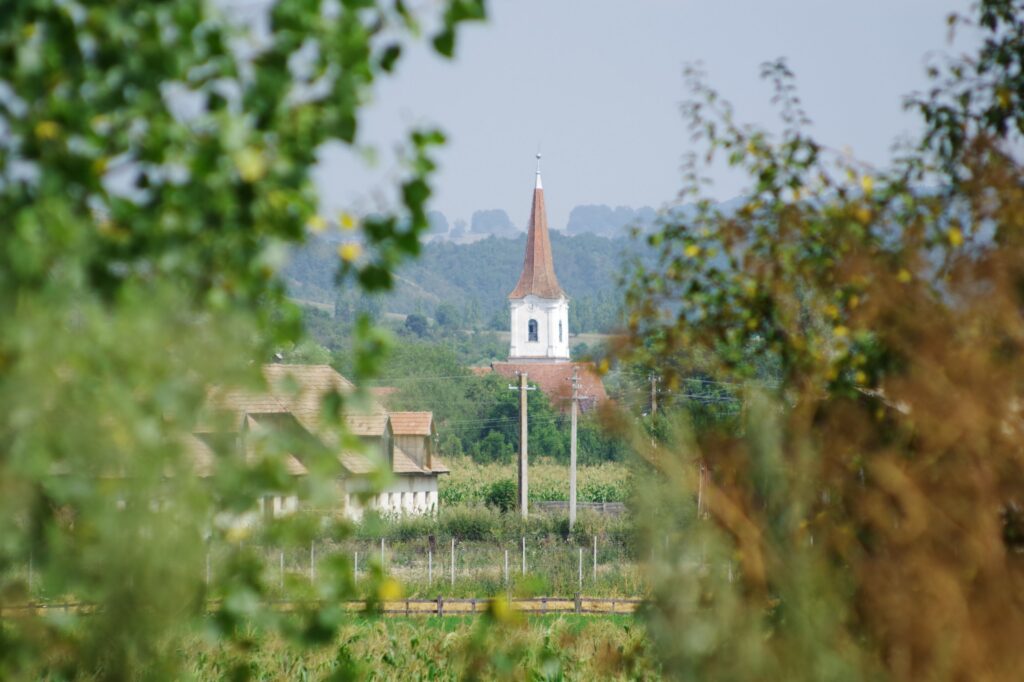
Our first destination is Oklánd (Ocland), home to one of the most fascinating Unitarian churches in Transylvania. The medieval church preserves fragments of wall paintings depicting scenes from the Legend of Saint Ladislaus, while its painted coffered ceiling represents one of the finest examples of eighteenth-century ecclesiastical folk art in the region. Together, the frescoes and painted ceiling illustrate how Renaissance artistic influences were adapted to local traditions and enriched with motifs drawn from Hungarian folk culture.
Among the ceiling’s most remarkable features are two unique panels that have attracted the attention of historians and art scholars alike. One depicts the Copernican heliocentric model of the solar system, a rare scientific representation in a church interior, while another contains a perpetual Easter calendar, used to calculate the date of Easter for any given year. Together, they illustrate the close relationship between faith, learning, and everyday life in the Unitarian communities of Transylvania.
We then continue to Miklósvár (Micloșoara) and visit the beautifully restored Kálnoky Castle, the ancestral home of one of Transylvania’s most prominent noble families. Through the history of the Kálnokys, we gain insight into the lives of the Transylvanian aristocracy and the profound changes brought about by the twentieth century, including the communist nationalization of private estates. Today the castle serves as an important cultural and heritage centre, preserving the memory of a vanished world while contributing to the revival of rural tourism and historic preservation.
The story of the Kálnoky family also reflects the remarkable revival of many historic Transylvanian estates after the fall of communism. The region has attracted international attention through the heritage conservation efforts supported by King Charles III, whose long-standing interest in Transylvania has helped bring wider recognition to its architectural and cultural treasures.
After lunch, we travel to Nagyajta (Aita Mare), the birthplace of János Kriza (1811–1875), one of the most influential figures in the history of the Hungarian Unitarian Church. A bishop, writer, folklorist, and ethnographer, Kriza is best known for collecting and preserving Hungarian folk poetry and traditions, thereby making a lasting contribution to Hungarian cultural heritage.
The fortified church complex houses several exhibitions devoted to the history of Transylvanian Unitarianism, local ethnography, regional history, and the life and work of János Kriza. Through these exhibitions, visitors gain a deeper understanding of the cultural and intellectual traditions that shaped Unitarian communities across Transylvania.
In the late afternoon, we continue to Sepsiszentgyörgy (Sfântu Gheorghe).
Dinner and accommodation in Sepsiszentgyörgy.
Accommodation: Sepsiszentgyörgy (Sfântu Gheorghe)
April 21 – Saint Anna Lake, Mohos Peat Bog and Csernáton (Cernat)
Today we turn our attention to the natural wonders and traditional craftsmanship of Székely Land.
After breakfast, we travel to the Ciomadul Volcanic Massif, the youngest volcanic region in the Carpathian Basin. Although its last eruption occurred tens of thousands of years ago, its geological legacy remains clearly visible in the landscape.
Our first destination is Saint Anna Lake, the only volcanic crater lake in Romania. Nestled within the forested crater of an extinct volcano, the lake is one of Transylvania’s most beautiful natural landmarks. Nearby lies the Mohos Peat Bog, formed in the second crater of the same volcanic complex. Accompanied by a local guide, we will explore this protected nature reserve, whose unique ecosystem preserves rare plant species and offers insight into the geological history of the region.
Following our visit, we continue to Csernáton (Cernat), home to the renowned Haszmann Pál Museum, one of the most important open-air museums in Székely Land. The museum presents traditional rural life through historic buildings, agricultural machinery, tools, household objects, a notable collection of traditional stoves and furnaces, and folk-art collections gathered from across the region.
Particularly notable is the museum’s commitment to preserving traditional crafts. Through educational programs and summer workshops, hundreds of young people learn woodcarving, furniture painting, and other folk-art techniques each year. During our visit, we will have the opportunity to experience some of these traditions firsthand and gain a deeper appreciation for the craftsmanship that has shaped Székely cultural identity for generations.
No visit to the region would be complete without sampling one of its best-known culinary specialties. Together, we will prepare and bake traditional chimney cakes (kürtőskalács), a beloved pastry associated with celebrations and community gatherings throughout Transylvania.
In the evening, we return to Sepsiszentgyörgy (Sfântu Gheorghe).
Dinner and accommodation in Sepsiszentgyörgy.
Accommodation: Sepsiszentgyörgy (Sfântu Gheorghe)
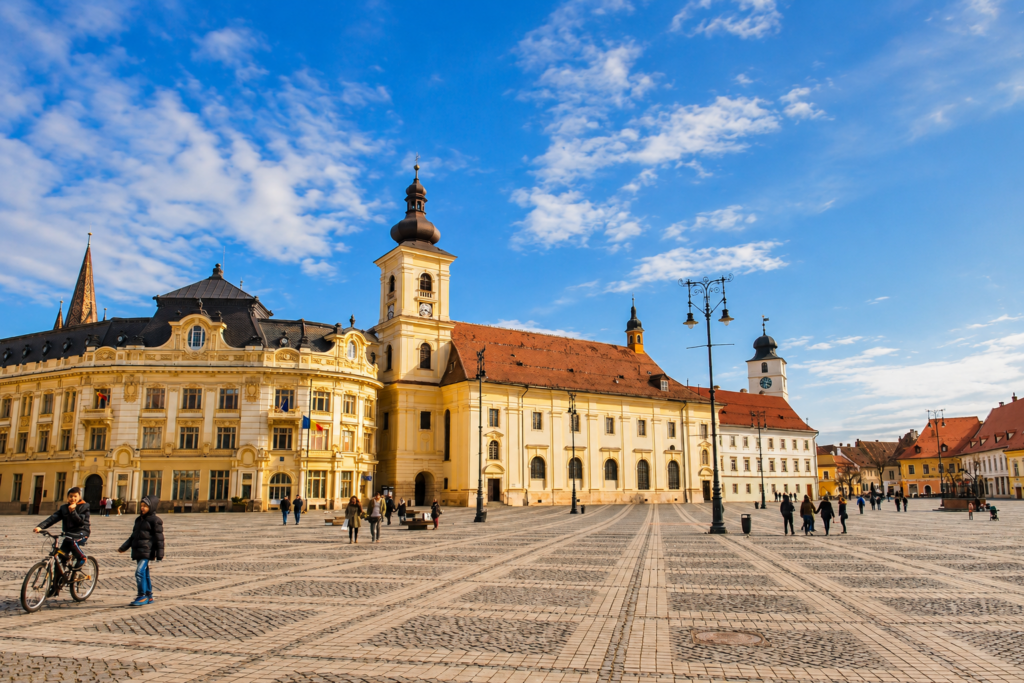
April 22 – Nagyszeben (Sibiu)
After breakfast, we bid farewell to Székely Land and travel to Nagyszeben (Sibiu), one of the most beautiful and historically significant cities in Transylvania.
Founded and developed by the Transylvanian Saxons, Nagyszeben served for centuries as the political, cultural, and economic centre of the German-speaking communities of Transylvania. Its exceptionally well-preserved historic centre, elegant squares, defensive walls, and distinctive architecture make it one of the region’s most attractive destinations. In recognition of its rich cultural heritage, the city was named European Capital of Culture in 2007.
Our visit begins with a guided tour of the Old Town, where we will explore the city’s medieval streets, historic churches, fortifications, and public squares. Along the way, we will learn about the unique history of the Transylvanian Saxons and their enduring contribution to the cultural landscape of the region.
We will also visit the Brukenthal Museum, one of the oldest museums in Central and Eastern Europe. Established around the art collection of Baron Samuel von Brukenthal, the museum houses an impressive collection of European paintings, decorative arts, and historical artifacts, including works by some of Europe’s most celebrated masters.
Another highlight of the day is the ASTRA Museum of Traditional Folk Civilization, one of Europe’s largest open-air museums. Its extensive collection of traditional houses, workshops, mills, and farm buildings offers a remarkable introduction to the diverse rural cultures of Romania and provides valuable insight into the everyday life of past centuries.
After lunch, participants will have free time to explore the city independently. Whether visiting museums, enjoying the cafés and restaurants of the historic centre, or simply wandering through the picturesque streets, visitors will have the opportunity to experience the distinctive atmosphere of one of Transylvania’s most vibrant cultural centres.
Dinner is on your own.
Accommodation: Nagyszeben (Sibiu)
April 23 – Vajdahunyad (Hunedoara) and Déva (Deva)
Today we journey into one of the most historically significant regions of Transylvania, where medieval castles, royal history, and the story of the early Unitarian Church intersect.
Our first destination is Vajdahunyad (Hunedoara), home to the spectacular Corvin Castle, one of the largest and most impressive medieval castles in Europe. Originally constructed in the fifteenth century by the Hunyadi family, the fortress combines Gothic, Renaissance, and military architectural elements into a dramatic ensemble of towers, courtyards, bridges, and great halls.
During our guided visit, we will explore the history of the Hunyadi family, one of the most influential noble dynasties in the Kingdom of Hungary. The castle offers a fascinating introduction to the political and military world of late medieval Central Europe and remains one of Romania’s most visited historic monuments.
After lunch, we continue to Déva (Deva), a city deeply connected to the history of the Unitarian Church. Rising above the town are the ruins of Déva Fortress, strategically positioned on a volcanic hill overlooking the Mureș Valley. The fortress played an important role in the history of Transylvania and offers magnificent views of the surrounding landscape.
For Unitarians, Déva is remembered above all as the place where Ferenc Dávid, founder and first bishop of the Unitarian Church, spent the final months of his life. Imprisoned for his religious convictions, he died in the fortress in 1579. His death transformed Déva into one of the most significant memorial sites in Unitarian history.
We will visit the memorials associated with Ferenc Dávid and reflect on the legacy of a man whose commitment to freedom of conscience helped shape the religious history of Transylvania and beyond.
Before returning to our accommodation, we will also visit the local Unitarian church and pilgrimage centre, an important place of remembrance that welcomes visitors seeking to learn more about the life, faith, and enduring legacy of Ferenc Dávid.
Dinner and accommodation in Déva.
Accommodation: Déva (Deva)
April 24 – Gyulafehérvár (Alba Iulia), Torockó (Rimetea) and Torda (Turda)
Today we explore some of the most significant sites in the religious and political history of Transylvania, culminating in a visit to the birthplace of religious freedom.
Our first stop is Gyulafehérvár (Alba Iulia), one of the oldest and most important cities in Transylvania. For centuries it served as the capital of the Principality of Transylvania and played a central role in the political, cultural, and religious life of the region.
Within the impressive Vauban-style citadel, we will visit Saint Michael’s Cathedral, the oldest and most important medieval Roman Catholic church in Transylvania. The cathedral contains the tombs of several princes of Transylvania, including John Sigismund Zápolya, the only Unitarian ruler in history and a key supporter of the religious reforms that transformed sixteenth-century Transylvania.
We will also see the Coronation Cathedral, where King Ferdinand I and Queen Marie were crowned as monarchs of Greater Romania in 1922, the historic Princely Palace, and the renowned Batthyaneum Library, home to one of Romania’s most valuable collections of manuscripts and rare books.
We then continue to Torockó (Rimetea), one of the most picturesque villages in Transylvania. Nestled beneath the dramatic cliffs of the Székelykő Mountain, the village is renowned for its remarkably preserved traditional architecture and distinctive white houses with green shutters. Owing to its exceptional cultural heritage, Torockó received the Europa Nostra Award and has become one of the best-known heritage destinations in the Carpathian Basin.
After lunch, we travel to Torda (Turda), a city of extraordinary significance in the history of religious freedom. It was here, in January 1568, that the Transylvanian Diet adopted the decree that became one of Europe’s earliest legal expressions of freedom of conscience and religious tolerance.
During our visit, we will explore the historic centre of the city and visit the Monument of Religious Freedom, inaugurated in 2018 to commemorate the 450th anniversary of the Diet of Torda. The monument stands as a powerful symbol of the principles that continue to inspire people around the world.
We will also visit the Roman Catholic Church of Torda, traditionally associated with the sessions of the 1568 Diet, and the House of Religious Freedom Visitor Centre, where exhibitions and interpretive displays present the story of the Diet of Torda and its enduring international significance.
In the late afternoon, we return to Kolozsvár (Cluj-Napoca).
Dinner and accommodation in Kolozsvár.
Accommodation: Kolozsvár (Cluj-Napoca)
April 25 – Kolozsvár (Cluj-Napoca)
Our final full day in Transylvania begins with breakfast, followed by participation in Sunday worship at the First Unitarian Church of Kolozsvár, one of the most important congregations of the Hungarian Unitarian Church. Worship alongside the local community offers a meaningful opportunity to experience the living traditions of Transylvanian Unitarianism and to reflect on the history, faith, and heritage encountered throughout the pilgrimage.
Following the service and lunch, participants will have free time to explore the city independently. This is an opportunity to revisit favorite locations, discover museums and galleries, enjoy the cafés and restaurants of the historic centre, or simply experience the atmosphere of one of Transylvania’s most vibrant cultural cities.
In the evening, we gather for a farewell dinner, celebrating the friendships, discoveries, and shared experiences of our journey through Transylvania. Together we will reflect on the people, places, and stories that have shaped this pilgrimage and the enduring legacy of religious freedom and Unitarian heritage in the region.
Accommodation: 1568 Guest House, Kolozsvár (Cluj-Napoca)
April 26 – Kolozsvár (Cluj-Napoca)
Breakfast, farewell to Transylvania, transfer to the airport, and departure.
Your Transylvanian journey ends here, hopefully not forever. We will be here, waiting for your return and new adventures.
Pricing and Registration
Dates: April 15–26, 2027
Duration: 12 days / 11 nights
Tour Price: USD 3,200 per person
Single Supplement: USD 500
Prices are based on a group of 20–25 participants. If fewer than 20 participants register, the price may be adjusted accordingly.
Included in the Price
- 11 nights of accommodation in 3- and 4-star hotels
- 29 meals (11 breakfasts, 10 lunches, and 8 dinners)
- Expert-led lectures and guided visits
- Professional tour leadership throughout the pilgrimage
- Private coach transportation and airport transfers
- Entrance fees to all sites included in the program
Not Included
- 3 dinners
- International airfare
- Personal expenses
- Travel insurance
Registration Deadline
November 30, 2026
This pilgrimage will operate with a minimum of 15 participants. If the minimum number of registrations has not been reached by the registration deadline, participants will be notified regarding the status of the tour before making final travel arrangements.
Please do not purchase airline tickets until the tour has been officially confirmed.
While every effort will be made to follow the published itinerary, the organizers reserve the right to make adjustments should circumstances require.
Supporting Unitarian Communities
The pilgrimage is organized with a modest operating margin. Proceeds help support humanitarian assistance programs, educational scholarships, marginalized communities, and congregations in need, while also contributing to the development of future pilgrimage programs.
Registration and Further Information
For registration or additional information, please contact:
For assistance with travel arrangements from the United States, please contact UUA’s ambassador to Transylvania, Rev. Andrew Weber, at weberandras@yahoo.com.