Introduction
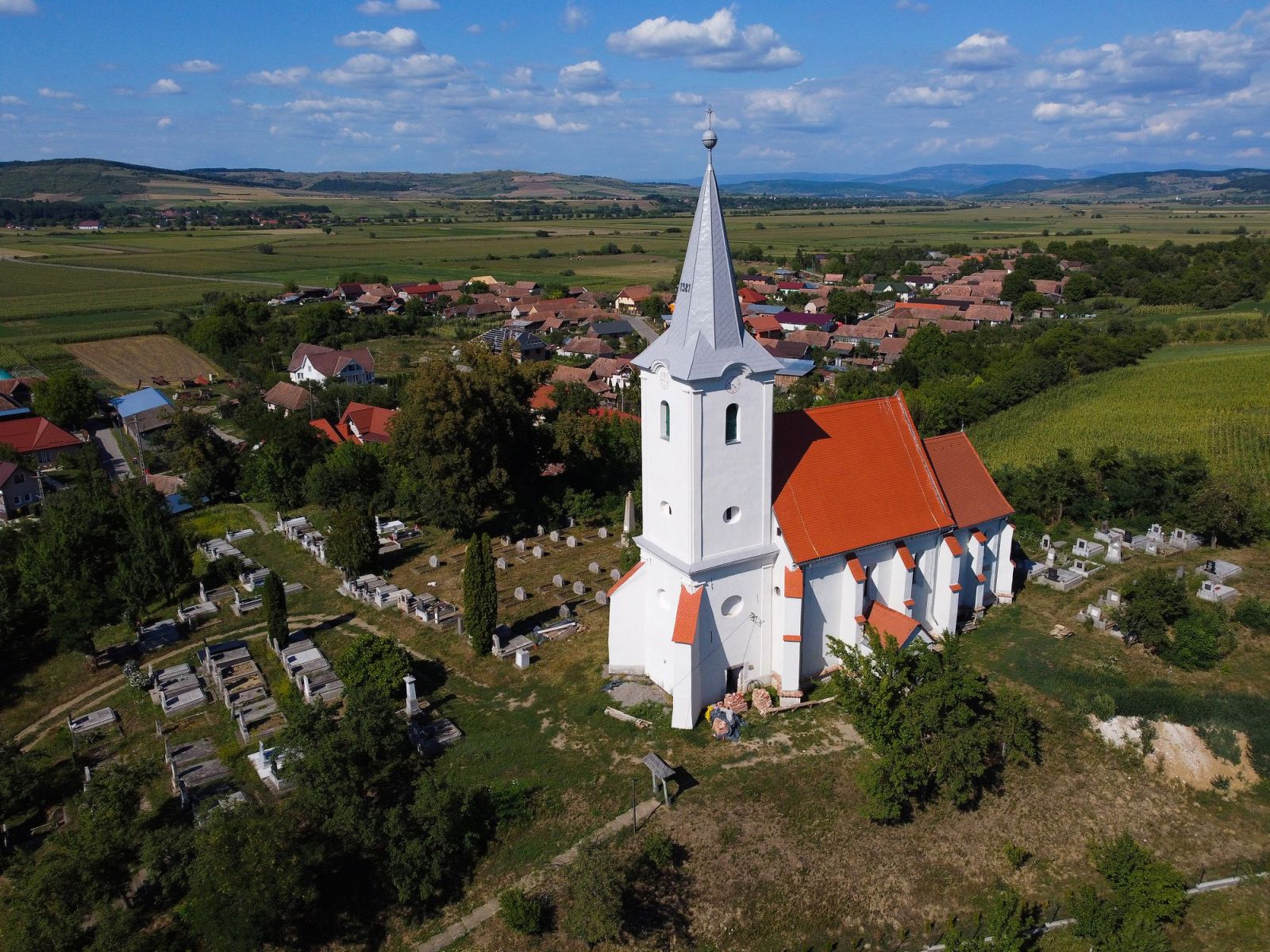
Located in the Nyárád Valley of Mureș County, Szentgerice (Romanian: Gălețeni) is one of the historic Unitarian communities of Transylvania. The village is first mentioned in written records in 1332, and its Unitarian congregation has been documented since before 1633. Among the church’s many historical treasures, the painted coffered ceiling stands out as one of the finest surviving examples of seventeenth-century ecclesiastical woodwork in the region.
The Unitarian Church
The construction of the church most likely began during the fourteenth century, and the building is already mentioned in the papal tithe registers of 1332. Parts of the present walls date from this medieval phase, while the sanctuary and its pointed-arch windows reflect a major rebuilding campaign during the fifteenth century.
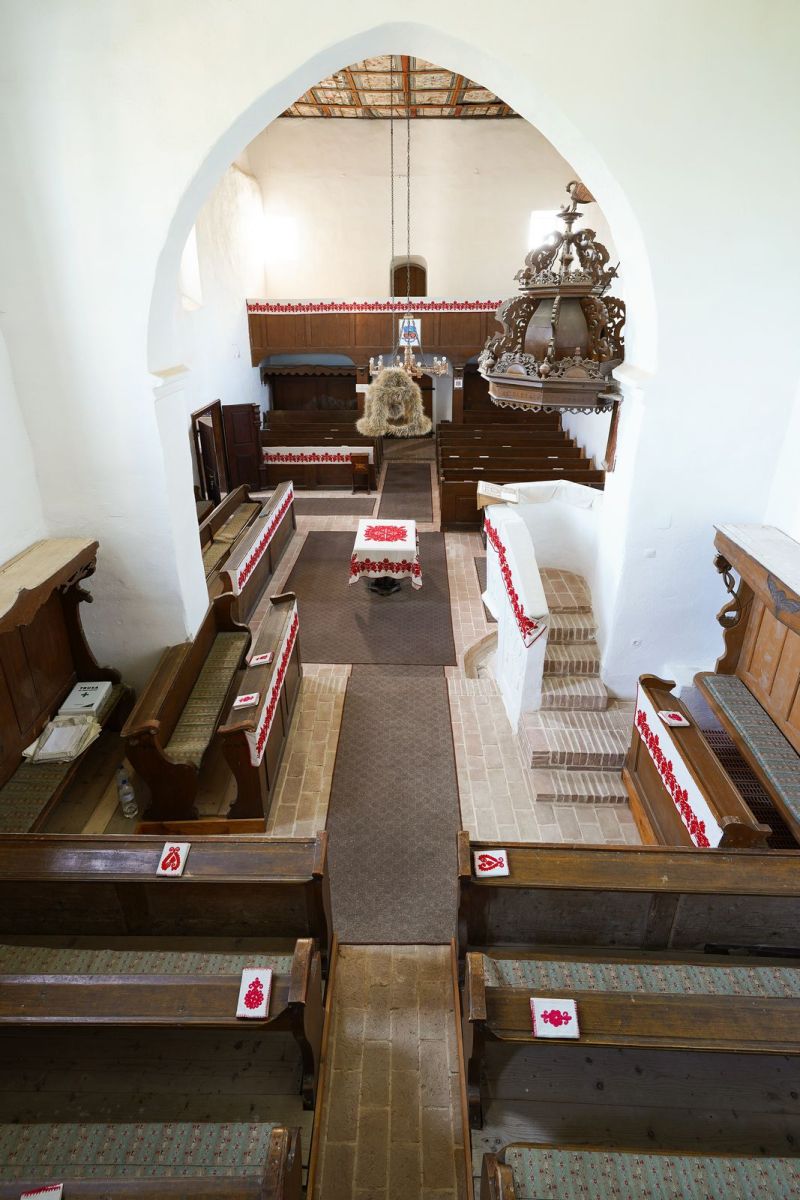
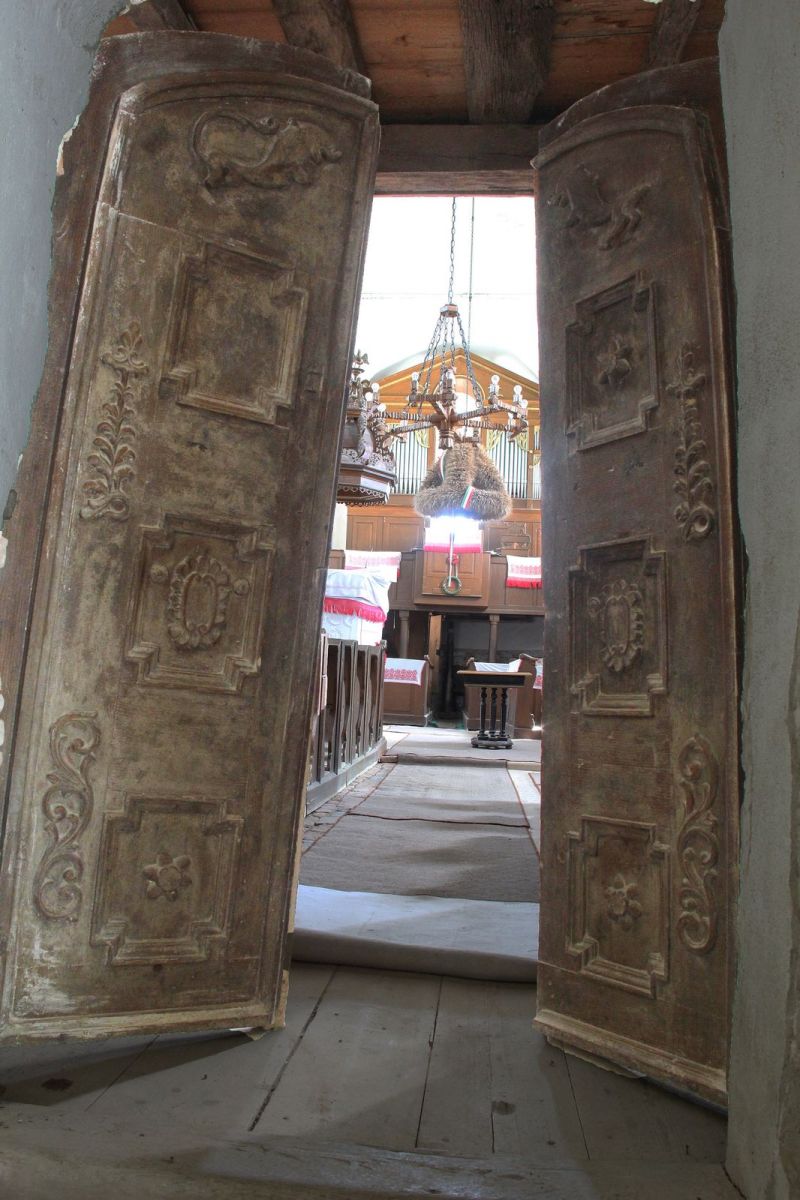
In 1670, the original vault of the nave was replaced by a painted wooden coffered ceiling, creating the church’s most important artistic feature. During the eighteenth century, the interior was further enriched with finely crafted woodwork, including an imposing pulpit crown, carved pews, and doors decorated with heraldic motifs. The present tower was erected between 1791 and 1792, replacing an earlier freestanding bell tower.
The Painted Coffered Ceiling
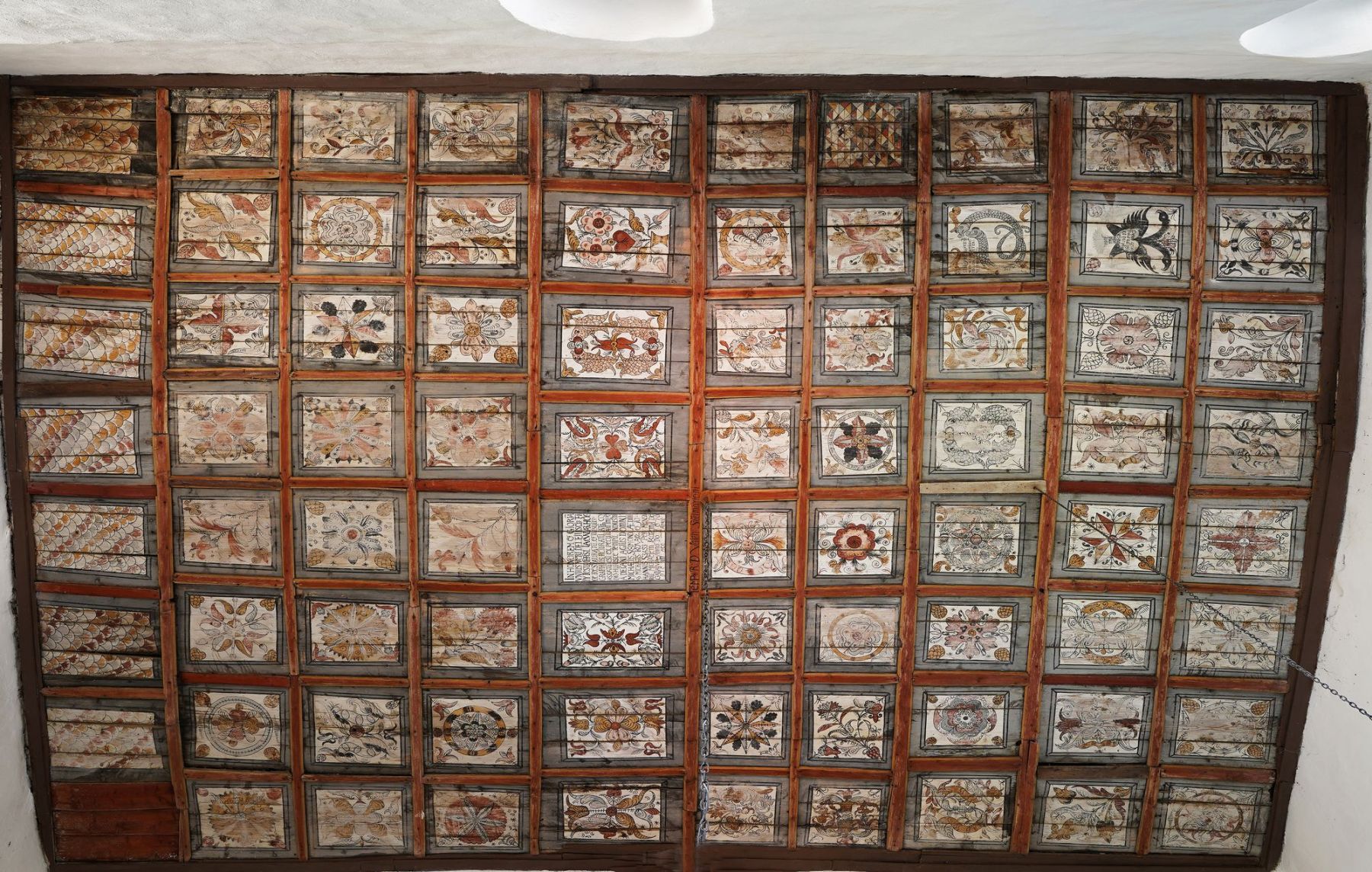
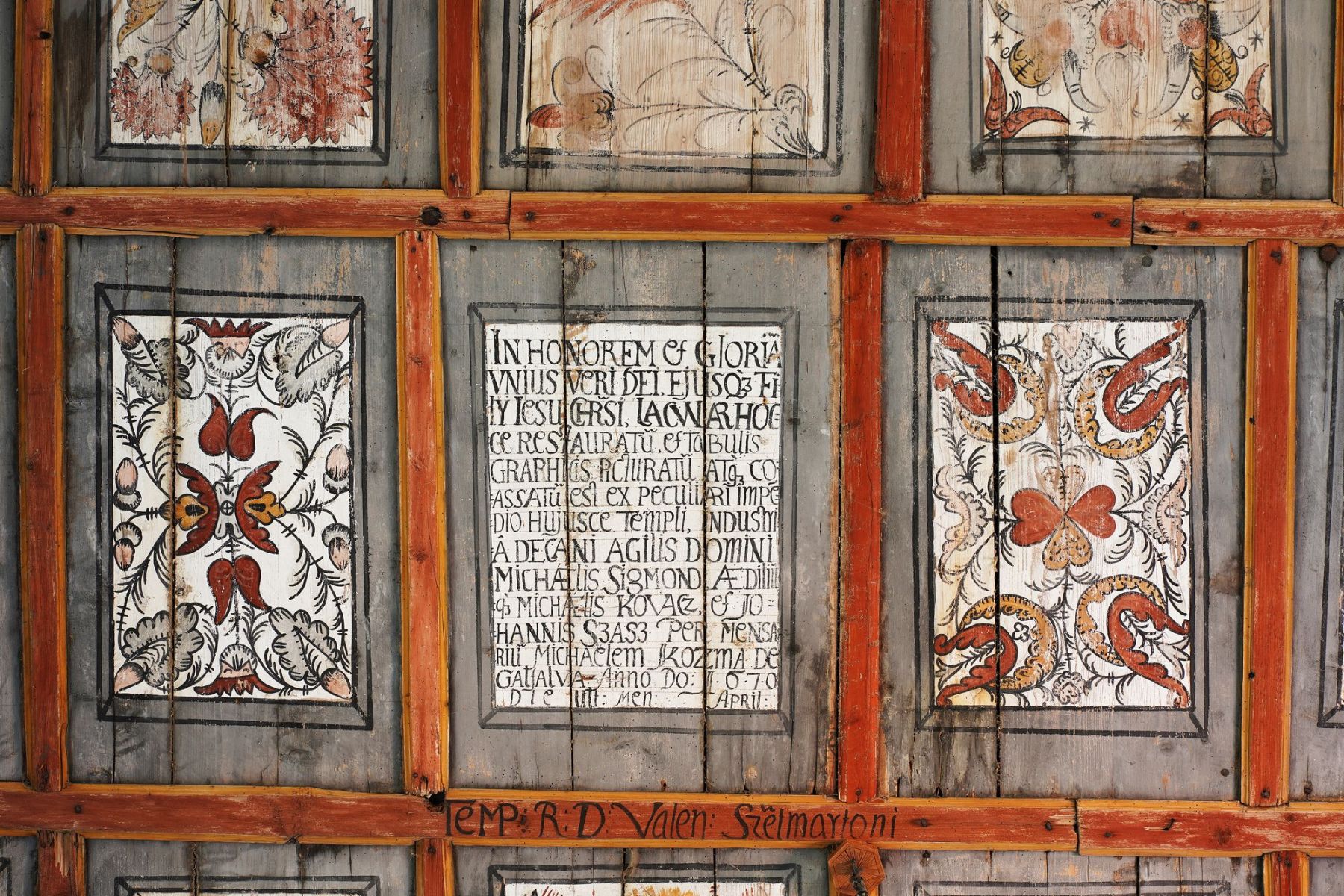
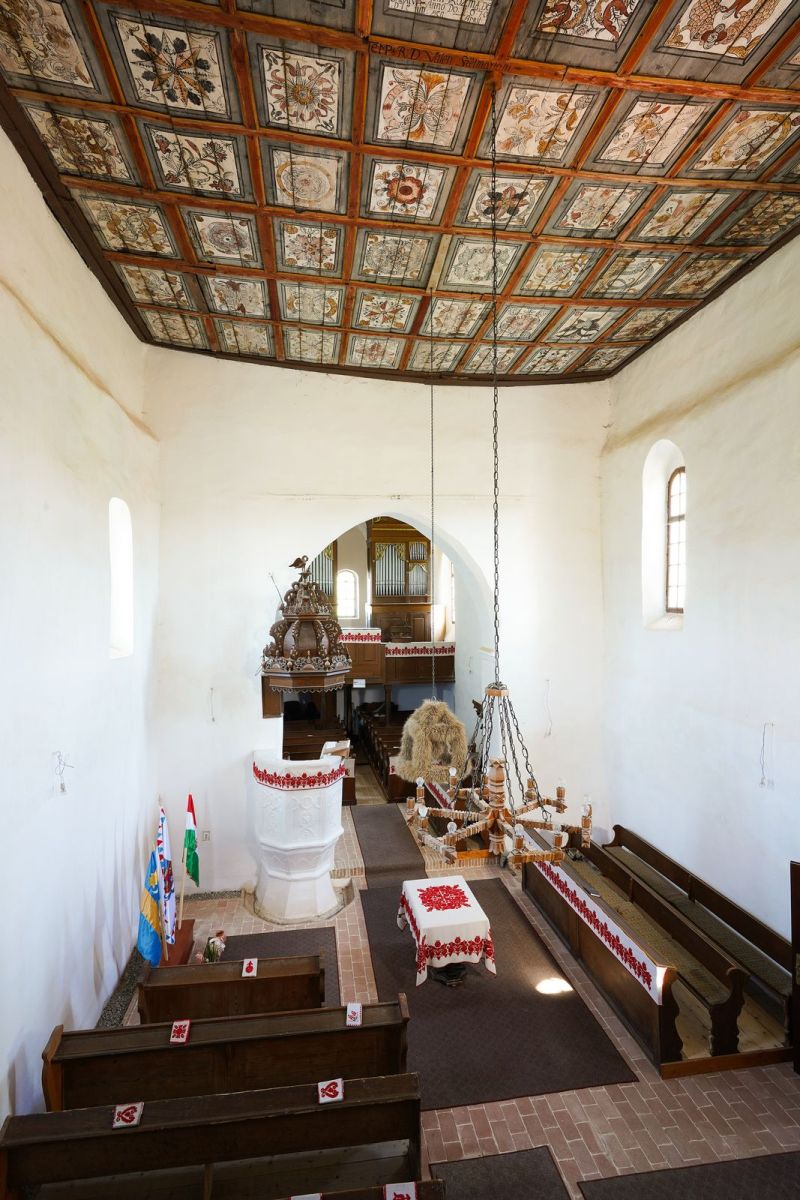
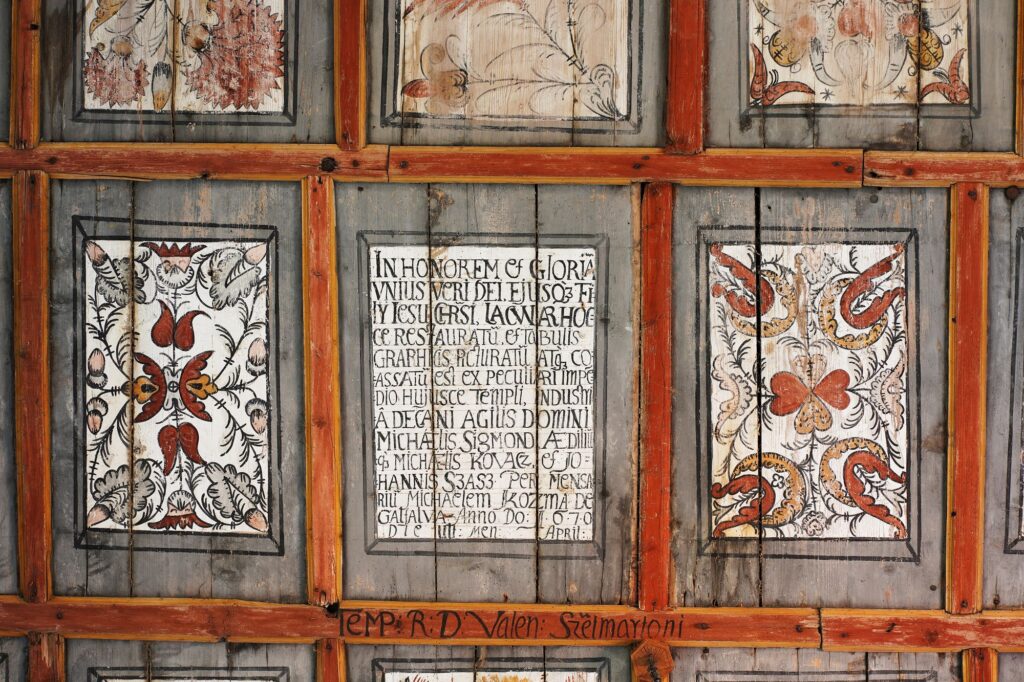
The painted ceiling was created in 1670 by Mihály Kozma of Gálfalva and belongs to the small group of the earliest surviving painted ceilings in Transylvania. Remarkably well preserved, it consists of eighty panels arranged in an 8 × 10 grid.
The decoration combines floral and ornamental motifs with symbolic designs characteristic of seventeenth-century Transylvanian church art. The central row contains larger rectangular panels, creating a visual axis across the ceiling. One of these central panels bears a lengthy Latin inscription recording the creation and restoration of the ceiling, the names of local church leaders, and the date of completion: April 1670.
The ceiling is particularly valuable because it preserves both its original artistic conception and much of its historical fabric. Together with the painted frieze running along the cornice of the nave and sanctuary, it forms a coherent decorative program that has survived largely intact for more than three and a half centuries.
It is important to note that the painted coffered ceiling covers only the nave of the church. The sanctuary retains a separate architectural character, being covered by a barrel vault and featuring an oval stucco cartouche at its center.
The Pulpit Crown and Interior Furnishings
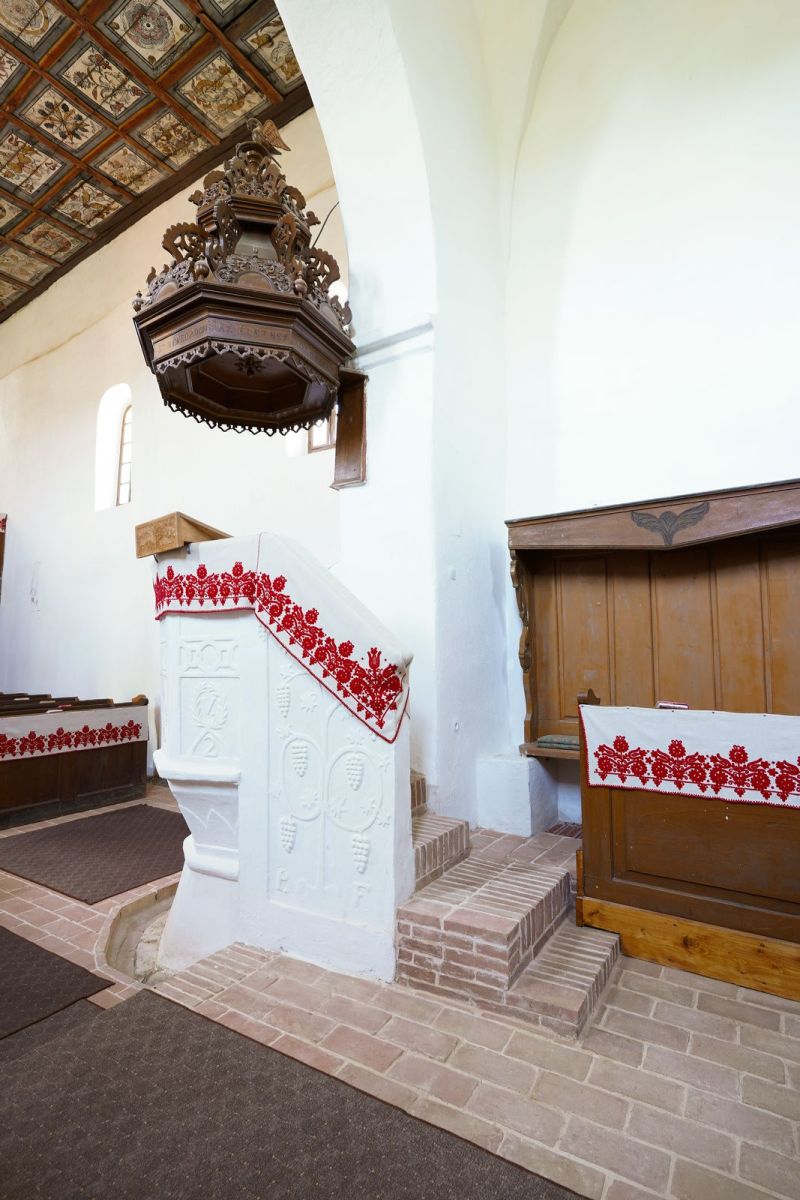
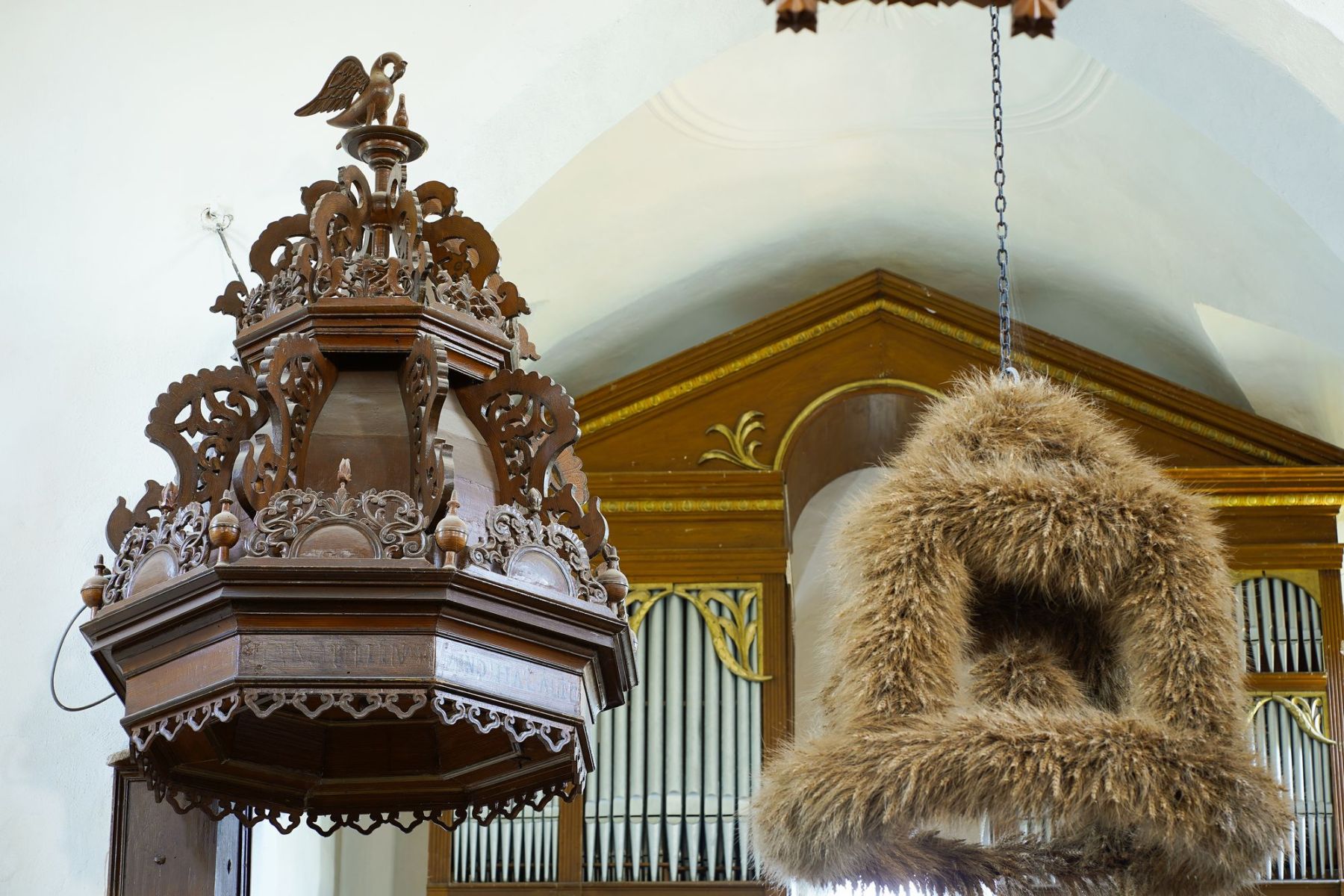
The artistic ensemble of the church extends beyond the ceiling itself. During the late eighteenth century, an impressive wooden pulpit crown was added above the pulpit. According to the surviving inscription, it was commissioned by Márton Imre and remains one of the most distinctive elements of the church interior.
The crown bears the biblical inscription from the Book of Revelation:
“Be faithful unto death, and I will give thee a crown of life.” (Revelation 2:10)
This verse also serves as the motto traditionally associated with the church and reflects the spiritual message embodied in its decoration.
The sanctuary is covered by a barrel vault, while a wooden organ gallery rises at the western end of the church, contributing to the harmonious architectural character of the interior.
Artistic and Cultural Significance
The painted ceiling of Szentgerice occupies an important place in the history of Transylvanian ecclesiastical art. As one of the earliest surviving painted coffered ceilings in the region, it illustrates the transition from medieval church interiors to the distinctive decorative culture that emerged within Protestant communities after the Reformation.
The work of Mihály Kozma combines craftsmanship, religious symbolism, and local artistic traditions into a unified composition. Its survival, together with the church’s eighteenth-century furnishings, pulpit crown, and decorative friezes, makes Szentgerice one of the most valuable examples of historic Unitarian church interiors in Mureș County.
Visiting Szentgerice
Visitors to Szentgerice encounter a church where several centuries of artistic and religious history remain visible in a single interior. The seventeenth-century painted ceiling, the monumental pulpit crown, and the carefully preserved architectural details together create an atmosphere that reflects the enduring cultural heritage of the Unitarian communities of Transylvania. The church remains one of the outstanding examples of painted ecclesiastical woodwork in the Nyárád region and a remarkable destination for those interested in history, art, and sacred architecture.
Gallery by Czire Alpár