
Compiled by: Norbert Zsolt Rácz
The world has known many pilgrims—travelers who set out with a purpose, seeking sacred places or sacred ideas, venturing into the unknown. What they share is the belief that something awaits them just beyond the horizon—something that might make life more bearable within the swirling dialectic of life and death.
Alongside pilgrims, another kind of traveler gradually emerged. These travelers were not concerned with enlightenment, purification, or the Holy Grail beyond the horizon. Instead, they were driven by sights and experiences: stolen moments frozen in photographs, souvenirs placed on shelves, stories meant to dazzle those back home. They are the tourists. Today, there are more tourists than pilgrims—a sign that truth, sanctity, and purification beyond the horizon have become less compelling. Once again, spectacle has triumphed over deeper understanding.
And yet, there are travelers who seek neither enlightenment nor mere experience. They set out with a transparent soul, ready to receive whatever the universe offers them. This transparency, however, does not remain absolute. They absorb countless impressions, thoughts, and lived experiences, but measure them against an increasingly refined inner canon. These travelers resemble crystals: their internal structure is ordered, yet this order does not block the light passing through them. Instead, they refract it, retaining certain “photons of thought,” processing them through the metabolism of the spirit, and integrating them into their inner structure. Ferenc Balázs belonged to this third group.
“Through three summers / I wandered across Székely Land, / Nothing else remained: / I set out for the great wide world. / Forward, always forward, / For five long years I roamed.”
—he writes in a free verse intended as a preface to I Travel Around the World.
Those five long years began in the autumn of 1923, when he traveled to England to study at Manchester College in Oxford, maintained by the Unitarians. His English was still rudimentary at the time, but he quickly overcame this limitation. Soon, he was not only speaking, but thinking and even dreaming in English. The free and refined atmosphere of the English university, the landscapes of Great Britain, soon captivated him. Yet he was deeply troubled by the contradiction between such wealth and development and the misery of the slums. In this tension, he recognized the labor pains of his age—a world torn between the noble ideals of progress and the baseness of material greed. This fundamental impression would shape his entire journey.
He traveled through numerous cities and villages across Europe, shared in the joy of nature with members of the German youth movement Wandervogel, and in the autumn of 1927 crossed the ocean to America.
The New World presented the same duality, yet here he glimpsed the possibility of a better and more just society. From there, he spent three months each in Japan, China, and India, before heading through the Middle East, Palestine, and Egypt, increasingly hastening his return home.
Japan was difficult for him to appreciate at first. He initially saw it as hypocritical and underdeveloped, a country yielding itself too readily to Western exploitation. Over time, however, his view evolved. He learned to respect its unique culture and to recognize in it, too, the potential for development through education.
He greeted China with reverence. Its ancient culture and wisdom captivated him, yet he soon recognized how fragile progress can be—how easily it may be undermined by the hunger for power and wealth.
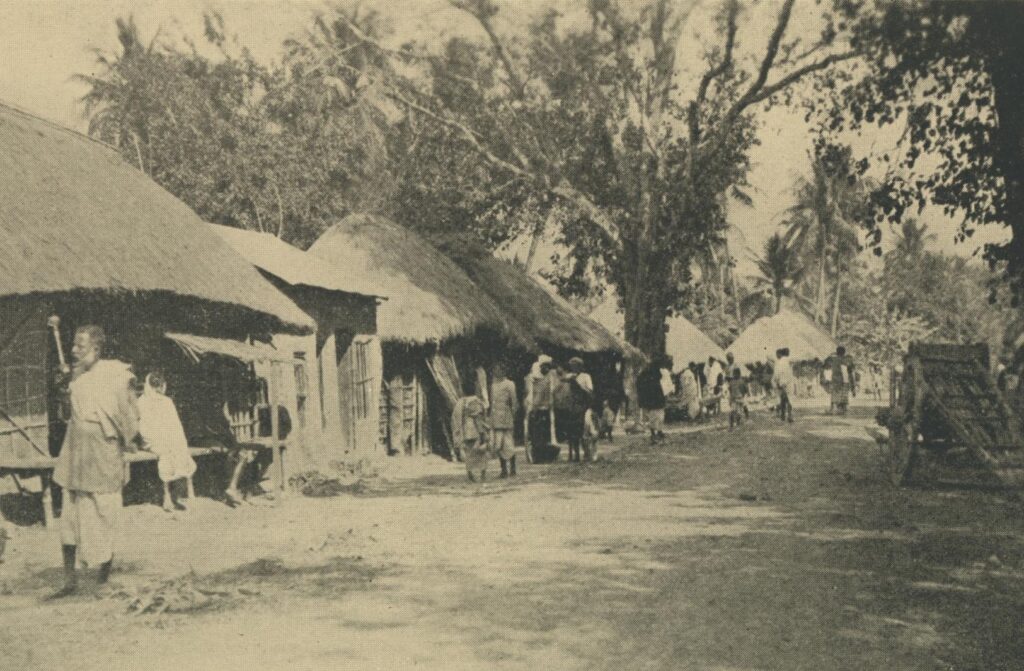
India fascinated him. He marveled at its vastness and richness. In Gandhi, he recognized a figure who would be revered by future generations, though he himself was not entirely enthralled. He spoke more warmly of Rabindranath Tagore—the poet who founded a school, the philosopher who transformed ideas into lived reality.
The scents, flavors, and forms of the Arab world enchanted him. The emerging reality of Israel filled him with mixed emotions. By the time he reached Egypt, he had become, in a sense, a tourist—and from there, his journey accelerated rapidly toward home.
This journey undoubtedly transformed Ferenc Balázs. He was not a pilgrim—he did not find, nor seek, the Holy Grail. But neither was he a tourist, collecting trivial souvenirs. Throughout his travels around the world, he remained himself—absorbing everything he encountered and integrating it into a worldview already taking shape within him, much like a sculptor who removes the superfluous to reveal the masterpiece beneath.